

Seoul: Shares, won tumble on recession fears
 Add BT as a preferred source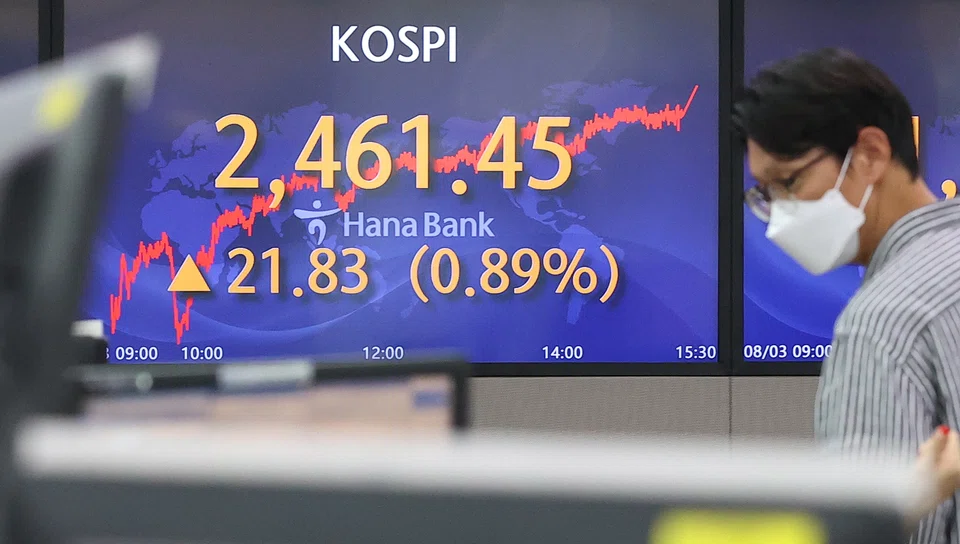
SOUTH Korean shares dropped more than 2 per cent on Wednesday (Sep 28) to their lowest close in more than 2 years, weighed down by heightened global recession fears.
The Korean won weakened more than 1 per cent against the dollar to hit a fresh 13 1/2-year low, while the benchmark bond yield erased much of early gains on market stabilising measures.
The benchmark Kospi ended down 54.57 points or 2.45 per cent at 2,169.29, its lowest close since Jul 10, 2020.
“The local market saw bigger losses than most Asian peers because of its higher proportion of tech shares, which were under pressure from the reports on Apple,” said Na Jeong-hwan, an analyst at Cape Investment and Securities.
LG Innotek, a camera part supplier, saw its worst day since mid-March 2020, falling 10.5 per cent on reports that Apple dropped plans to increase production of its new iPhones this year.
Among heavyweights, technology giant Samsung Electronics fell 2.4 per cent, peer SK Hynix lost 0.98 per cent, and battery maker LG Energy Solution declined 2.36 per cent.
Celltrion gained 0.6 per cent after the company said it had received the final US sales licence for a biosimilar anticancer drug.
Foreigners were net sellers of shares worth 145.9 billion won (S$146.2 million) on the main board.
The won ended 1.28 per cent lower at 1,439.9 per dollar on the onshore settlement platform, after touching its weakest level since Mar 16, 2009 at 1,442.2.
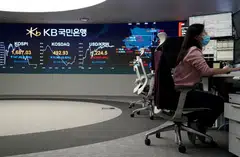
In money and debt markets, December futures on 3-year treasury bonds ended down 0.11 point at 101.40, after falling as much as 0.65 point.
South Korea’s finance ministry and central bank said they would each conduct buyback and direct purchases of treasury bonds to stabilise the bond market.
The most liquid 3-year Korean treasury bond yield fell by 7.8 basis points to 4.216 per cent, while the benchmark 10-year yield rose by 2.5 basis points to 4.231 per cent, after touching its highest since May 11, 2011 at 4.426 per cent. REUTERS
Decoding Asia newsletter: your guide to navigating Asia in a new global order. Sign up here to get Decoding Asia newsletter. Delivered to your inbox. Free.
Share with us your feedback on BT's products and services
TRENDING NOW
NDR 2026: Singapore to create new Western island to support 'new generation of industries'

MSCI drops S-E Asian heavyweights Sembcorp, GoTo and Ayala Land from global benchmarks
E-commerce is killing ‘real’ commerce, says China’s beverage king Zhong Shanshan

Asia-Pacific aviation: is up really the only way?

