

Seoul: Stocks edge down as focus turns to earnings, won steady
 Add BT as a preferred source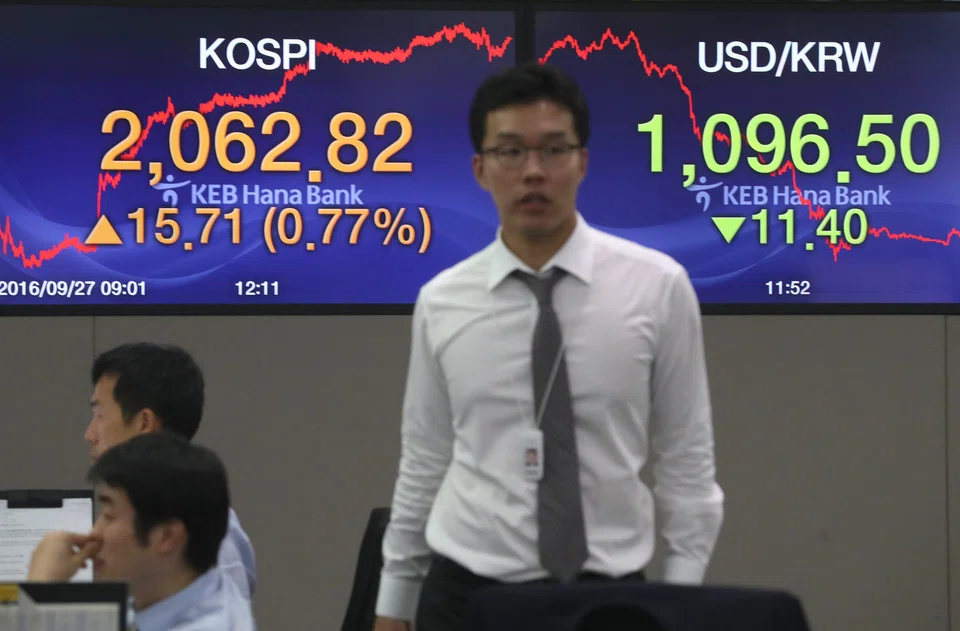
[SEOUL] South Korean shares slipped on Wednesday morning, pressured by foreign sales as investors adopted a cautious stance ahead of third quarter earnings.
The Korea Composite Stock Price Index (Kospi) was down 0.3 per cent at 2,057.19 points as of 0202 GMT.
Lee Jae Man, a stock analyst at Hana Daetoo Securities, said he expects the index to move higher in October after the release of corporate earnings for the third quarter.
"Earnings of Samsung Electronics is something to worry about, but other than that most of the big companies are expected to do fine, pushing the Kospi higher," he added.
Samsung Electronics Co is battling a crisis as the world's top smartphone maker announced on Sept 2 a global recall of at least 2.5 million Note 7 smartphones in 10 markets due to faulty batteries causing some phones to catch fire.
Samsung Electronics were trading flat at 1,560,000 won.
Offshore investors sold a net 40.4 billion Korean won (S$50.18 million) worth of Kospi shares near mid-session.
Decliners outnumbered advancers 423 to 357.
Carmaker Kia Motors Corp lost near 2 per cent while Hyundai Department Store Co Ltd gained 1.7 per cent.
The South Korean won held steady around 1,095.5 to the US dollar, little changed from the previous close of 1,096.5. The local currency has steadied after some volatile trading sessions amid questions about the US Federal Reserve's rates outlook.
December futures on three-year treasury bonds gained 0.06 point to 110.85.
REUTERS
Share with us your feedback on BT's products and services
TRENDING NOW

Nearly half of Apac’s wealthy expect market crash or correction, plan to rotate to cash: study

Shanda co-founder sells Tanglin Hill bungalow for S$76 million

Yeo’s, Tiger Beer and now Gardenia – flight of food manufacturing from Singapore might be just as planned

Johor property old hand KSL readies family handover amid market boom

