Singapore, Asia markets gain amid Trump uncertainty, Venezuela turmoil
US President Donald Trump says the United States will take control of the oil-producing South American nation

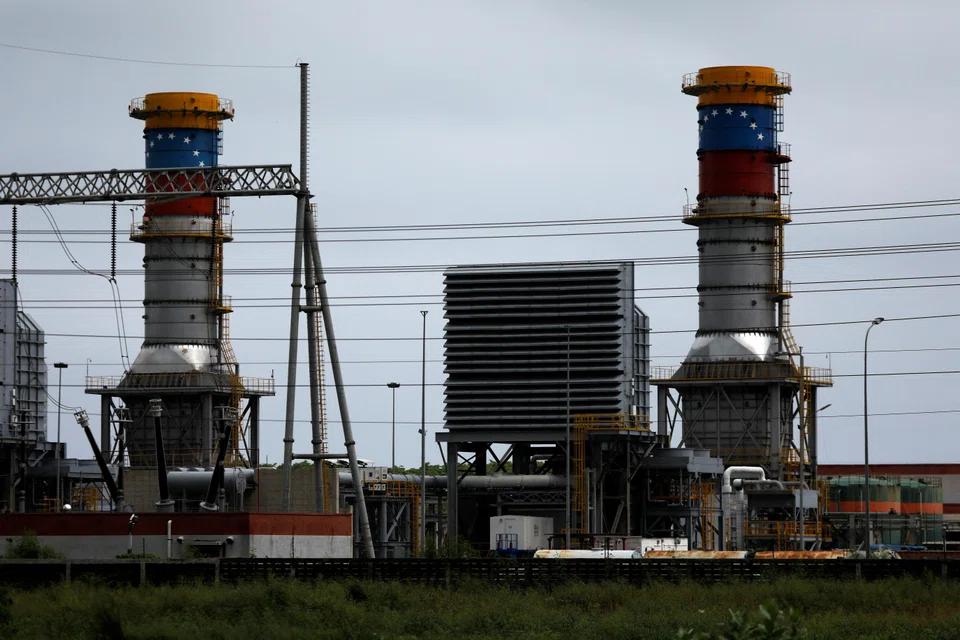
[SINGAPORE] Asian markets broadly rose on Monday (Jan 5) morning as the region resumed trading after the weekend’s political upheaval in Venezuela.
This followed a fall in oil prices in the early minutes of trading day in Asia. The drop was due to an ample oil supply, despite concerns about the situation in Venezuela, which is a member of the Organization of the Petroleum Exporting Countries (Opec).
In Singapore, the benchmark Straits Times Index closed 0.5 per cent up, though shares of Singapore-listed energy players finished mixed.
Sembcorp Industries closed flat, while Rex International fell 0.7 per cent. China Aviation Oil , owned by China National Aviation Fuel Group, closed 0.6 per cent down.
South Korea’s Kospi rose 3.4 per cent and Malaysia’s Kuala Lumpur Composite Index was up almost 0.6 per cent.
Taiwan’s Taiex finished 2.6 per cent higher and Shanghai’s CSI 300 gained 1.9 per cent. Hong Kong’s Hang Seng Index was flat.
Swift operation
The US on Jan 3 executed a swift operation to capture and extract Venezuelan President Nicolas Maduro amid questions over the legality of its actions.
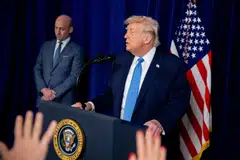
US President Donald Trump later said his country would take control of the oil-producing South American nation.
Trump after the attack had said that the US will temporarily “run” the country, while US oil companies will also fix Venezuela’s “broken infrastructure”.
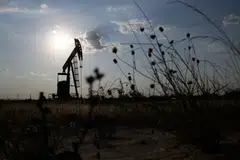
“Venezuela’s oil industry has been in decline since the previous decade due to overexploitation, underinvestment, mismanagement and US sanctions,” said Norbert Rucker, head of economics and next generation research at Julius Baer.
The South American nation supplies less than 0.5 per cent of global oil, or about 0.5 million barrels a day, he said. That is less than half of what it produced before Maduro came to power in 2013 and is dwarfed by the 20 million barrels produced by the US, the world’s largest producer.
Nigel Green, chief executive officer of financial consultancy deVere, said: “Global supply remains ample, Venezuelan production represents a small share of worldwide output and there’s no clear evidence yet of sustained disruption to physical flows.”
Keeping oil supply steady
The wider Opec+ agreed to keep oil supply steady at its meeting on Sunday, despite the situation in Venezuela and tensions between key members Saudi Arabia and United Arab Emirates.
“We see oil prices trading in the high US$50s for much of 2026,” said Rucker. “The oil market seems in a lasting surplus, largely due to structural factors, and able to weather geopolitics quite well.”
However, Green noted that China may still feel the effects of any disruptions in oil supply from Venezuela.
The majority of Venezuelan crude exports flow to China, with limited exposure to US or European refiners, which he said reduces the immediate sensitivity of Western benchmarks such as Brent and WTI.
Venezuela’s bilateral relations with China were upgraded to an “all-weather strategic partnership” in 2023, making it the only country in Latin America with this designation.
China’s foreign ministry condemned the US’ actions over the weekend, stating it was “deeply shocked”.
Professor Jiang Shixue of Shanghai University told The Straits Times that China faced risks of restrictions on Chinese oil companies if a pro-US government eventually took over.
Following the attack, Trump said that he will keep oil flowing to China.
However, it is not yet clear if Beijing will have to buy Venezuelan oil through the US in the interim, or if existing agreements between China and Venezuela will be respected.
Franklin Templeton Institute strategists said that looking ahead at the end of the decade, five million barrels of oil per day could be added to global crude markets if longer-term stability in Venezuela and a potential peace deal in Ukraine is achieved.
“If so, that would amount to about 5 per cent or more of global crude output, enough to keep oil prices depressed for longer, which would be a clear positive for global growth and a restraint on inflation,” said chief market strategist Stephen Dover and global investment strategist Larry Hatheway of the Franklin Templeton Institute.
Decoding Asia newsletter: your guide to navigating Asia in a new global order. Sign up here to get Decoding Asia newsletter. Delivered to your inbox. Free.
Copyright SPH Media. All rights reserved.