Singapore blue chips rise 2.2% after Trump says Iran war will end ‘very soon’
The Straits Times Index is up 104.03 points at 4,860.64

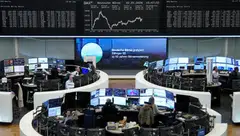
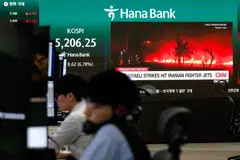
[SINGAPORE] Blue-chip counters in Singapore rebounded on Tuesday (Mar 10) after US President Donald Trump said overnight that the war with Iran would be over “very soon”.
The Straits Times Index (STI) rose 104.03 points or 2.2 per cent to 4,860.64. The iEdge Singapore Next 50 Index, however, slid 2.7 per cent or 38.67 points to 1,417.06.
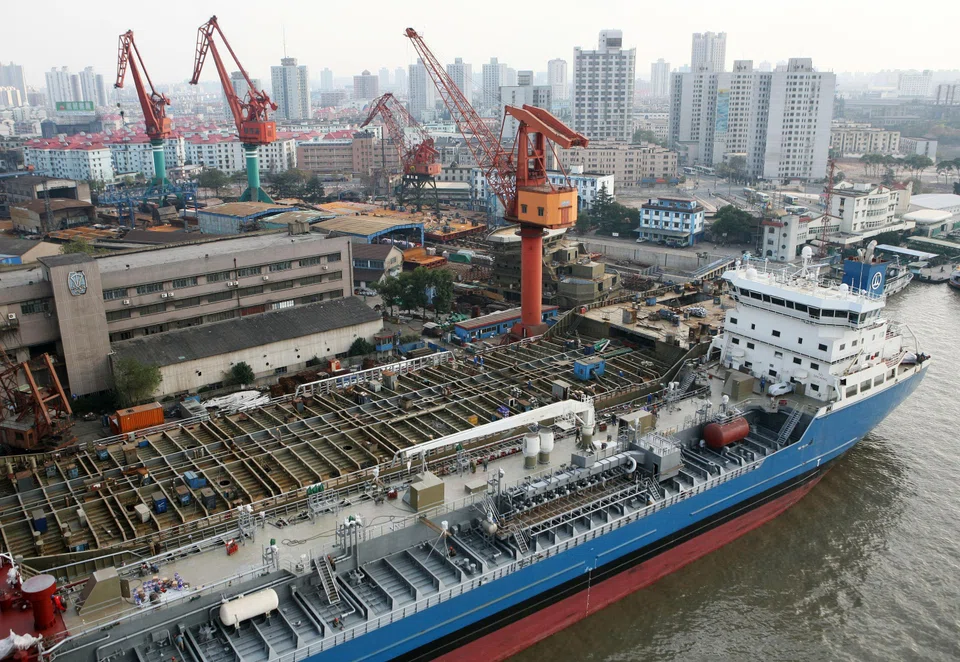
China-based shipbuilder Yangzijiang Shipbuilding was the only STI constituent that closed lower, falling 1.2 per cent or S$0.05 to S$4.05.
Another company in the Yangzijiang stable, Yangzijiang Financial , was the worst performer on the iEdge Singapore Next 50 Index. The investment and fund management company fell 3.8 per cent or S$0.01 to S$0.25.
Hong Kong-based Jardine Matheson was the STI’s biggest gainer on Tuesday, rising 7.7 per cent or US$5.59 to US$78.40.
The banking trio all finished higher. DBS gained 2.5 per cent or S$1.34 to S$55.65; OCBC was up 2.3 per cent or S$0.47 at S$20.93; and UOB rose 2.1 per cent or S$0.74 to S$36.25.
Across the broader market, gainers beat decliners 457 to 157, with 1.6 billion securities worth S$2.4 billion transacted.
Trump’s comments that the war in the Middle East would end soon drove oil prices lower, following a surge past US$100 a barrel that fanned inflation fears.
“We’re looking to keep the oil prices down,” the US president said. “They went artificially up because of this excursion.”
SEE ALSO
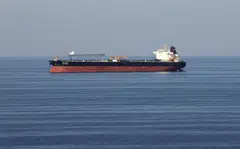
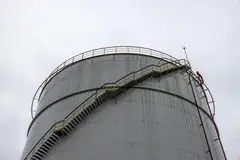

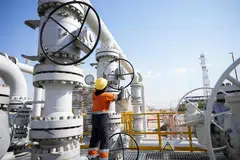

The closure of the Strait of Hormuz – a narrow waterway that normally handles a fifth of the world’s oil – has seen Saudi Arabia, Iraq, Kuwait and the United Arab Emirates reducing output as storage fills.
Decoding Asia newsletter: your guide to navigating Asia in a new global order. Sign up here to get Decoding Asia newsletter. Delivered to your inbox. Free.
Copyright SPH Media. All rights reserved.