Singapore corporate earnings lower in Q1, weighed down by glovemakers, banks

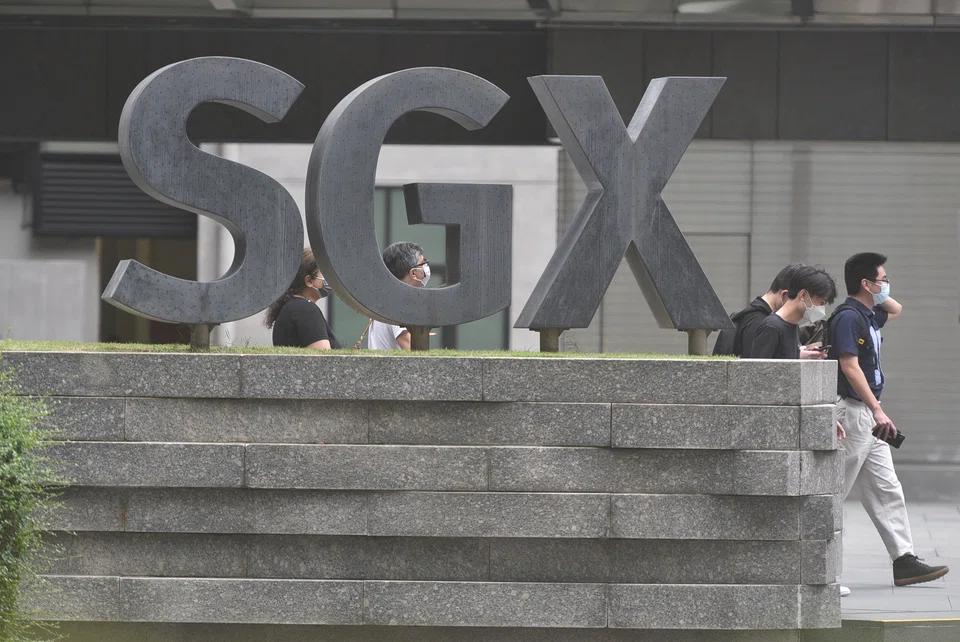
COMPANIES listed on the Singapore Exchange (SGX) clocked weaker earnings overall for the first quarter ended Mar 31, 2022, with the biggest decline in net profit coming from banks and rubber glove manufacturers.
As of Thursday (Jun 2), some 121 local companies had released their results for Q1 2022. Total net profit from these companies amounted to S$7.2 billion, down 8.7 per cent from the same period a year earlier, data compiled by The Business Times showed.
Some 86 companies turned in a profit in the latest reporting period, while 35 were loss-making. Among those that were profitable, 30 companies had weaker profits than in the year-ago period.
Makers of rubber gloves were among the top decliners, as the average selling price (ASP) of disposable gloves fell amid higher supply and increased competition in the market.
Sri Trang Gloves saw its net profit fall the most during the quarter, down nearly 90 per cent to 1.1 billion baht (S$42.7 million) in Q1 2022, from 10.1 billion baht a year earlier.
The company sold some 7.9 billion gloves during the quarter, up 17.8 per cent on year. However, sales revenue decreased as the ASP had fallen 61.3 per cent on year as a result of increasing supply in the market.
It was a similar story at other listed glovemakers. Riverstone and UG Healthcare saw net profit tumble 79.2 per cent and 68.9 per cent, respectively, as revenue slid.
These companies had been beneficiaries from the rise in demand for gloves when the pandemic began, but the higher ASPs seen in the first quarter of 2021 have started to normalise.
The share prices of the locally listed glovemakers have also seen a correction from their record highs. Over the past year, Sri Trang Gloves, Riverstone and UG Healthcare have fallen between 48.2 and 64.5 per cent.
Meanwhile, the financial sector was impacted by weaker market sentiment.
OCBC’s insurance subsidiary, Great Eastern , was one of the top decliners, with net profit halving to just S$220 million, due to lower valuation of investments arising from less favourable financial market conditions in the quarter compared with the year-ago period.
The 3 local banks – DBS , OCBC , and UOB – also each reported a 10 per cent decline in net profit, on the back of lower revenue.
Wealth and other non-interest income were the biggest drags for the banks, amid market volatility due to geopolitical tensions.
An RHB analyst said: “We believe that the year-on-year drop in wealth management fees can be attributed to 2 factors, which are: weaker investor sentiment given the Russia-Ukraine war and concerns over macroeconomic developments (rising inflation and recession fears).”
The weaker earnings were also partly attributable to a high-base effect from the previous year.
Glenn Thum, research analyst at Phillip Securities Research, noted that the banks were coming off an “exceptional FY21 performance”, with the reopening of borders and economics in Asean.
Even so, he noted that the banks still had a relatively stable quarter – with mid-to-high single digit loans growth and continued improvement in net interest margins (NIMs).
“The outlook for banks would be improved NIMs and net interest income as interest rates continue to go up, stable loans growth, and stable provisioning and allowances as the ASEAN economies begin to reopen and recover from the pandemic,” he said.
RHB, meanwhile, said the situation for the remaining 3 quarters of the year depends on how the geopolitical crisis and macro headwinds pan out.
“The banks have flagged that these challenges could dampen the earlier expectations of healthy growth in fees from wealth management,” RHB said.
Even as some large players saw weaker earnings during the first quarter, there were still positive signs across the broader market.
Of the 86 companies that were profitable, around half managed to turn in higher profits compared to a year earlier.
Leading the gains in Q1 were plantation-focused players, with Golden Agri-Resources , Wilmar International and Bumitama Agri all recording improved net profit and revenue.
Golden Agri-Resources posted the biggest increase in net profit, up US$147 million to US$188 million in Q1 2022.
DBS Group Research analysts noted that the stronger profits from such players in Q1 2022 were primarily driven by higher Indonesia domestic crude palm oil (CPO) price – which reached US$1,085 per metric tonne in Q1, up 60 per cent on year.
“Integrated palm oil companies like Wilmar also benefited from strong vegetable oil refining margins,” the analysts said. They noted that the sector also stands out for earnings growth this year, following a wider rally in commodities.
RHB expects the strong performance from plantation players to persist, as CPO prices are expected to stay high for the first half of this year. While the price may moderate in the second half, it would still be higher than 2021 levels.
For the overall market, DBS Group Research said it is still forecasting 11 per cent earnings growth for stocks under its local coverage in FY22, led by reopening plays such as Singapore Airlines and Genting Singapore.
“Real estate investment trusts and technology stocks could also recover if inflation fears peak and in turn drive a retreat in yields,” the analysts noted.
“That said, if the current upward trajectory in yields remains, I think we will see a flight to quality (if this has not already happened), where selected quality stocks in each sector, such as AEM , Mapletree Industrial Trust and Venture , are favoured.”
TRENDING NOW
Grab CEO’s wife Chloe Tong on life with Anthony Tan and finding her purpose
Once staunchly pro-China, Malaysian Chinese businesses are now distancing themselves from Beijing
Crystal Jade Fine Dining faces charge for failing to file income tax return on time
UOB found ‘grossly negligent’ over Stamford Land rights issue advice, to pay S$1.9 million