Singapore IPO pipeline looking robust, fuelled by Asia growth and US-China tensions

Singapore
SINGAPORE may be a laggard in attracting blockbuster listings when compared to Hong Kong, but the pipeline for initial public offerings (IPOs) this year looks robust on renewed interest from companies expanding in Asia and US-listed Chinese companies looking for a secondary listing closer to home - but outside China - amidst rising US-China tensions.
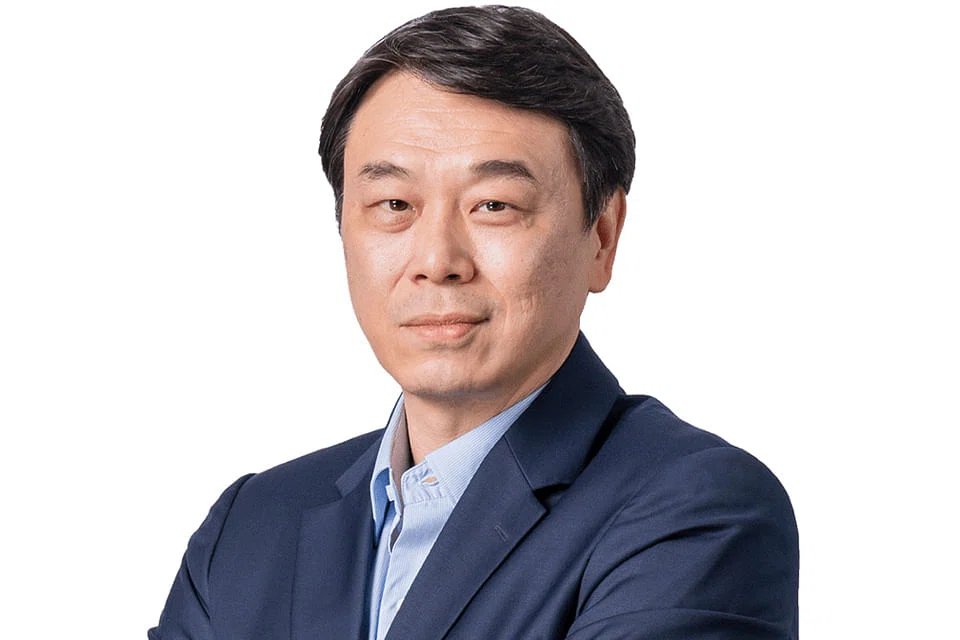
Raymond Tong, widely regarded as one of Singapore's top capital markets lawyers, told The Business Times in an interview that he was seeing a healthier pipeline for IPOs this year, compared to last year.
"The pipeline this year is going to be better than last year. There will be a few more large ones of half-a-billion to one-billion market capitalisation types, similar to Nanofilm's size range," said Mr Tong, who joined Rajah & Tann Singapore as a partner in the capital markets/mergers & acquisitions practice on Feb 15.
Before that, he spent more than 10 years at Clifford Chance, after spending a decade with another Singapore Big Four firm, WongPartnership.
Nanofilm Technologies International, a provider of nanotechnology solutions, raised more than S$470 million in its IPO here last year. Today, its market value is more than S$3 billion.
Mr Tong advises on both domestic and international matters and has worked on some of the most high-profile equity capital market deals across South-east Asia in recent years.
Last year, he advised DBS Bank on a S$2.1 billion renounceable underwritten rights issue of new shares by Sembcorp Marine, which at the time of the launch was Singapore's second largest rights issue in 2020.
He was also involved in the US$1.68 billion (S$2.24 billion) IPO of NetLink, the US$813 million IPO of Prime US Reit and the US$394.6 million IPO of United Hampshire US Reit, as well as the US$2 billion IPO by CapitaMalls Asia in 2009, which, at that time, was Singapore's largest offering in 15 years.
Regionally, he advised Leong Hup International on its RM1.03 billion (S$338 million) IPO and acted for Lotte Chemical Titan on its US$878 million IPO on Bursa Malaysia, to name just a couple.
Mr Tong, who is ranked a Band 1 leading lawyer in the Asia-Pacific, said Singapore is seeing some spillover effects from Chinese companies ditching their US listings as they grapple with rising tensions between Beijing and Washington.
In January, the New York Stock Exchange (NYSE) suspended trading of shares of three NYSE-listed Chinese telecom companies. China Mobile, China Telecommunications and China United Telecommunications Group Co are listed mainly on Chinese exchanges but have been raising capital in the US market in recent years.
The delisting follows a series of executive orders targeting Chinese technology companies as national security risks. Chinese companies raised US$13.5 billion in US capital markets through 35 IPOs in 2020, according to Renaissance Capital.
While the administration of new US President Joe Biden has already reversed several executive orders signed by former President Donald Trump, the rhetoric on China-related matters from Mr Biden's team does not project an immediate change of policy on Chinese tech and US capital markets.
In the wake of these developments and uncertainties, many big Chinese tech companies have chosen to raise capital on closer-to-home exchanges such as Hong Kong and Shanghai. But there are some which prefer not to list in China, and are showing interest in Singapore.
"Singapore is still an attractive destination to many. The tensions between the US and China could result in some of the smaller US-listed Chinese companies looking to Singapore as a possible secondary listing destination. That's an avenue that we've seen quite a fair bit of activity," Mr Tong said.
"We've seen the flow to Hong Kong with the big boys, but I think the medium boys may consider Singapore and we've seen some of those," he added.
Last year, AMTD International, one of Asia's largest independent asset managers, became the first company to be dual listed on the NYSE and the Singapore Exchange (SGX), and also the first to do so under a dual class shares structure in Singapore.
"We may not get the mega caps, but we are seeing the large caps, lower pricing matrix types," Mr Tong said. He is currently working on two US-listed candidates seeking to list here.
Other potential IPO candidates include real estate investment trusts (Reits) with foreign assets, given that most of Singapore's assets are already in Reits; non-Reits including consumer and traditional businesses that have done well despite Covid-19; as well as companies in the IT and renewable space.
Mr Tong intends to leverage Rajah & Tann's network to focus on boosting capital raising in the public market.
"I think much can be done. Specifically, how I can help the Singapore capital markets by translating these private investments into the public market space.
"That's where I'm going to focus on and I think there's quite a lot there to play for notwithstanding all the naysayers," he said, referring to the common criticism that SGX has been a laggard in IPOs.
Mr Tong believes that Singapore, which has invested heavily on developing a tech ecosystem, will bear fruit over the next four to five years as these startups mature and private equity funds look to exit.
So far, the pandemic has not impacted capital raising activities, he said. Unlike the Asian financial crisis, banks today are well-capitalised and have strong balance sheets.
Save companies in the oil and gas, airlines and hotel businesses, most companies appear to be managing well, having time to recalibrate their operations and manage the headwinds, of course with government help such as the Jobs Support Scheme (JSS).