

Singapore shares end lower after Middle East conflict intensifies; STI down 1.3%
All three banking stocks end lower


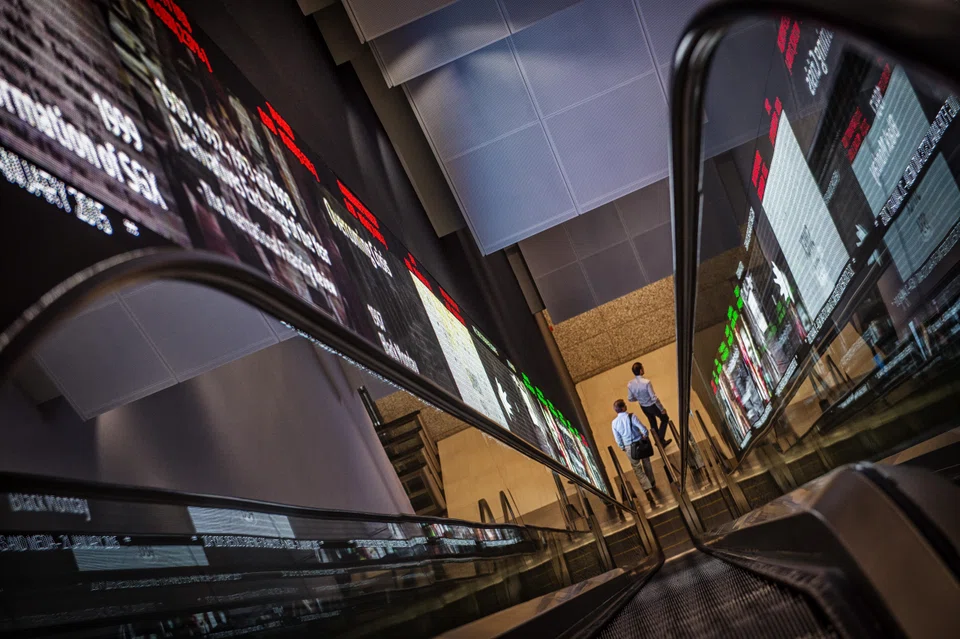
[SINGAPORE] Singapore stocks closed lower on Wednesday (Jun 10).
This came after a wave of new strikes by the US against Iran, which led to retaliatory attacks by Iran on American bases in the Gulf, Reuters reported.
The Straits Times Index (STI) lost 1.3 per cent or 64.4 points to finish at 4,958.85; it fell as much as 1.7 per cent earlier in the day.
Wilmar International led the gainers on the blue-chip barometer, rising 3.2 per cent or S$0.11 to S$3.50.
The worst performer among the STI’s constituents was Thai Beverage , which sank 3.4 per cent or S$0.015 to S$0.425.
The local banks all ended lower.
DBS fell 3 per cent or S$1.93 to S$61.83, after falling as low as S$61.63 in the first hour of trading. OCBC closed 2.4 per cent or S$0.57 lower at S$23.23, and UOB was down 1.3 per cent or S$0.50 at S$37.88.
Major technology stocks such as AEM in Singapore fell as well, tracking Wall Street’s reversal after two days of gains.
The S&P 500 and Nasdaq indices fell on Tuesday as a rebound in technology shares faded and investors continued rotating out of tech stocks.


On the iEdge Singapore Next 50 Index, First Resources was the top gainer, rising 5 per cent or S$0.13 to S$2.72. UMS Integration was the index’s biggest decliner, falling 3.2 per cent or S$0.08 to S$2.43.
Across the broader market, gainers trailed losers 260 to 337, after 1.5 billion securities worth S$2.6 billion changed hands.
Key regional indices were mixed.
Hong Kong’s Hang Seng Index lost 0.6 per cent, Japan’s Nikkei 225 fell 1.9 per cent and South Korea’s Kospi was down 4.5 per cent. Meanwhile, the FTSE Bursa Malaysia KLCI advanced 0.2 per cent.
The prices of West Texas Intermediate crude oil rose more than 1 per cent to surpass US$89 a barrel after the latest round of attacks, and eased to US$87.90 in the evening in Asia.
Nigel Green, CEO of global financial advisory deVere Group, said that if markets begin to assume disruptions in the Gulf are likely to recur, energy prices could stay volatile.
This is on top of how inflation could prove “more stubborn than many currently expect”, he added.
“The biggest economic threat may be the gradual acceptance that this confrontation is becoming increasingly entrenched, creating a cycle of recurring instability.”
Decoding Asia newsletter: your guide to navigating Asia in a new global order. Sign up here to get Decoding Asia newsletter. Delivered to your inbox. Free.
Copyright SPH Media. All rights reserved.
TRENDING NOW

DBS, OCBC, UOB rout lops billions off STI as inflation, rate concerns spook investors

Grab CEO’s wife Chloe Tong on life with Anthony Tan and finding her purpose

OCBC sheds S$8 billion in value as shares close nearly 6% down; analysts cautious on banks

Deal between tycoon friends sparks scrutiny of Philippine power sector

