

Singapore stocks end flattish after tech sell-off drags Asia markets; STI up 0.03%
Mapletree Pan Asia Commercial Trust leads the gainers on the blue-chip index
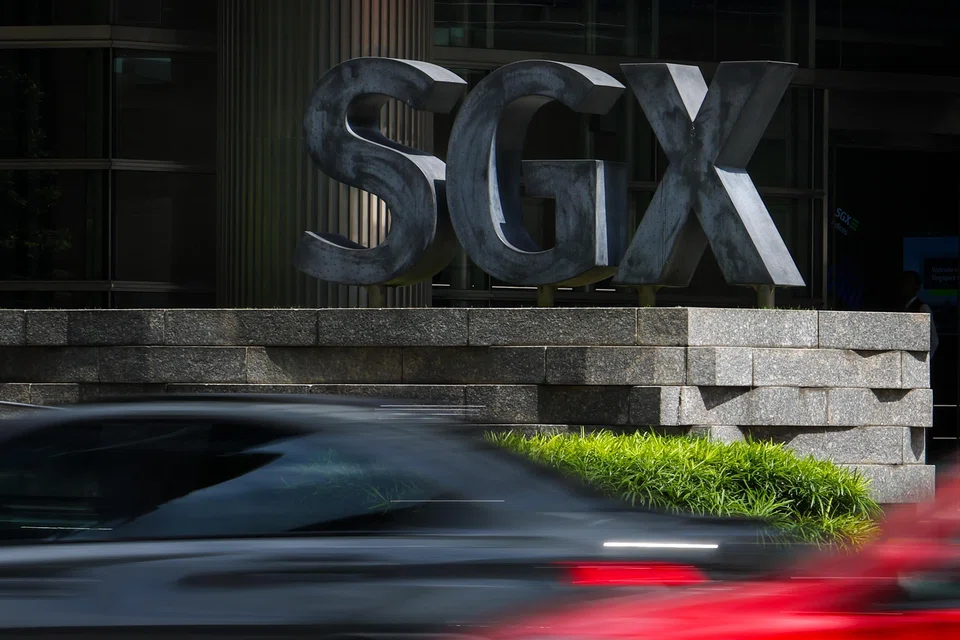
[SINGAPORE] Singapore stocks ended little changed on Tuesday (Jun 23) as a sell-off in tech stocks led to a slump in Asia markets.
The benchmark Straits Times Index (STI) ended the day at 5,205.74, up 0.03 per cent or 1.73 points.
Mapletree Pan Asia Commercial Trust led the gainers on Singapore’s blue-chip index, rising 2.4 per cent or S$0.03 to S$1.29.
The worst performer among STI constituents was Yangzijiang Shipbuilding , which declined 3.3 per cent or S$0.12 to S$3.55.
OCBC rose 0.3 per cent or S$0.07 to S$25.07, and UOB was up 1 per cent or S$0.38 at S$39.84, while DBS was unchanged at S$66.29.
Within the iEdge Singapore Next 50 Index, Keppel Infrastructure Trust was the top gainer, rising 3.8 per cent or S$0.02 to S$0.55.
Frencken Group was the index’s biggest decliner, falling 12.7 per cent or S$0.45 to S$3.09.
Across the broader market, losers outnumbered gainers 435 to 193, after 1.6 billion securities worth S$2.1 billion changed hands.
Key regional indices were negative.

Hong Kong’s Hang Seng Index lost 1.8 per cent, Japan’s Nikkei 225 fell 3.6 per cent, South Korea’s Kospi was down 10 per cent, and the FTSE Bursa Malaysia KLCI declined 1.2 per cent.
Louis Chua, equity analyst in the Asia research team at Julius Baer, has raised his target for the Nikkei 225 from 68,000 to 75,000, citing “accelerating earnings growth in Japan”.
“We view Japan as a key beneficiary of the acceleration in the global artificial intelligence infrastructure build-out and favour companies that are exposed to AI-related hardware and stocks that are leveraged to the build-out of physical AI,” he added.
This article has been written with the assistance of AI and reviewed by a reporter
Decoding Asia newsletter: your guide to navigating Asia in a new global order. Sign up here to get Decoding Asia newsletter. Delivered to your inbox. Free.
Share with us your feedback on BT's products and services
TRENDING NOW

Could stablecoins be the future of money?

Vietnam’s northern provinces, not Hanoi or Ho Chi Minh City, are powering near 10% GDP growth

The Assembly Place expands beyond co-living as it targets 10,000 keys by 2030

Once staunchly pro-China, Malaysian Chinese businesses are now distancing themselves from Beijing

