

Singapore stocks fall on Monday, tracking regional declines; STI down 0.2%
 Add BT as a preferred source
DeeperDive is a beta AI feature. Refer to full articles for the facts.
SINGAPORE shares fell on Monday (Feb 14), tracking losses across most regional markets, with investors cautious and in risk-off mode.
The benchmark Straits Times Index (STI) slipped 0.2 per cent or 7.75 points to close at 3,421.20.
Elsewhere in the region, key indices in Japan, China, Hong Kong and South Korea ended the day between 1 and 2.2 per cent lower.
Said DailyFX strategist Margaret Yang in a note: "Lingering geopolitical unrest and fears about the US Federal Reserve tightening monetary policy may continue to suppress risk assets in the near term."
She noted that investors are increasingly convinced about the possibility of a 50 basis point rate hike at the March US Fed monetary policy meeting, which is sending the US dollar higher and stocks lower.
On the local bourse, losers outnumbered gainers 318 to 167, after 1.62 billion securities worth S$1.5 billion changed hands. Just 6 of the 30 counters on the STI ended the day higher.
Navigate Asia in
a new global order
Get the insights delivered to your inbox.
Wilmar International shares were the top gainer for the day, climbing 2 per cent to close at S$4.54. Meanwhile, shares of ComfortDelGro finished at the bottom of the index performance table, after falling 2.1 per cent to close at S$1.43.
Shares of DBS were the most actively traded by value, with 5.1 million shares worth S$188.2 million changing hands, after the bank reported on Monday morning a 37 per cent year-on-year increase in fourth-quarter net profit. The counter slipped 0.1 per cent to close at S$37.20.
Decoding Asia newsletter: your guide to navigating Asia in a new global order. Sign up here to get Decoding Asia newsletter. Delivered to your inbox. Free.
Copyright SPH Media. All rights reserved.
TRENDING NOW

Autobahn Rent A Car directors declared bankrupt over S$50 million each owed to DBS

Higher costs, lower returns: Why are Singaporeans still betting on real estate?

Richard Eu on how core values, customers keep Singapore’s TCM chain Eu Yan Sang relevant
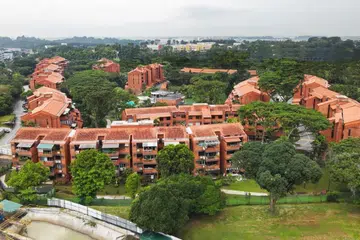
Loyang Valley sold for S$880 million to SingHaiyi-led consortium

