

South Korea: Stocks post sharpest fall in 15 months as China virus spreads
 Add BT as a preferred source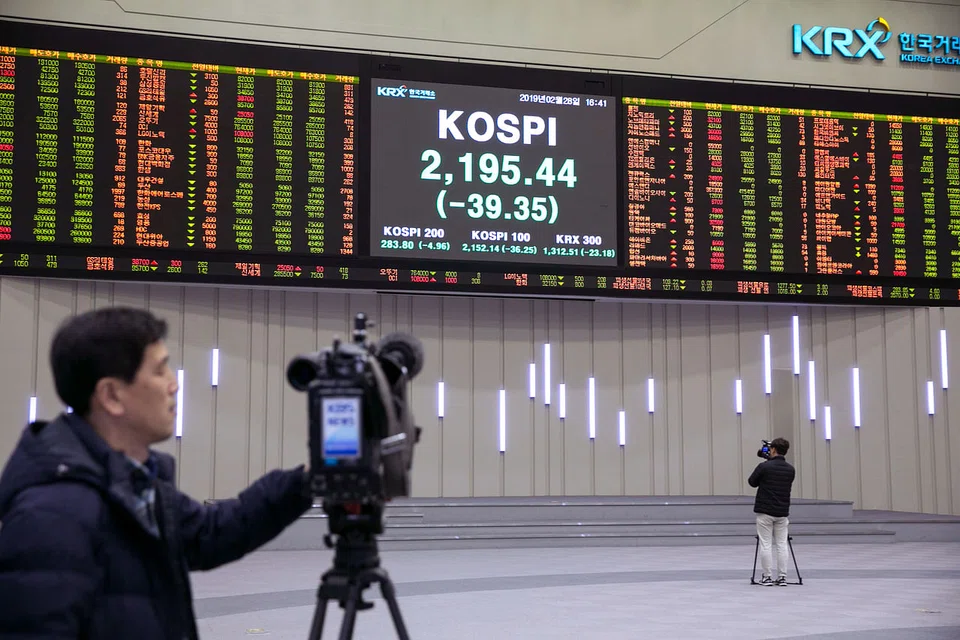
[SEOUL] South Korean shares suffered their worst session in more than 15 months on Tuesday, dragged down by mounting worries over the economic impact of the new coronavirus outbreak.
Local stocks exposed to China, the biggest buyer of South Korean goods, dominated the losses as the death toll from the virus in the world's second-largest economy climbed to 106 and some health experts questioned whether Beijing can contain the virus, which could threaten global growth.
The Seoul stock market's KOSPI index ended down 69.41 points, or 3.09 per cent, at 2,176.72, posting its sharpest one-day fall since Oct 11, 2018. The index touched its lowest since Jan 8 earlier in the session.
"South Korea's economy could take a bigger hit compared with other Asian countries due to its significant trade volume with China," said Choi Seok-won, chief of SK Securities' research centre.
He added that the market is likely to bottom out only after investors confirm that China's countermeasures are working effectively.
South Korean cosmetic makers highly dependent on Chinese tourists visiting Seoul tumbled, with Tonymoly and Able C&C losing more than 12 per cent and 15 per cent, respectively. China has discouraged its citizens from travelling abroad amid the virus outbreak.
On the other hand, mask producers, Kleannara and Monalisa were the best performers in the broader market, as they firmed 30 per cent each to hit intraday price limit.
On the main board, foreign investors offloaded US$448.25 million worth of local stocks, marking their biggest net sales since Nov 26, 2019.
The trading volume during the session in the KOSPI index was 800.05 million shares and, of the total traded issues of 909, the number of advancing shares was 82.
REUTERS
Share with us your feedback on BT's products and services
TRENDING NOW

When every phone becomes a satellite phone, what happens to Asia’s telcos?

Singapore should anchor hedge fund leaders, nurture local managers amid regional talent war: observers
How BYD disrupted Singapore’s car market – and why the strategy is turning on itself

Too little, too late? Manila’s billion-dollar bid to ignite its sputtering EV industry

