South Korean policy chief who backed leveraged ETFs steps down
The presidential office does not immediately disclose the reason or name a successor
 Add BT as a preferred source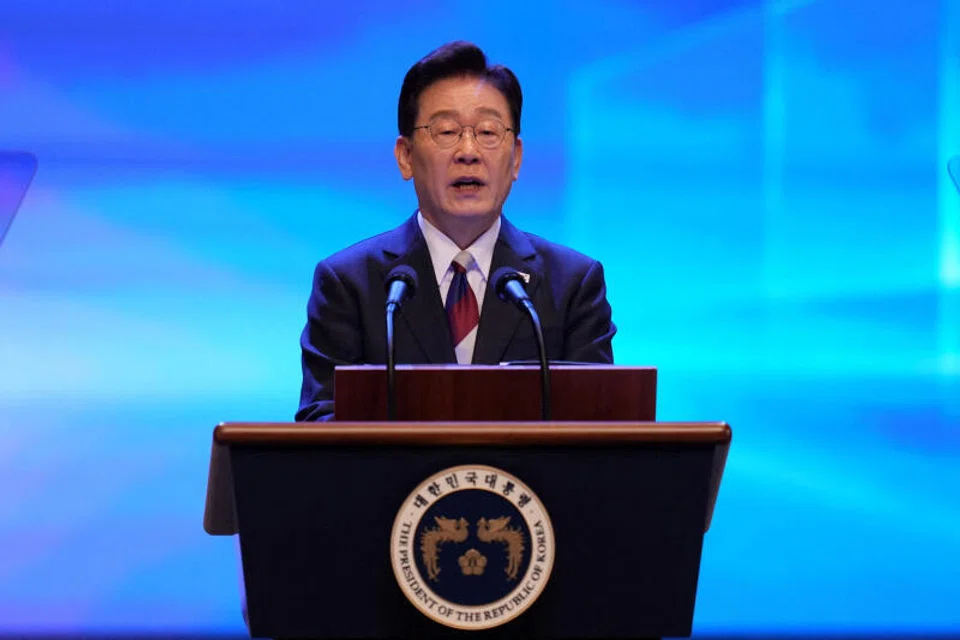
[SEOUL] Kim Yong-beom, the South Korean presidential adviser who backed the introduction of leveraged single-stock exchange-traded funds (ETFs) and floated the idea of a “citizen dividend” funded by excess tax revenue from the artificial intelligence boom, has stepped down as the government tries to shore up its sinking approval ratings.
South Korean President Lee Jae-myung accepted Kim’s resignation as his chief policy secretary on Tuesday (Sep 1), according to the presidential Blue House.
The presidential office did not immediately disclose the reason or name a successor. The position oversees the administration’s economic and domestic policy agenda.
Kim’s departure comes just days after Lee’s first major cabinet reshuffle since taking office in June 2025.
Kim had initially remained in his post even as a slew of ministers in charge of finance, land, justice and defence were replaced in an abrupt move that blindsided some of them.
“The shake-up of Cabinet ministers over the weekend failed to turn the tide,” said Park Chang-hwan, a professor of political science at Jangan University. “It would have been more effective if the dismissals were announced all at once,” Park said.
The replacements came as the Lee government prepares to unveil its 2027 Budget, putting renewed focus on whether stronger growth and fiscal support can translate into gains felt more broadly by households.
The shake-up follows a slide in his approval rating to a low of 42 per cent in the latest Gallup Korea poll.
Housing policy was the biggest source of dissatisfaction among those who disapproved of his performance, highlighting the political cost of the government’s failure so far to keep property prices within reach of younger families.
SEE ALSO




It is unclear, however, if Kim’s resignation will temper the public’s growing discontent over rising housing costs.
Kim was a key architect of many of the government’s signature policy initiatives, but also drew criticism over the rapid introduction of single-stock leveraged ETFs tied to Samsung Electronics and SK Hynix.
The products, launched in May as part of an effort to draw retail money into domestic equities, later contributed to extreme market swings and prompted regulators to tighten investor safeguards.
His suggestion for a potential citizen dividend funded by excess tax revenue from the AI boom also triggered intense public debate, and fuelled market speculation over how the government might use the windfall.
Kim said the idea involved distributing excess tax receipts rather than tapping company profits.
Kim was also a force behind the government’s mega chip investment drive aimed at capitalising on soaring demand for semiconductors.
The Lee administration is orchestrating at least 1,350 trillion won (US$880 billion) of corporate investment in chip plants and data centres across the country as it looks to position the economy as a key player in the AI revolution.
Kim’s exit leaves a major gap in Lee’s economic and policy team at a time when the administration is trying to translate the semiconductor boom into a boon for a broader spectrum of households.
The Bank of Korea expects the economy to expand 3.3 per cent in 2026 as strong global demand for chips boosts trade, corporate earnings and government revenue.
But the headline growth masks persistent weaknesses within the economy.
The country’s potential growth rate has continued to decline as its working-age population shrinks and productivity stagnates, while employment gains have been subdued and the benefits of the chip boom remain concentrated among a relatively small group of companies and workers. BLOOMBERG
Decoding Asia newsletter: your guide to navigating Asia in a new global order. Sign up here to get Decoding Asia newsletter. Delivered to your inbox. Free.
Share with us your feedback on BT's products and services