

South Korea’s Kospi stock benchmark tops 5,000 for first time
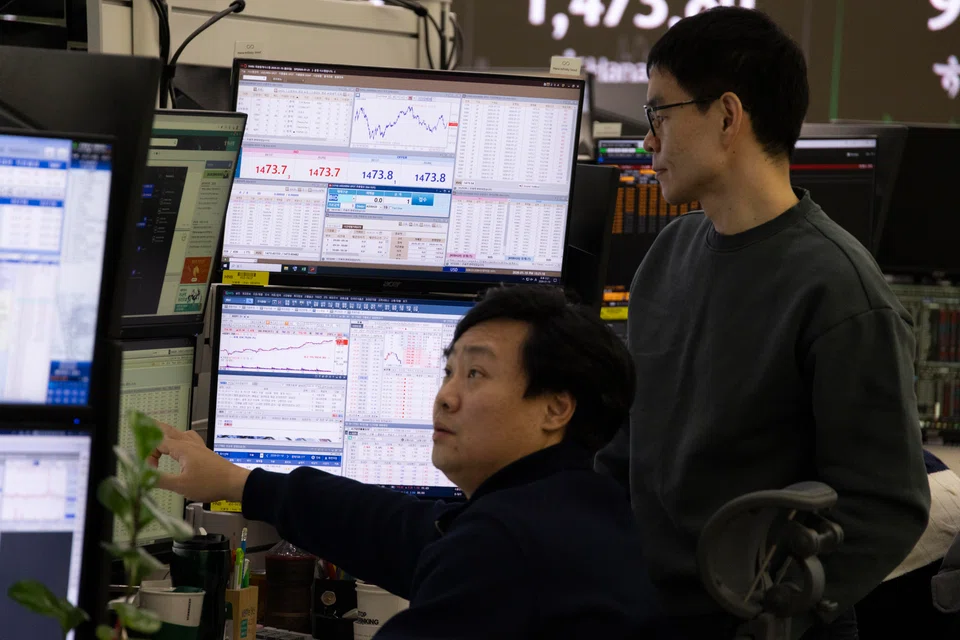
[SEOUL] South Korea’s stock benchmark topped 5,000 points for the first time on Thursday, powered by gains in chipmakers like Samsung Electronics and SK Hynix, reaching a level promised by President Lee Jae Myung in just over six months since he took office.
The benchmark Kospi rose 2.08 per cent to 5,009.4 as of 0009 GMT, marking its highest level on record.
The index has risen 19 per cent so far this month, after emerging as the world’s best performer in 2025 with a 76 per cent jump - its biggest annual gain since 1999 - on a chip rally fueled by artificial intelligence optimism and various capital market reforms.
The breach of the 5,000 mark also follows US President Donald Trump backing away from his threat to slap new tariffs on European nations, easing market volatility and extending a rally in Korea’s world-beating index.
Chipmaker Samsung Electronics rose 4.15 per cent and SK Hynix gained 3.65 per cent on Thursday, hitting record highs.
Hyundai Motor, up 4.6 per cent and also trading at a record, has also been rallying this month as investors cheered its newly-unveiled humanoid robot technologies.
“The bullish market trend this time is a fundamentals-driven one based on earnings growth, which makes the Kospi still cheap,” said Kim Jae Seung, an analyst at Hyundai Motor Securities.
Under his “KOSPI 5,000” initiative, President Lee has introduced a series of market reforms and tax measures aimed at boosting the domestic stock market and resolving the so-called “Korea Discount”, since he took office in June 2025.
The Korea Discount refers to a tendency for domestic stocks to trade at lower valuations compared with global peers, due to factors such as opaque corporate governance structures and low dividend payouts.


The Lee administration last year revised the Commercial Act to better protect shareholder interests and plans to make share repurchases and cancellations a requirement for listed companies to boost shareholder value.
The government also aims to win developed-market status for the domestic stock market from global index provider Morgan Stanley Capital International (MSCI), with further loosening of foreign exchange restrictions planned for this year to improve foreign access. REUTERS
Decoding Asia newsletter: your guide to navigating Asia in a new global order. Sign up here to get Decoding Asia newsletter. Delivered to your inbox. Free.
Share with us your feedback on BT's products and services
TRENDING NOW

Once staunchly pro-China, Malaysian Chinese businesses are now distancing themselves from Beijing

Looking beyond looming CEO succession, should UOB potentially pursue a transformative merger?

Could stablecoins be the future of money?

Grab CEO’s wife Chloe Tong on life with Anthony Tan and finding her purpose

