Suntec Reit’s Q1 DPU falls 27.4% on higher financing costs
Raphael Lim &
Wu Xinyi
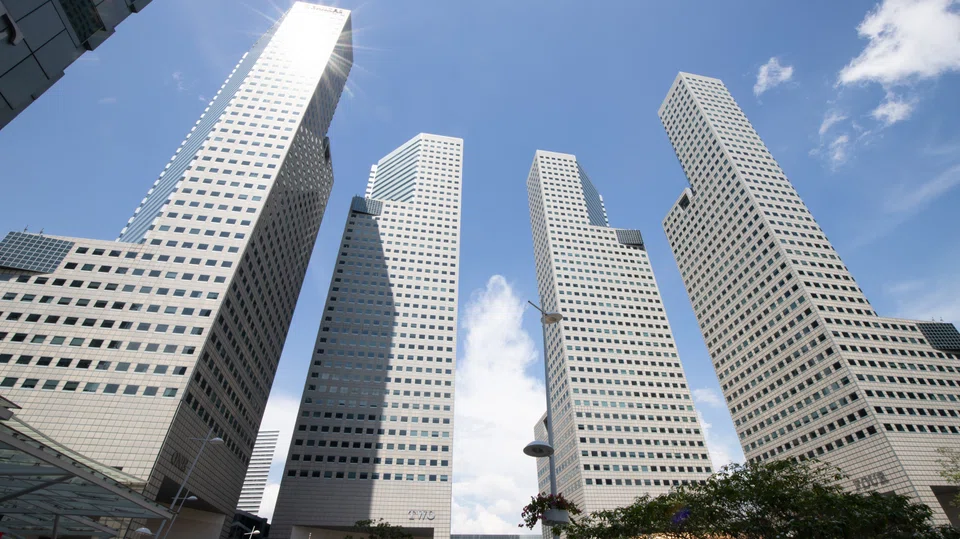
SUNTEC Real Estate Investment Trust (Reit) recorded a 27.4 per cent decline in distribution per unit (DPU) to S$0.01737 for the first quarter of 2023, from S$0.02391 in the same period a year ago.
This comes despite a 9.6 per cent year-on-year rise in gross revenue to S$108.7 million in Q1 2023 and net property income climbing 2.7 per cent on year to S$76.3 million.
While the Reit’s operational performance held steady due to higher revenue from Suntec City Office, Suntec City Mall and Suntec Convention, its gains were eroded by higher financing costs, the manager reported on Wednesday (Apr 26).
Distributable income fell by 26.8 per cent year on year to S$50.3 million for Q1 2023, from S$68.7 million previously. The decline in DPU and distributable income was also attributed to the weaker Australian dollar and British pound against the Singapore dollar, which affected the Reit’s portfolio in Australia and the UK.
The DPU for Q1 FY23 comprised S$0.01538 DPU from operations and S$0.00199 DPU from capital distribution.
“Our objective is to always try our best to give unitholders stable returns, even in a down market,” said chief executive of the manager Chong Kee Hiong during a briefing with media and analysts. He noted they also took into consideration that interest rates may stabilise earlier than expected. “We will complete the distribution of this remaining capital distribution this year, so it will be around S$5.75 million each quarter,” he added.
The distribution will be paid on May 30, after the record date of May 5.
During the first quarter, Suntec Reit reported higher gross revenue and net property income for its Singapore office portfolio following higher occupancy and rent at Suntec City office. However, joint-venture income for its Singapore office portfolio fell 26 per cent to S$15.1 million on higher interest expense at One Raffles Quay and a bank loan taken for Marina Bay Financial Centre.
The Singapore office portfolio has recorded 19 quarters of positive rent reversion, with rent reversion in Q1 2023 coming in at 11.2 per cent. But the Reit manager also noted that office demand is expected to slow down amid macroeconomic uncertainties, even though it still expects rent reversion to remain positive.
For the retail portfolio in Singapore, Suntec Reit reported higher occupancy and rent at Suntec City Mall. Suntec Convention also saw revenue more than double to S$9.2 million, with higher revenue from corporate events, conferences and long-term licences.
Chong noted that big events drive profits for the convention segment. He said: “I think second half you will see more of it, but I think the full recovery is still 2024.”
Suntec Reit’s manager said that financing costs are expected to remain high for the year, which would impact distribution for the year.
As at end-March 2023, net asset value (NAV) per unit stood at S$2.09, down from S$2.12 as at end-2022.
The Reit’s aggregate leverage ratio stood at 42.8 per cent as at Mar 31, up from 42.4 per cent in Dec 2022, rising closer to the 45 per cent regulatory threshold. Meanwhile, its adjusted interest coverage ratio (ICR) fell to 2.2 times from 2.4 times over the same period.
Chong noted that interest rates are more stable than three months ago. The Reit manager’s sensitivity tests show that overseas assets capitalisation rates rising by 100 basis points would result in a S$600 million drop in valuation, and could cause the Reit to reach the 45 per cent gearing threshold.
“But that’s a huge drop, so I honestly don’t think it will happen,” he said, adding that they are watchful of this trend.
The Reit manager also explained that if capitalisation rates adjust by 10 basis points in the Singapore portfolio, their sensitivity analysis shows that overseas capitalisation rates would need to increase by 50 basis points before they reach the gearing threshold.
Analysts also queried whether the manager would consider an equity fundraise if its gearing reaches the threshold.
“We will cross the bridge when we come to it,” Chong said. “Whatever action we take must be beneficial to unitholders in the short and medium term so we are very mindful of that.”
He noted that divestment of mature assets is the best way forward for unitholders. Chong shared that they are looking at potential divestment of mature assets in Australia and strata units in Suntec office towers. “Progress is, of course, a bit slower than normal times, but I believe when interest rates show some stability, that’s when transactions will come back to the market.”
Citi analyst Brandon Lee said that higher financing cost across both Suntec Reit’s subsidiary and joint-venture properties, as well as weaker overseas currency, exerted a noticeable drag on profitability.
“While we appreciate management’s proactive efforts to divest its mature properties (its preference over equity fundraising), we believe it may need to take a haircut on expected selling prices given challenging capital and transaction markets environment,” he said. Lee added: “Until high gearing of 42.8 per cent and low ICR of 2.2x are improved upon, we see a cap on share price performance despite the steep NAV discount of 31 per cent.”
Units of Suntec Reit fell 2.1 per cent or S$0.03 to close at S$1.40 on Wednesday.