Swiss franc at nine-year high as greenback weakens ahead of inflation data
 Add BT as a preferred source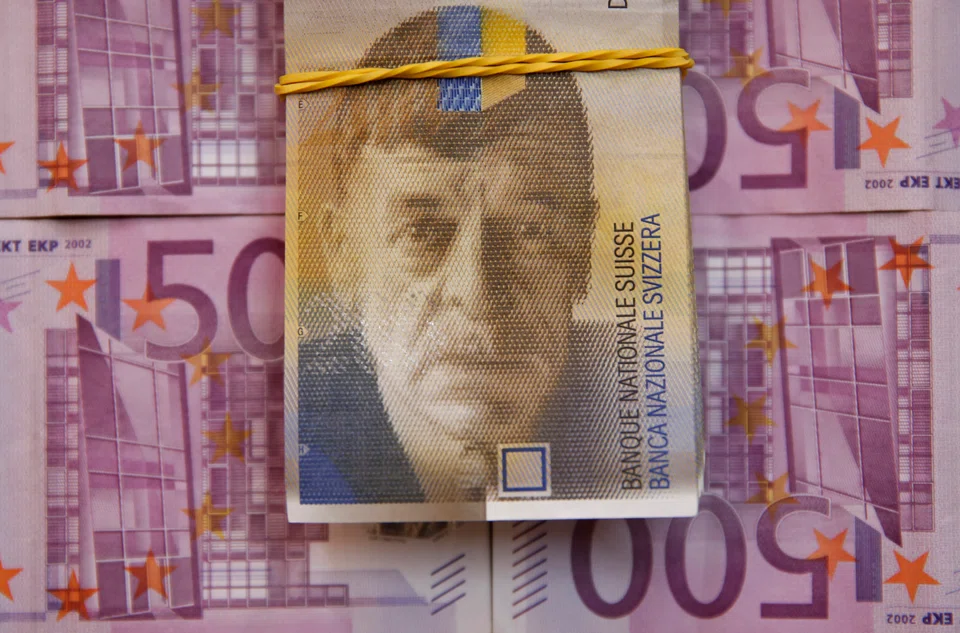
DeeperDive is a beta AI feature. Refer to full articles for the facts.
THE Swiss franc hit its strongest level against the US dollar in nearly nine years on Friday (Dec 22), and the euro reached a four-month high as the greenback stayed under pressure ahead of the release of a key US inflation gauge later in the day.
The US dollar has been softening in recent months as data shows US inflation is slowing and traders ramp up bets of how much the Federal Reserve will be cutting interest rates in 2024.
The US dollar index, which tracks the US unit against a basket of currencies is down 4.3 per cent in the three months since the start of October, which would be its biggest quarterly drop this year.
Among the beneficiaries of the US dollar’s weakness have been the euro, which on Friday rose 0.12 per cent to US$1.1024, its highest since mid-August, and the Australian dollar which squeezed up a fraction on the day to US$0.6807, its highest since late July.
The Swiss franc firmed with the US dollar down as much as 0.3 per cent to 0.85355 francs, falling below the trough from July this year, and taking it to its weakest since January 2015. That was when the Swiss National Bank sparked significant volatility by discontinuing its policy of having a minimum exchange rate against the euro.
The last major data before Christmas is due later in the day, the US core personal consumption expenditures (PCE) print – the Fed’s preferred measure of underlying inflation. Expectations are for the core measure to have risen 3.3 per cent on an annual basis, compared to October’s 3.5 per cent increase.
Navigate Asia in
a new global order
Get the insights delivered to your inbox.
“The distribution for US inflation is now considered skewed and one-sided, with a high probability of lower levels,” said Chris Weston, head of research at Pepperstone.
“Hence, the Fed has increased scope to ease policy should the need arise, and while Fed officials are saying their work is not done, and the last push to get to its 2 per cent inflation target is the hardest part, they can front-load cuts far more efficiently when core PCE is at 3.5 per cent and falling.”
Sterling gained 0.37 per cent to US$1.27375 as traders digested data that showed British retail sales in November jumped by much more than expected, but third-quarter GDP was revised lower.



In Asia, the yen last stood a touch stronger at 141.93 per US dollar, little moved by Friday’s data that showed Japan’s core consumer prices rose 2.5 per cent in November from a year earlier, marking the slowest pace of increase in over a year and taking pressure off the Bank of Japan (BOJ) to phase out its massive stimulus.
The Japanese currency looked set to end the week largely unchanged, after the BOJ had, earlier this week, maintained its ultra-loose policy settings and offered few hints on when it could move away from negative interest rates. REUTERS
Decoding Asia newsletter: your guide to navigating Asia in a new global order. Sign up here to get Decoding Asia newsletter. Delivered to your inbox. Free.
Share with us your feedback on BT's products and services