US bonds’ midterm election rally skids to halt after strong jobs data
Treasury market’s tolerance for the robust jobs report suggests it is ‘applying a new lens’ to economic data after the election
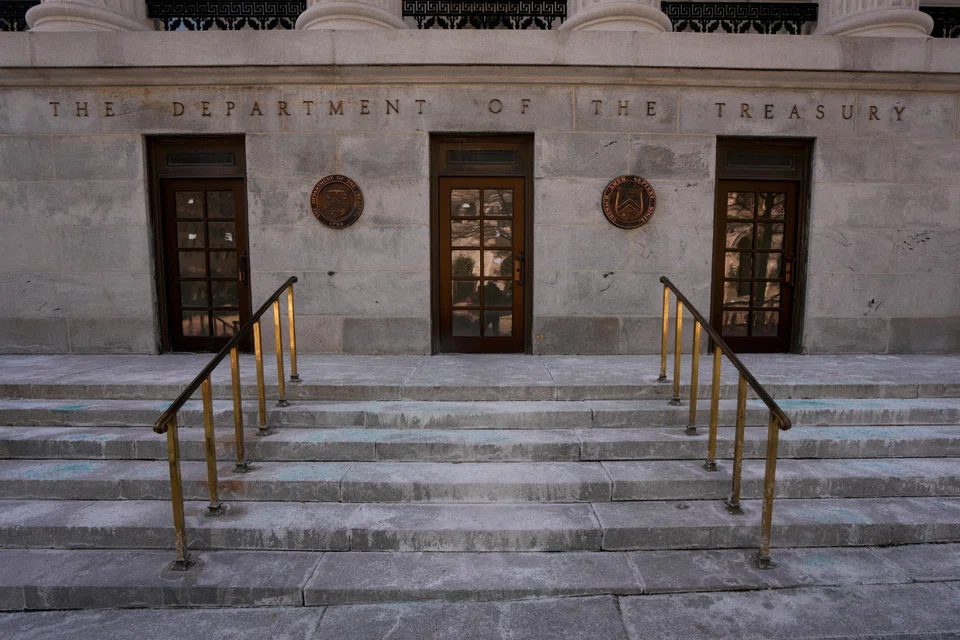
[WASHINGTON] The US Treasury market pared a steep weekly advance after strong October employment data revived wagers on a Federal Reserve interest-rate hike in December.
The US midterm elections on Tuesday (Nov 3) sparked declines for shares of large US technology companies and oil prices that fuelled gains for US government bonds, sending yields to the lowest levels since early September.
That move stalled on Friday, as the stock market stabilised and the jobs data further challenged forecasts of an economic slowdown.
The bond market’s initial reaction to the data faded over the course of the day, however, leaving the weekly advance mostly intact. Only short-term yields – more sensitive to the outlook for the Fed’s rate path – remained firmly higher as traders priced in slightly higher chances that the next decision on Dec 9 will be a quarter-point hike.
The Treasury market’s tolerance for the robust jobs report suggests it is “applying a new lens” to economic data after the election, which flipped control of Congress, said George Goncalves, head of US macro strategy at MUFG.
“We are heading into a mixed government that could see growth constrained, from fiscal gridlock and less (artificial intelligence) spending.”

The Democratic sweep of Congress in Tuesday’s US midterm elections escalated concerns around the sustainability of capital spending on artificial-intelligence infrastructure, and investors flocked to bonds as the Nasdaq 100 index fell 6.4 per cent on Thursday in its biggest daily drop since March 2020.
The resulting demand for Treasuries – extending a rotation from stocks to bonds that began a month ago – sent the two-year yield below 4.5 per cent and the 10-year toward 4.8 per cent, the lowest levels since early September.
On Friday, the two-year rose as much as nine basis points to 4.55 per cent before retreating to around 4.51 per cent. The Nasdaq 100 index was up 1.7 per cent after gaining as much as 2.6 per cent.


The strong jobs data “is a reminder that AI is not the economy,” said Florian Ielpo, head of macro at Lombard Odier Investment Managers. “This report once again confirms the economic strength highlighted by the Fed and all but seals the case for a December rate hike.”
San Francisco Fed president Mary Daly, who will be a voting member of the Fed’s rate-setting body in 2027, speaking after the employment data on Friday said a solid job market gives the Fed latitude to raise rates further. The US central bank raised rates in September for the first time since 2023 in a strike against inflation that continues to exceed its 2 per cent target.
Policymakers also are mindful of the risk that the AI investment boom will contribute to higher inflation in the near-term, St Louis Fed president Alberto Musalem said on Friday. Musalem is slated to vote on policy in 2028.
The jobs data led to a marginal increase in market-implied expectations for further rate increases by the US central bank. Swap contracts linked to future Fed moves priced in about 20 basis points of tightening for the next decision on Dec 9, up from about 17 basis points on Thursday and about 19 basis points before the jobs data.
Contracts expiring in mid-2027 priced in about 46 basis points of tightening versus 44 basis points before the jobs data and 38 basis points on Thursday. The employment report showed the US added 165,000 jobs in October, exceeding all estimates in a Bloomberg survey. Wage growth unexpectedly accelerated and the unemployment rate, seen holding steady, declined to 4.1 per cent.
“The economy is still functioning well at higher yields and today’s job number proves it,” said Tim Musial, head of fixed income for CIBC Private Wealth.
Ahead of the jobs data – which also included upward revisions to August and September job creation – bond investors had indicated they were prepared to buy Treasuries in the event that the data sparked a rise in yields because strong jobs data favouring Fed rate hikes could lead to fresh weakness in stocks.
“If risk markets start to view strong data as bad news with expectations for higher rates, this could dampen some of the move higher in rates as flight to quality comes back into play,” said Molly Brooks, US rates strategist at TD Securities.
The Fed raised rates in September after an oil price surge caused by the US war on Iran kept inflation elevated, while the AI investment boom buoyed US stocks. Expectations for further hikes subsequently dwindled, particularly after the central bank stood pat in October, saying economic conditions permitted waiting for additional data to guide its next decision.
That decision will take into account not only October consumer price index data to be released next week, but also November employment data on Dec 4.
This week’s slump in crude oil prices to the lowest levels in two months – driven in part by the prospect that the election results will bring about a swifter end to the Iran war – has spurred a collapse in market-implied inflation expectations.
The breakeven rate for five-year Treasury Inflation-Protected Securities, or TIPS – representing the average CPI rate needed to match the return from higher-yielding regular Treasuries – declined to about 2.3 per cent this week from 2.5 per cent at the end of last week.
Meanwhile, Friday’s price action lifted the expected yield for the first of next week’s three auctions of longer-term Treasury debt. Monday’s US$58 billion auction of three-year notes was indicated around 4.59 per cent. October’s three-year note auction drew 4.932 per cent, the highest result since 2006. BLOOMBERG
Decoding Asia newsletter: your guide to navigating Asia in a new global order. Sign up here to get Decoding Asia newsletter. Delivered to your inbox. Free.
Share with us your feedback on BT's products and services