

US considers tapping oil under military bases to refill reserve
The reserve is poised to reach its lowest level since 1982
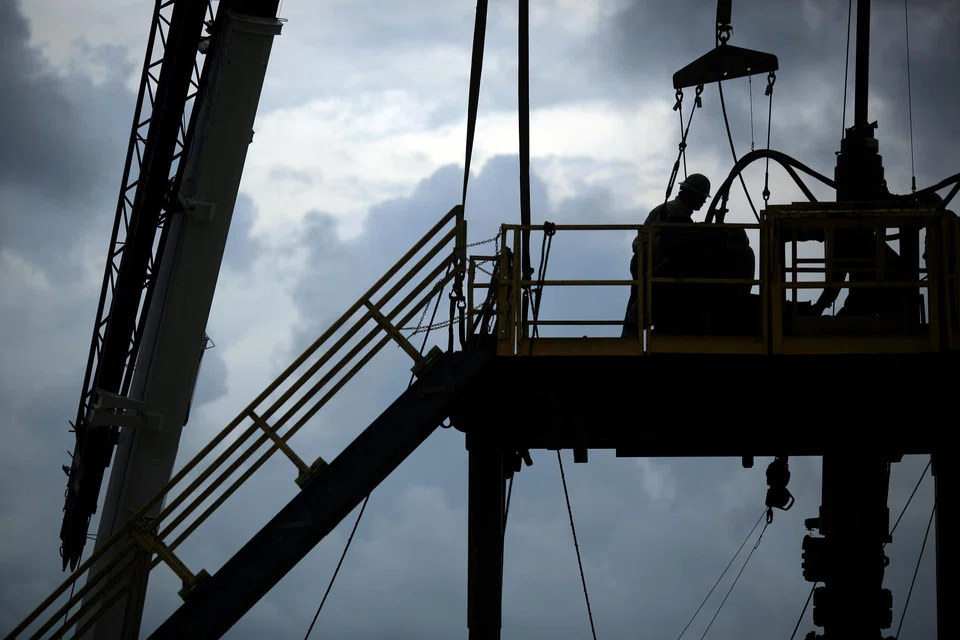
[WASHINGTON] The Trump administration is studying using oil under land at US military bases and other Department of War sites to help refill the nation’s depleted emergency reserves, according to a source familiar with the matter.
No decision has been made on the possible initiative, said the source who asked not to be named, discussing private information. The move comes as the administration has vowed to find innovative ways to refill the Strategic Petroleum Reserve, which has seen additional declines during the Iran war.
The Energy Department did not respond to a request for comment.
The reserve, created in the aftermath of the Arab oil embargo in the 1970s, is poised to reach its lowest level since 1982. The Biden administration oversaw a historic drawdown meant to tame skyrocketing petrol prices after Russia’s invasion of Ukraine, and reserves declined further after US President Donald Trump ordered a 172-million-barrel release to help ease soaring energy prices in the face of the conflict with Iran.
The near closure of the Strait of Hormuz has sparked a global fuel crunch, and consumers are getting saddled with soaring prices. US retail prices for petrol this week topped US$4.50 a gallon for the first time since July 2022, extending their march higher just as Americans prepare for the busy summer travel season.
A project to drill under military bases is unlikely to have any immediate impact on energy prices, but it could allow the US government to outright own the oil produced and not need to make purchases from private producers to replenish inventories. The Biden administration had begun slowly refilling the emergency cache, but ran out of funding to buy more crude. The Trump administration has said that it considers refilling the reserves a national security issue.
Energy Secretary Chris Wright alluded to the possible initiative at a forum last month, saying the administration planned “to do pragmatic things” with energy resources under federal control and that “creative ways” were needed to refill the reserve.
“We have military bases or facilities that are in the middle of oil fields, but there is no development under those resources – that’s crazy. It’s right there,” Wright said at an event held by The Wall Street Journal. “We will see some creative things.”
It was not immediately clear what Department of War sites were under consideration. In September 2025, the Trump administration sold the rights to drill for oil and gas under nearly 2,000 acres of land on Barksdale Air Force Base in Louisiana, one of two US airforce bases that host B-52 bombers.
Though it’s not very common, drilling at military bases would not be entirely novel. Oil and gas leasing has been allowed for decades at Barksdale.
In all, some 29.4 billion barrels of technically recoverable oil, along with 391 trillion cubic feet of natural gas, exist under federal lands, including property owned by the Department of Defense, the Interior Department and other agencies, according to a 2025 analysis by the US Geological Survey.
Trump, who has bashed former president Joe Biden for draining the reserve, vowed on his first day in office to refill the massive oil cache “right to the top”. But Congress has been reluctant to furnish the billions of dollars needed to do so.
The Energy Department has said that because their most recent 172 million barrel release was structured as an exchange – essentially a loan that companies must eventually return with interest – they will refill the reserve with approximately 200 barrels, or 20 per cent more than what was released, within the next year. BLOOMBERG
Decoding Asia newsletter: your guide to navigating Asia in a new global order. Sign up here to get Decoding Asia newsletter. Delivered to your inbox. Free.
Share with us your feedback on BT's products and services
TRENDING NOW
8 public officers referred to police over property buys near unannounced MRT stations: Chan Chun Sing

Grab CEO’s wife Chloe Tong on life with Anthony Tan and finding her purpose
Retrenched PMETs who return on lower pay see median 25% wage cut

Hao Mart owner resisting OG’s mortgage foreclosure on his Tanglin GCB

