

US dollar pares losses as consumer prices rise in November
 Add BT as a preferred source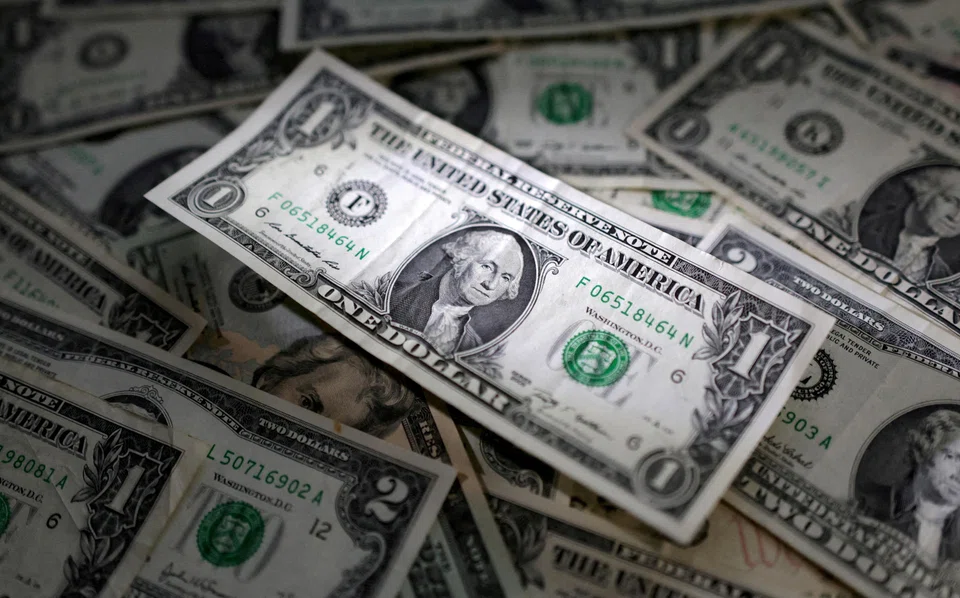
DeeperDive is a beta AI feature. Refer to full articles for the facts.
THE US dollar pared losses on Tuesday (Dec 12) in choppy trading that initially saw it move lower, after data showed that US consumer price inflation rose 0.1 per cent in November, above economists’ expectations of no change during the month. Headline prices gained at an annual pace of 3.1 per cent, in line with expectations.
The US dollar was last down 0.14 per cent on the day against a basket of currencies at 103.9. It got as low as 103.48 immediately after the data, before bouncing. The euro was last up 0.18 per cent at US$1.0783. It was around US$1.0809 before the data.
The greenback dipped 0.4 per cent to 145.61 Japanese yen, after earlier getting as low as 144.75. The pair has had a volatile few days, with the yen surging on remarks taken as hawkish from the Bank of Japan before falling back on a news report playing down the prospect of an imminent policy change.
“There is talk of a pivot by the Bank of Japan to higher rates and there is some speculation it could come as soon as next week,” said ANZ economist Tom Kenny.
“A hike now seems premature with a backdrop of weak consumer spending,” he added, though trends in inflation and wages suggest sustainable inflation and ANZ anticipates Japan starting its journey out of super-accommodative negative rates by April 2024.
Sterling gained 0.04 per cent to US$1.2559. Investors in sterling were digesting data that showed British wage growth slowed by the most in almost two years, though pay is probably still rising too fast for the Bank of England (BOE) to relax its tough stance against cutting interest rates.
Navigate Asia in
a new global order
Get the insights delivered to your inbox.
Markets are pricing in substantial rate cuts from central banks next year, and see a roughly 50 per cent chance that the first Federal Reserve rate cut will come as soon as March, according to the CME’s FedWatch tool.Officials at the Fed, the BOE and the European Central Bank (ECB) at least publicly continue to talk about an extended rate plateau however.
Later in the week, the ECB, BOE, Norges Bank and the Swiss National Bank (SNB) will meet, with Norway considered the only one to possibly hike rates. There is also a risk that the SNB could dial back its support for the franc in FX markets. The Swiss franc made an almost nine-year high on the euro last week and was trading steady on Tuesday at 0.9451 francs to the common currency.
Decoding Asia newsletter: your guide to navigating Asia in a new global order. Sign up here to get Decoding Asia newsletter. Delivered to your inbox. Free.
Copyright SPH Media. All rights reserved.
TRENDING NOW

China pips the US if Asean is forced to choose, but analysts warn against reading it like a sports result

Beijing’s calculated silence on the Iran war

Shelving S$5 billion office redevelopment plan proved ‘wise’ as geopolitical risks mount: OCBC chairman

Vietnam formalises new state leadership, redefining ‘four pillars’ power balance

