

US dollar perks up after sharp losses, but downtrend still intact
 Add BT as a preferred source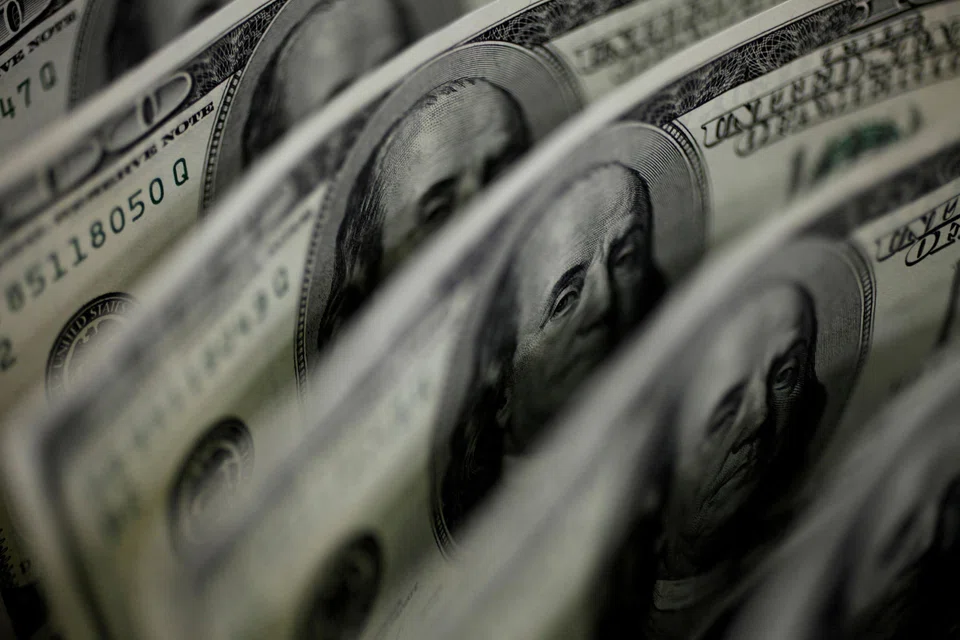
DeeperDive is a beta AI feature. Refer to full articles for the facts.
THE US dollar recovered modestly on Friday (Jul 14) after falling sharply the last few days, as investors consolidated losses ahead of the weekend. But its trajectory remained tilted to the downside with the Federal Reserve near the end of its rate hike cycle amid softening inflation.
The greenback, however, was on track for its biggest weekly decline since November against a basket of six major currencies.
The dollar index edged 0.1 per cent higher at 99.869, after touching a 15-month low of 99.574 earlier. The index was down 2.3 per cent for the week, its biggest weekly decline in eight months.
US producer prices barely rose in June and the annual increase in producer inflation was the smallest in nearly three years, data showed on Thursday, a day after data showed consumer prices rose modestly last month.
“The embattled dollar is catching a breather after enduring its worst week of the year,” said Joe Manimbo, senior market analyst, at Convera in Washington.
“While expectations the Fed is all but done hiking won’t help the buck, the market is now waiting on the central bank’s July meeting to see if officials abandon their tightening bias,” he added.
Navigate Asia in
a new global order
Get the insights delivered to your inbox.
Markets are still pricing in a 95 per cent chance of a 25-basis-point hike from the Fed later this month, CME’s FedWatch tool showed, but no more for the rest of the year.
Investors have been betting on a turn lower in the dollar for months, with short positions more than doubling over the month to Jul 7, showed data from the Commodity Futures Trading Commission, although they remain far off the levels in 2021.
US central bank officials, however, remain cautious, with Fed governor Christopher Waller saying he is not ready to call an all-clear on US inflation and favours more rate rises this year.

Against a weakening dollar, the euro touched a fresh 16-month peak of US$1.1243 in Asian hours before flattening at US$1.1233.
The euro “has taken off on the back of US disinflationary bets and a large unwinding of dollar positions”, said Francesco Pesole, FX strategist at ING.
“Our short-term fair value model shows that the pair (euro/dollar) has now entered overvaluation territory.”
Against the Swiss franc, the dollar gained 0.3 per cent to 0.8611 francs, rising from an eight-year low of 0.8568. The dollar was on pace for its largest weekly percentage loss versus the franc since December last year.
The Swedish krona fell 0.5 per cent against the greenback to 10.2395 per dollar, moving away from a two-month high hit versus the US unit on Thursday, on data showing consumer prices in Sweden were decelerating at a slower pace than expected. The Swedish currency is still set for its biggest weekly gain since March 2009, up 5.2 per cent.
Elsewhere, the Australian dollar eased 0.5 per cent against its US counterpart to US$0.6856 after Michele Bullock was appointed head of Australia’s central bank on Friday, becoming its first female governor as it undertakes a sweeping reorganisation.
Against the Japanese yen, the dollar rose 0.6 per cent to 138.84, but was on course for its worst week since January. REUTERS
Decoding Asia newsletter: your guide to navigating Asia in a new global order. Sign up here to get Decoding Asia newsletter. Delivered to your inbox. Free.
Share with us your feedback on BT's products and services
TRENDING NOW

Shelving S$5 billion office redevelopment plan proved ‘wise’ as geopolitical risks mount: OCBC chairman

Why where you park your joint venture matters: Lessons from a US$689 million shareholder dispute

China pips the US if Asean is forced to choose, but analysts warn against reading it like a sports result
Singaporeans can now buy record amount of yen per Singdollar

