

US dollar stays buoyant hovering at 3-week high
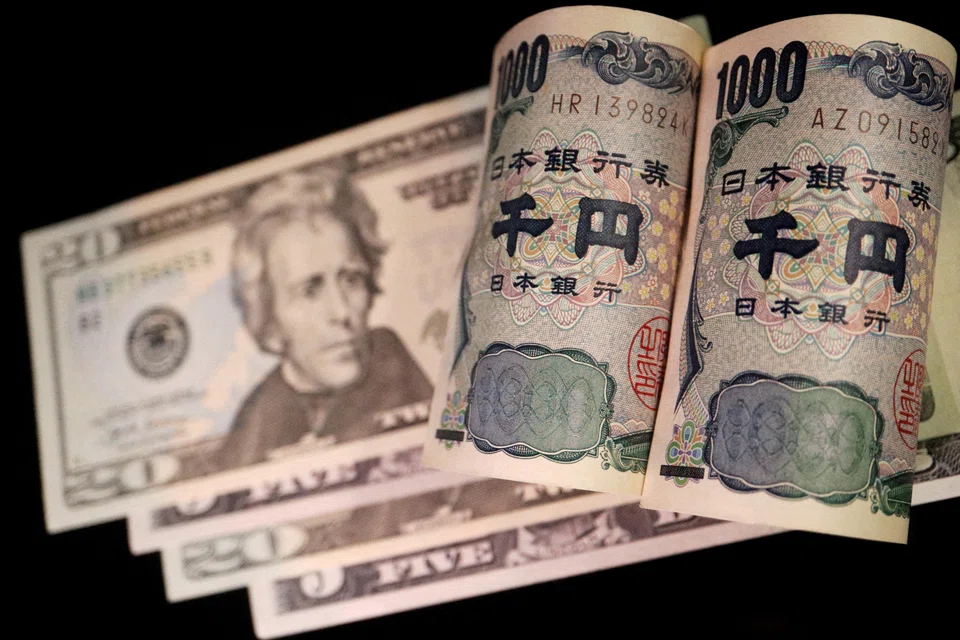
THE greenback was buoyant on Thursday (Oct 26), hovering at a near three-week high as Treasury yields rose and appetite for riskier currencies dimmed.
The US dollar index held on to gains after US GDP grew at its fastest pace in nearly two years in the third quarter. The index was up 0.18 per cent to 106.71.
The Japanese yen hit a fresh one-year low of 150.78 per US dollar and was not far off the 32-year low of 151.94 it touched in October last year, which led to Japanese authorities intervening in the currency market.
It briefly strengthened sharply to 149.865 before rebounding to its current level at 150.37, but analysts said this was unlikely to be intervention.
“The move was less than one big figure. That tells me it wasn’t intervention,” said Niels Christensen, chief analyst at Nordea.
“If it had been intervention, we would have seen a bigger move,” Christensen added.
Japanese Finance Minister Shunichi Suzuki earlier warned traders against selling the yen again, saying authorities were closely watching moves. He made no direct comment about the potential for intervention.
A recent surge in global interest rates is heightening pressure on the Bank of Japan (BOJ) to change its bond yield control next week. A hike to an existing yield cap set three months ago was being discussed as a possibility, sources told Reuters.
Japan’s low yields have made the currency an easy target for short-sellers and funding trades, with the widening gap in interest rates between Japan and the US leading to persistent weakness in the yen.

The yen has fallen over 20 per cent since the US Federal Reserve began rapidly raising rates to combat inflation in March 2022, while the BOJ remains an outlier among central banks and has stuck to its ultra loose monetary policy.
Benchmark US 10-year Treasury yields inched higher, resuming a move towards a 16-year peak above 5.0 per cent briefly breached on Monday. The 10-year yield was at 4.968 per cent on Thursday.
The euro extended its losses against the US dollar following the European Central Bank decision to hold interest rates.
The euro was down 0.3 per cent at US$1.0534.
Sterling was last at US$1.2081, down 0.2 per cent on the day, having touched a three-week low of US$1.2070 earlier in the session.
Against a basket of currencies, the US dollar was 0.3 per cent higher at 106.83 after touching a near three-week peak of 106.88.
The Australian dollar slid to a one-year low of US$0.6271 and was last down 0.1 per cent at US$0.6302.
A surprisingly high reading for inflation on Wednesday stoked expectations of a further hike in interest rates.
The head of Australia’s central bank on Thursday said the strong third-quarter inflation report was around policymakers’ expectations, and they were still considering whether it would warrant a rate rise.
The New Zealand dollar touched a near one-year low of US$0.5774 and was last unchanged at US$0.5802.
The Canadian dollar fell 0.1 per cent versus the greenback to 1.3811 per US dollar after the Bank of Canada on Wednesday held its key overnight rate at 5.0 per cent as expected but left the door open to more rate hikes to tame inflation.
In cryptocurrencies, bitcoin last fell 1 per cent to US$34,155. The world’s largest cryptocurrency has surged 14 per cent this week on speculation that an exchange-traded bitcoin fund is imminent. REUTERS
Decoding Asia newsletter: your guide to navigating Asia in a new global order. Sign up here to get Decoding Asia newsletter. Delivered to your inbox. Free.
Share with us your feedback on BT's products and services
TRENDING NOW

Singapore identifies 7 firms responsible for haze fires, notices issued urging action: Grace Fu

‘How many will survive?’: Bubble fears arise as China’s humanoid robotics face reality check

GIC-backed Bank Jago sees wealth management as next growth engine as Indonesian investor base grows

Ageing in Asia: Huge potential for the consumer economy

