

US dollar surges in September, leaving euro lagging
Key drivers for the common currency will be expectations for Fed and ECB policy
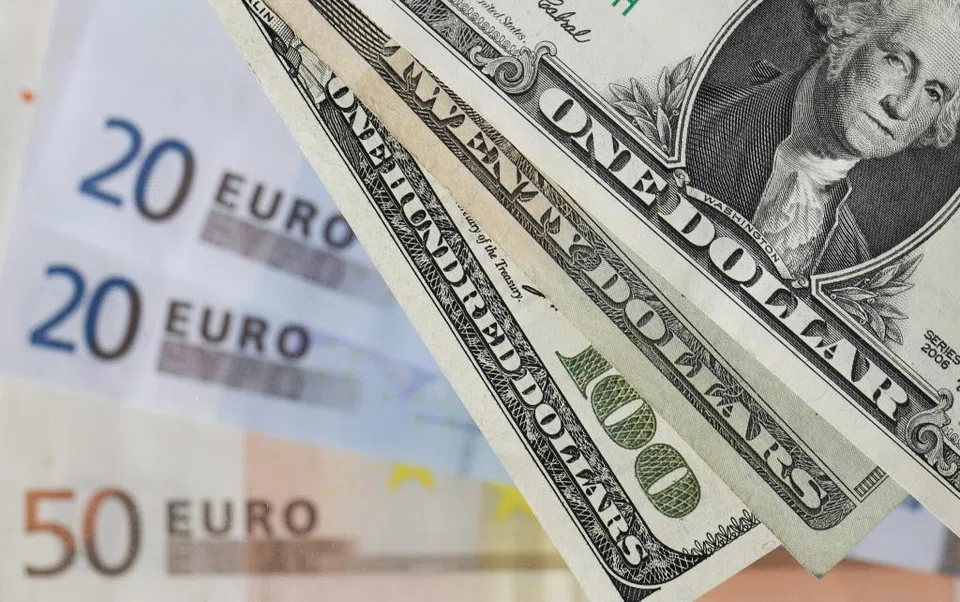
[LONDON] The US dollar hovered near its highest level of the year against the euro on Wednesday (Sep 30) and was on track for its biggest monthly gain versus the single currency in 14 months, buoyed by stronger US growth and rising interest-rate expectations.
The euro has been one of the worst-performing major currencies this year, pressured by Europe’s energy and debt worries. In September, the greenback has gained nearly 2.2 per cent against the euro, putting it on course for a third consecutive quarterly advance.
A run of data pointing to a resilient US economy and persistent inflation prompted the Federal Reserve to raise interest rates in September for the first time in three years. Traders subsequently priced in a more aggressive path for US monetary policy relative to the eurozone, where growth remains weaker and debt concerns are mounting.
Some of that hawkish Fed pricing eased on Wednesday after New York Fed president John Williams said there was “no need for urgency” in raising rates, while French data showed that consumer inflation accelerated more than expected in September.
The euro edged up to US$1.135 but remained close to the May 2025 low touched in the previous session. It was also testing support near 178 yen.
“I would still regard the current dollar strength as rather fragile, not least because it already appears over-stretched even relative to developments in the euro area-US interest rate differential,” said Thu Lan Nguyen, an FX analyst at Commerzbank.
Key drivers for the euro will be expectations for Fed and European Central Bank (ECB) policy. Comments by ECB president Christine Lagarde this week were seen as pushing back against the prospect of consecutive rate hikes.
Options markets have increasingly reflected demand for protection against further euro weakness in recent sessions.
Investors also weighed the prospects of an imminent end to the Middle East conflict after Iran said it had received a US response to its latest proposal to resurrect a collapsed ceasefire in the Gulf.

Sterling rose around 0.5 per cent to a one-week high of US$1.3292 after data showed that the British economy grew faster than previously estimated in the second quarter.
It firmed 0.3 per cent against the euro, which hit a one-month low of £0.8544.
Next up on the data front is the Fed’s preferred inflation measure, the Personal Consumption Expenditures index, for August.
Traders have cut expectations for a 25-basis-point Fed rate increase in October to about 42 per cent, from around 70 per cent earlier in the week, according to CME Group’s FedWatch tool.
Markets also expect the ECB to keep rates unchanged in October, LSEG data shows.
The greenback has strengthened against most major currencies in September, supported by Treasury yields that have climbed to multi-year highs.
The US currency was trading near a 17-month high against the Swiss franc at 0.834 francs. The franc has come under pressure as investors seek alternative low-yielding funding currencies to the yen for carry trades.
The yen has become a less attractive funding currency following Japan’s yen-buying intervention in July, repeated warnings from Japanese authorities against excessive currency moves and an acceleration in domestic rate hikes.
The greenback has declined 1.6 per cent against the yen in September and nearly 3.3 per cent over Q3. REUTERS
Decoding Asia newsletter: your guide to navigating Asia in a new global order. Sign up here to get Decoding Asia newsletter. Delivered to your inbox. Free.
Share with us your feedback on BT's products and services






