

US dollar surges as traders brace for war impact
The impact on oil and inflation is a paramount concern in markets that last month saw US stocks post their worst drop in 10 months
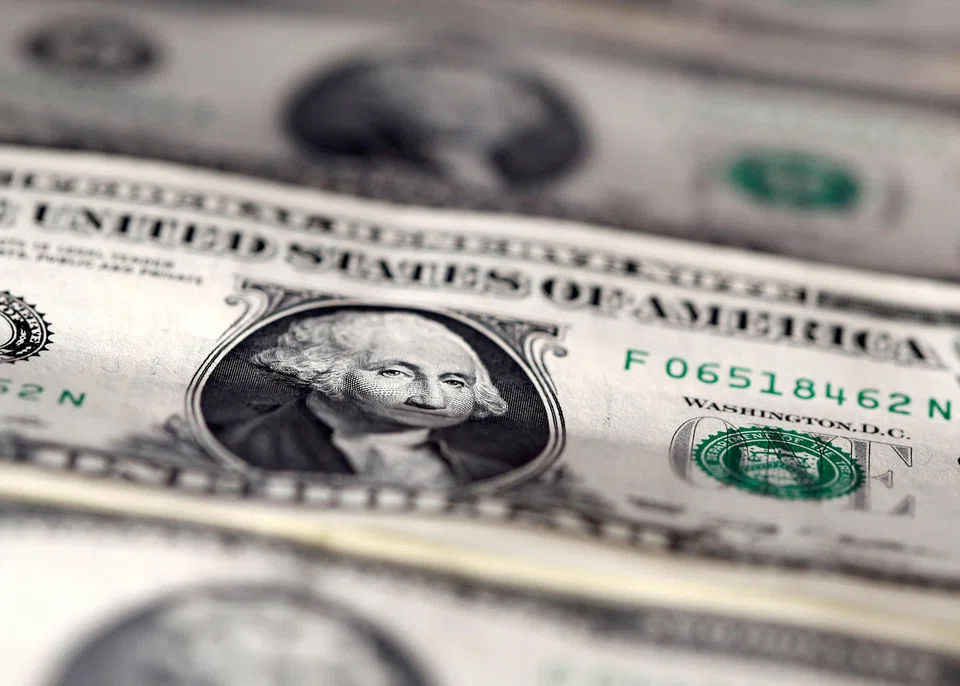
[NEW YORK] The escalating Mideast war is testing global market resiliency anew as investors brace for the open of stock, bond and energy markets on Sunday (Mar 1) evening in New York.
Early signs point to a shift away from risk. The US dollar surged and the Swiss franc edged higher against major peers in early trading, while the Australian dollar and South African rand led risk-sensitive currencies lower.
Benchmark equity indexes in Saudi Arabia and Egypt each slid more than 2 per cent in Sunday trading, while Bitcoin, which trades around the clock, was down about 2 per cent as of 4 pm in New York. Futures on US stocks, Treasuries, oil and gold are set to begin trading at 6 pm New York time, offering the first broad gauge of investor sentiment.
Shaken by fresh anxieties over artificial intelligence and potential cracks in credit, all while trading at historically high valuations, markets now must contend with a spiralling military action in Iran and the broader region that threatens to destabilise global shipping and stanch travel. The impact on oil and inflation is a paramount concern in markets that last month saw US stocks post their worst drop in 10 months.
“This is all coming at a fragile time as investors are becoming more cautious,” said Dec Mullarkey, managing director at SLC Management. “US equity markets are already very sensitive to threats of technology disruption and emerging credit stress, so the prospects of higher commodity prices could force a sell-off as investors rein in risk.”
Bloomberg Economics said a prolonged Middle East conflict raises the likelihood of crude reaching US$80 a barrel and estimated that if the Strait of Hormuz is closed, then it could trigger a spike as high as US$108. About one-fifth of global oil flows pass through the waterway, making it a critical energy choke point.
Brent crude prices closed at US$72.48 a barrel on Friday.
Digital signals indicate that oil-tanker traffic through Hormuz has nearly halted, and three ships were attacked near the mouth of the Persian Gulf, heightening fears that supplies could tighten. Iran has said that it does not intend to shut the passage.
“Even without a formal closure of the Strait of Hormuz, the reality is that vessels rerouting and sharply higher insurance premiums effectively tighten supply conditions,” said Dilin Wu, a strategist at Pepperstone. “That alone embeds a fresh inflationary impulse into the global economy.”

On Hyperliquid, a crypto exchange that has emerged as one of the largest venues for derivatives known as perpetual futures, an oil-linked contract climbed more than 4 per cent to US$90.99 a barrel in mid-afternoon New York trading. Gold rose 1.1 per cent to US$5,379.60 an ounce while silver was changing hands at US$96.65 per ounce, up 1.88 per cent over the past 24 hours.
The contracts trade around the clock and have become a popular way to speculate across markets outside traditional hours. They are typically settled in USDC, a stablecoin pegged to the US dollar.
“Crude oil prices are poised to surge when markets open on Monday,” Elias Haddad, global head of markets strategy at Brown Brothers Harriman, wrote in a note to clients. “However, investors should lean against overshoots in crude oil prices as global oil production continues to outpace global demand.”
Bigger risks
While markets have often shrugged off geopolitical flare-ups, with stocks barely reacting to US strikes on Iranian nuclear sites in June, there’s a bigger risk that this conflict could hit the global economy as the turmoil deepens, wrote Ajay Rajadhyaksha, global chairman of research at Barclays. He cautioned against buying any sudden dip in equities.
“The risk-reward doesn’t seem compelling,” he said. “If equities pull back enough (say over 10 per cent in the S&P 500), there is likely to come a time to buy. But not yet.”
Energy and defence stocks will likely rally when equity trading gets underway, said Joe Gilbert, portfolio manager at Integrity Asset Management. Shares of Saudi Aramco, the state-run oil producer, climbed 3.4 per cent on Sunday, the biggest jump in more than four months.
Any long-lasting oil price spike would muddy the case for Treasuries. While a flight to safety in markets would cause yields to fall, higher energy prices that feed through the economy and stoke inflation drive them higher.
“I’d expect yields down five to 10 basis points at a minimum on the initial move,” said Maxence Visseau, Dubai-based director of research at investment firm Arkevium. “But the complication is oil. If crude spikes towards US$80 to US$90 on any Hormuz disruption, the long-end gets caught in a tug of war between safe-haven demand and repricing of inflation expectations.” BLOOMBERG
Decoding Asia newsletter: your guide to navigating Asia in a new global order. Sign up here to get Decoding Asia newsletter. Delivered to your inbox. Free.
Share with us your feedback on BT's products and services
TRENDING NOW
Singapore identifies 7 firms responsible for haze fires, notices issued urging action: Grace Fu

Could stablecoins be the future of money?

Singapore should prepare for prolonged haze until November, says Grace Fu

High Court rules against Julius Baer’s Singapore trust arm in US$50 million family trust dispute

