US: Dow erases 2020 losses as stocks charge upwards
 Add BT as a preferred source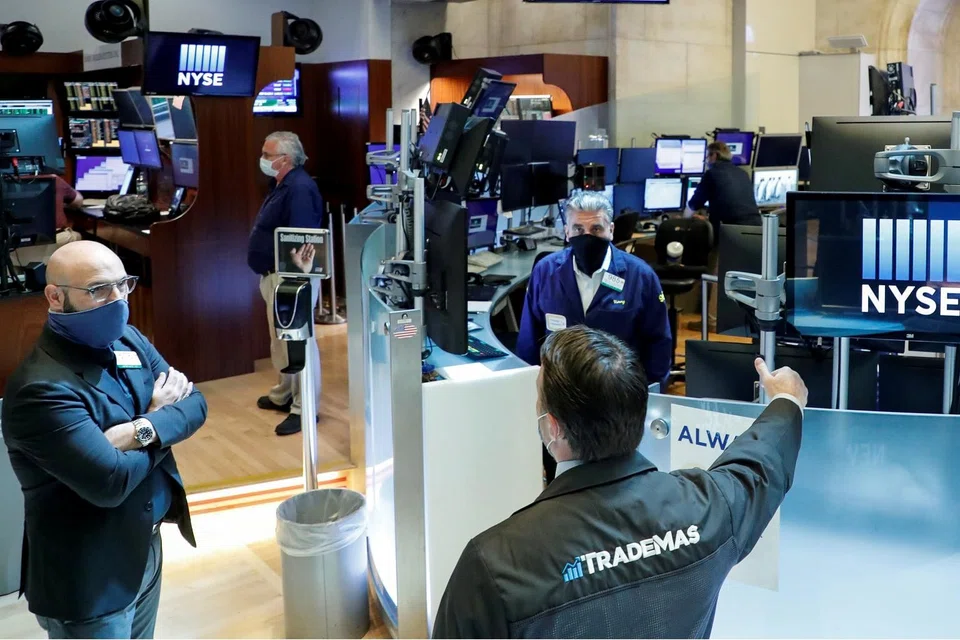
[NEW YORK] Wall Street flexed its muscles on Friday, with the Dow erasing its losses for the year and the S&P and Nasdaq again hitting records as investors shrugged off the ongoing coronavirus crisis, while markets elsewhere saw more moderate trading.
Much of the positive sentiment can be attributed to the Federal Reserve, which made clear that US interest rates will stay ultra-low as long as needed in a major policy shift announced Thursday.
That further buoyed stocks that had already climbed following their March Covid-19 downturn, after the Fed offered trillions of dollars in liquidity to keep markets functioning normally, with tech stocks doing particularly well as consumers spent more time at home.
"The technical picture improved thanks to the Dow's breakout, and while the industrial average is still below its pre-pandemic high, all of the key trend indicators confirm the bull market," Gorilla Trades strategist Ken Berman said.
European stocks closed slightly lower as London, Frankfurt and Paris all shed around half a per cent, while the dollar weakened.
Craig Erlam, senior market analyst with OANDA Europe, said that the Fed's announcement, along with its earlier measures, means "the taps will be on for the foreseeable future as the economy recovers from the wreckage of the pandemic, hopefully aided by a vaccine later this year."
Yet the coronavirus is far from over in the United States, where deaths topped 180,000 this week. And climbing cases in Europe have also rattled investors, with Germany and Spain imposing fresh control measures as infections surge following the easing of lockdowns.
Jerome Powell said Thursday the Fed would be in no rush to reel in inflation even if it overshoots the central bank's two per cent target, instead opting for an average that takes into account periods of weak price rises with an aim to benefiting lower-income families.
Mulling the dipping dollar, ThinkMarkets analyst Fawad Razaqzada warned that "if the Fed allows inflation to overcook by not reacting fast enough, then it may have to tighten its belt more aggressively when it finally does start its hiking cycle in an effort to bring prices back under control."
"Such a policy response will stifle economic growth and will most likely send the dollar soaring higher."
The yen - regarded as a safe haven in times of turmoil - also spiked by more than one per cent versus the dollar as Japanese Prime Minister Shinzo Abe announced he would resign.
Tokyo's Nikkei 225 ended down 1.4 per cent ahead of the official confirmation, which ends a record-breaking tenure at the helm of the world's third-largest economy.
Mr Abe said he is suffering a recurrence of the ulcerative colitis that forced him to cut short a first term in office, and that he no longer felt able to continue.
Analysts said there would be concerns about the end of his big-spending, easy money policy - dubbed Abenomics - that has been credited with supporting the fragile economy for years.
AFP
Decoding Asia newsletter: your guide to navigating Asia in a new global order. Sign up here to get Decoding Asia newsletter. Delivered to your inbox. Free.
Share with us your feedback on BT's products and services