US stocks extend gains, erasing losses caused by Iran war
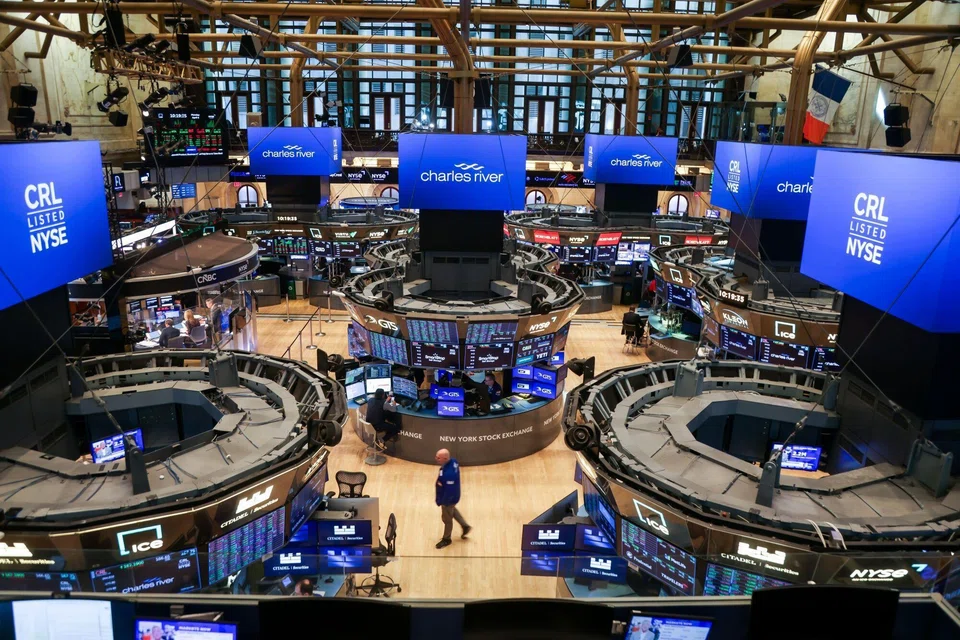
THE S&P 500 Index ended the day up 1 per cent, extending an advance that’s erased all of the losses brought on by the Iran war, as President Donald Trump dangled hopes of an agreement to end the conflict even as he moved to blockade the Strait of Hormuz.
Speaking at the White House, Trump said Iran wants “to make a deal” with the US. The remarks come after the negotiations between the countries failed over the weekend, pushing up oil prices and inflation expectations.
Trump’s comments sent the S&P 500 Index higher, with nine of the 11 industry groups advancing, and erased the last of the losses seen since the US launched the war a little over six weeks ago.
The Nasdaq 100 Index rose 1.1 per cent in its ninth consecutive day of gains, while the Dow Jones Industrial Average gained 0.6 per cent. The Cboe Volatility Index hovered a little over 19.
“Investors are clearly exhausted by the conflict, and you can see it in how little the market reacts to bad news,” said Mark Hackett, chief markets strategist for Nationwide. “The focus is starting to shift back to fundamentals, where earnings remain supportive, and with institutions already on the sidelines, there’s simply less left to sell.”
First-quarter earnings season kicked off with a mixed start. Goldman Sachs shares slipped 1.9 per cent after better-than-expected equity trading revenue failed to offset a miss in fixed-income, currency and commodities trading, marking a rough start to earnings season.
Goldman’s earnings miss Monday morning offered traders one of the first looks at the financial health of corporate America.
Wall Street’s biggest banks are expected to report a record US$18 billion stock-trading haul during the first quarter as the war and the software scare fueled more activity from investors. JPMorgan Chase & Co., Wells Fargo & Co. and Citigroup are all due to report earnings on Tuesday morning.
The gains extended the advance for much of last week, which was fueled by hopes that the peace talks in Pakistan would help bring about an end to the US-Israeli war against Iran.
While no deal was struck, oil prices pulled back on speculation that Trump is still eager to extricate himself from the conflict. The blockade may also be designed to pressure Beijing — which buys oil from Iran — into playing a more active role in reopening the Strait, according to Capital Economics.
Morgan Stanley’s Mike Wilson wrote Monday that while the S&P 500 may experience renewed weakness and fall to the 6,300 to 6,500 level, it may be a buying opportunity. He said countries would find ways to solve the impasse at the Hormuz, which is “intolerable for the global economy.”
Yet there is some skepticism of the buy-the-dip approach. Retail traders, who had been some of the most consistent buyers of stocks in recent months, have become net sellers of exchange traded funds and JPMorgan strategists say positioning by the group shows skepticism on last week’s rally.
“A positive earnings season will be needed to counterbalance the stagflationary tone the market seems to be embracing,” said JC O’Hara, chief market technician at Roth Capital Partners LLC.
In single-stock news, Fastenal was the worst-performing stock in the S&P 500. The industrial distributor’s shares fell 6.8 per cent after the industrial distributor reported a gross profit margin that contracted slightly more than Wall Street expected. BLOOMBERG
Decoding Asia newsletter: your guide to navigating Asia in a new global order. Sign up here to get Decoding Asia newsletter. Delivered to your inbox. Free.
Share with us your feedback on BT's products and services