

US stocks in for rough 2019 start in absence of positive drivers
ALL Wall Street got for Christmas this year was a lump of coal.
US stocks crashed last week after the Federal Reserve hinted that it was not going to waver from its rate-hike plans despite evidence of stress in the global economy and the government's shutdown chaos in Washington.
Strategists say stocks will likely bounce in the near future but a sustained recovery looks unlikely.
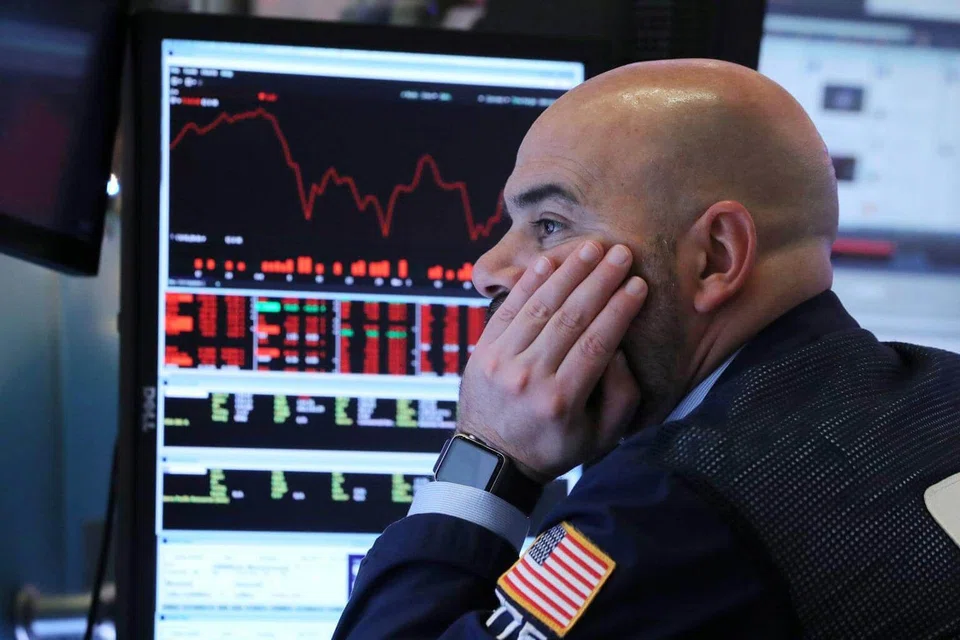
The Dow Jones Industrial Average fell by more than 6 per cent for its biggest weekly drop in 10 years - a dismal showing that could be the worst holiday-season performance since the Great Depression.
"Fed to Market: Drop Dead". "The Grinch". "Fed-ache". Wall Street's response to Fed chairman Jerome Powell's statement was almost as unflattering as Washington's response to US President Donald Trump's government shutdown.
Ahead of last Wednesday's decision to raise interest rates, investors had cast Mr Powell as Santa Claus. There were rumours that he would swoop in and save US stocks from the brink of a bear market with a grand gesture.
"Some had speculated that the Fed might delay its tightening efforts in light of the recent market correction," say portfolio strategists at money manager Alpha Capital Management.
Ahead of the decision, Mr Trump had implored Mr Powell to "feel the market", which was already more than 10 per cent below its October peak.
Mr Powell's predecessors Ben Bernanke and Janet Yellen had both given in to market tantrums in the past.
At the very least, strategists like Oliver Pursche of Bruderman Brothers had anticipated the Fed would deliver a "dovish hike", signalling to markets that this would be the last tightening of monetary policy for a while.
To borrow a phrase once used to describe former British prime minister Margaret Thatcher, Mr Powell was "not for moving".
"The Fed sent a clear message: the bias is to continue to hike but it is highly dependent on the data," say economists at brokerage Bank of America Merrill Lynch Global Research in a note to clients.
"Given the tightening of financial conditions and greater downside risks, we now expect the Fed to deliver only two more hikes," they add.
At Wells Fargo, strategists were more blunt, saying the Fed had made a "policy mistake", according to Bloomberg News.
After rising by more than 300 points ahead of last Wednesday's decision, the Dow finished with a loss of more than 400 points, a feat it repeated on Thursday and Friday, to come close to the 20 per cent retreat from recent highs that constitutes a bear market.
It was the intraday volatility that was most reminiscent of the 2008 global financial crisis. The blue chips spent part of each day rising sharply, only for the gains to crater suddenly, giving way to a cascading sell-off.
As in 2008, there was almost nowhere to hide from the selling, with the defensive safe haven of utility sector among the only investments to finish the year with significant gains.
The stock market was still digesting the disappointment on interest rates when foreign and domestic policy crises erupted in Washington.
The Senate had passed a stopgap spending bill on Wednesday and there were reports of senators singing Christmas carols on the floor of the chamber to celebrate averting a government shutdown.
Those celebrations eventually proved premature. Last Thursday, House Speaker Paul Ryan said the Senate bill would not become law unless it was amended to include funding for Mr Trump's border wall.
By Friday, the bill had been kicked back to the Senate where Democrats again refused funding for the wall.
Tens of thousands of federal workers will now be temporarily out of a job over the Christmas and New Year holidays.
On the foreign policy front, General James Mattis abruptly quit his position as Defence Secretary, apparently disgusted that Mr Trump was withdrawing troops from Syria without making provisions for Kurdish allies.
There's already a sense that Mr Trump's presidency is in crisis, with Robert Mueller's investigation circling ever closer to the West Wing.
There were even reports that Mr Trump had considered firing Mr Powell in what would have been an unprecedented act of vindictiveness in a nation where the central bank has traditionally been an independent operator.






