US stocks: Wall Street posts biggest daily drop in three months, Trump Greenland tariff threat triggers wide selloff
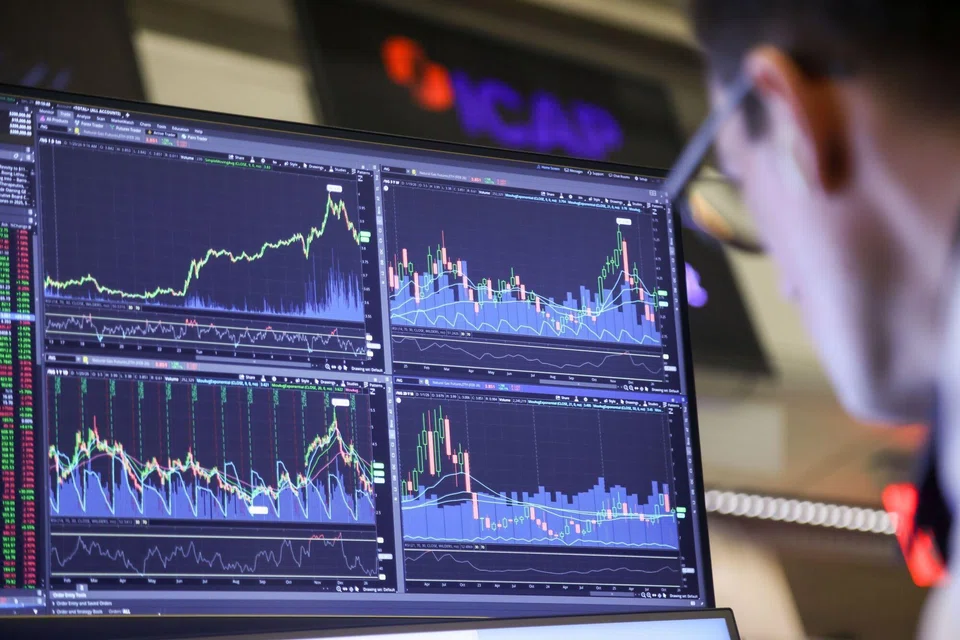
ALL three major Wall Street indexes ended Tuesday with their biggest one-day drops in three months, in a broad selloff triggered by concerns that fresh tariff threats from President Donald Trump against Europe could signal renewed market volatility.
The risk-off trade was pervasive, helping vault gold to fresh record highs, and pushing up debt costs with US Treasuries wobbling under renewed selling pressure. Bitcoin, which can find favour when traditional markets waver, fell more than 3 per cent.
All three US equity benchmarks registered their worst one-day performance since Oct 10, with both the S&P 500 and Nasdaq Composite slipping below their 50-day moving averages.
The S&P 500 lost 143.15 points, or 2.06 per cent, to end at 6,796.86 points, while the Nasdaq Composite gave up 561.07 points, or 2.39 per cent, to 22,954.32. The Dow Jones Industrial Average fell 870.74 points, or 1.76 per cent, to 48,488.59.
Trump said on Saturday additional 10 per cent import tariffs would take effect on Feb 1 on goods from Denmark, Norway, Sweden, France, Germany, the Netherlands, Finland and Great Britain — all already subject to US tariffs.
The tariffs would increase to 25 per cebt on June 1 and continue until a deal was reached for the US to purchase Greenland, Trump wrote in a post on Truth Social. Leaders of Greenland, an autonomous territory of Denmark, and Denmark have insisted the island is not for sale.
Uncertainty rises
The reinjection of tariff threats into global markets harkens back to April’s “Liberation Day,” when Trump’s levies on global trade partners pushed the S&P 500 to near bear market territory.
The CBOE Volatility Index, also known as Wall Street’s fear gauge, spiked to a two-month high.

While investor sentiment was frayed on Tuesday, the question being asked now is whether Greenland is a short-term jolt triggering a knee-jerk selloff, or something more substantial that will have longer implications for markets.
Jamie Cox, managing partner at Harris Financial Group, said he was not seeing indications investors were fleeing.
“I’m not at the point yet where I’m willing to say what is happening with Greenland, and the resurgence of the tariff threat back and forth, is going to precipitate a correction in the equities markets,” he said, adding he would be surprised if there was a 3 per cent to 5 per cent drop this week.
Bond markets spillover
A potentially more significant action, in Cox’s eyes, would be whether Japanese authorities intervene in financial markets. Japanese government bonds plunged on Tuesday, sending yields to record highs, while Tokyo stocks and the yen also fell after Prime Minister Sanae Takaichi’s call for a snap election shook confidence in the country’s fiscal health.
The moves helped push the cost of longer-term government bonds higher in other countries, including in Europe, with Greenland adding momentum, given the possibility of greater defense spending in Europe. US Treasuries fell on Tuesday, with the selloff more pronounced on the long end of the curve.
Despite the geopolitical uncertainty around Greenland weighing on US equities sentiment, the US economy remains in a strong position.
Investors are due a host of fresh data this week on the state of the US economy, including the third-quarter US GDP update, January PMI readings and the Personal Consumption Expenditures report, which is the Federal Reserve’s preferred inflation gauge.
Earnings season is also kicking into higher gear. Several industry bellwethers, including Intel and Netflix, are set to report their quarterly earnings this week. REUTERS
Decoding Asia newsletter: your guide to navigating Asia in a new global order. Sign up here to get Decoding Asia newsletter. Delivered to your inbox. Free.
Share with us your feedback on BT's products and services