

Wall Street asks what can save AI trade after Anthropic wipeout
Instead of finding inspiration to buy, investors just keep discovering reasons to sell
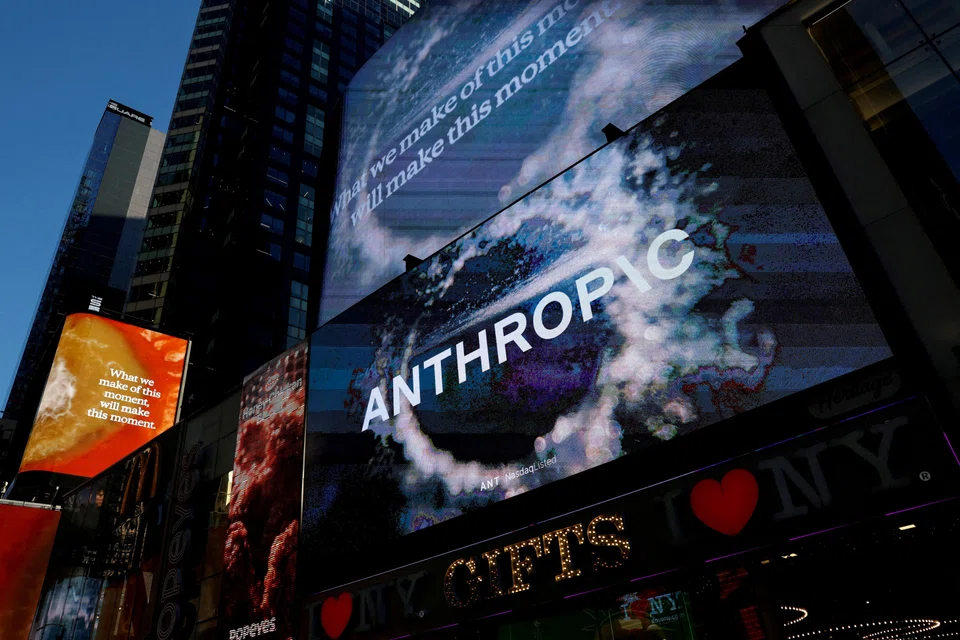
IT HAS been a tough month for the stock market, rocked by back-to-back punches from the stunning ouster of Jensen Huang from Nvidia and the Democrats’ decisive victory in the midterm elections.
Anthropic PBC’s record-breaking initial public offering (IPO) this week was supposed to provide some relief and change the mood. It did not. Instead, it raised more questions about the struggling artificial intelligence trade, and tech stocks continued to sell-off, led by chipmakers, with Nasdaq 100 Index tumbling 10 per cent for the week, its worst performance since the Covid-19 pandemic hit in March 2020.
Now, with few positive catalysts and a series of obvious risks on the horizon, starting with the Federal Reserve’s expected interest-rate hike next month, Wall Street is wondering what will inspire stocks to start climbing again. Instead of finding inspiration to buy, investors just keep discovering reasons to sell, as seemingly every other news headline – from air travel shutdowns to financial hacks – fuels suspicion that technology is not adapting to the risks posed by AI.
“The market is in limbo-land, especially when it comes to tech and AI,” said Paul Nolte, market strategist and senior wealth manager at Murphy & Sylvest Wealth Management. “You need to gird your loins and expect a period of volatility and downside risk.”
The Anthropic deal could mark the end of the AI trade, Anna Wong, an economist with Bloomberg Economics, wrote in a report on Thursday. The company’s financials show weakening pricing power for frontier intelligence, she wrote, meaning that even with all the demand for AI services, leading providers are having trouble getting customers to pay enough for it to justify their spending.
Of course, in a vacuum, Anthropic’s IPO did fine. It was priced over its targeted range, and when combined with a separate private placement of shares, the company raised the most cash for a new issue ever, topping SpaceX’s deal in June. The stock even raced higher out of the gate. But it quickly plateaued and then started retreating. By the end of Friday it was less than US$6 from where it went public.

The bigger issue is it ushered in more selling rather than giving investors a reason to buy. By the end of Friday, the Nasdaq 100 was teetering on the brink of bear market, defined as a 20 per cent decline from a recent high, while the S&P 500 Index had entered a correction after falling 12 per cent from its October record.
Sceptical times
All that selling laid bare the magnitude of the questions swirling around AI more than four years into a bull market powered by huge bets on the technology.
“There was a hope that the Anthropic IPO would provide a sustained boost, but the trading there is indicative of the broader concerns surrounding AI,” said Jim Baird, chief investment officer at Plante Moran Financial Advisors. “Anthropic came to market at a time of more general scepticism surrounding the space, and there are a lot of questions about their ability in the near term to deliver on increasingly lofty expectations.”

Democratic victories in the midterms raised the risk that data center construction will slow since many of the party’s candidates ran on blocking their development. Meanwhile, the risk of higher interest rates raises the cost of capital as big data center developers increasingly turn to credit markets for funding.
“A lot of the growth in AI is dependent on how and whether companies can fund their capital needs,” said Malcolm Polley, director of strategic market analysis at Stratos Investment Management, which has US$3.6 billion in assets. “Will they need to fund that through capital or debt markets? Until we know the cost of capital, we can’t adequately value the asset, and if the cost of capital is going higher, then valuations need to come down.”
But it’s the chaos at Nvidia that really has spooked investors. The company ousted Huang on Nov 12 after he admitted having an affair with a woman suspected of spying for China, and the stock has been in a tailspin ever since. Even a strong earnings report featuring a raised revenue forecast for next fiscal year and a US$150 billion stock buyback authorisation could not stop the selling, as the question remained who will be Huang’s permanent replacement.
Nvidia shares plunged 23 per cent this week, their worst performance since 2008. The stock is down 48 per cent from an Oct 6 all-time high.
The turmoil appeared to create openings for Nvidia’s competitors, including chipmaker Advanced Micro Devices Inc. But that bet took a hit on Thursday when a short seller raised questions about AMD’s business in China, which could be hurt by more US chip export restrictions. The shares plunged 20 per cent in the final two sessions of the week.
More broadly, it is the sustainability of the hundreds of billions of dollars being spent to expand computing power that is driving the sell-off. That spending has juiced earnings for companies across the AI ecosystem, from chipmakers and networking gear manufacturers to electricity providers and industrial companies. But investors are increasingly sceptical that it can last.
Chip stocks swing
This rapid swing from greed to fear is best seen in the trading of semiconductor stocks this year. Chips are historically a cyclical business, rising with demand and then falling as it dissipates. But the belief was that this history would be rewritten as years of AI demand would break the cycle. The Philadelphia Stock Exchange Semiconductor Index more than doubled in the first half of the year on that bet. But it has lost 41 per cent in the second half as investors rethink those positions.
Memory and storage stocks, which also are major beneficiaries of the AI spending, have been among the hardest hit over the last few months. Sandisk was leading the S&P 500 in the first six months of year, soaring 857 per cent. It is the worst stock in the index in the second half, dropping 72 per cent. Western Digital has tumbled more than 65 per cent from a June record, while Micron Technology is down more than 50 per cent from its all-time high.
Of course, some optimism remains on Wall Street. In particular the hope is the sell-off is nearing exhaustion as investors have used the opportunity to reduce risk, according to Brian Smedley, chief investment officer and head of Cynosure Strategies, the hedge fund division of the Cynosure Group.
“I think investors will gain confidence that AI demand remains exceptionally strong, and that the key players – Anthropic among them – will continue to have very healthy growth prospects,” he said. “The market has overshot to the downside, just as it overshot to the upside earlier this year.”
One thing investors agree on is that Anthropic’s debut will provide a new level of visibility into the business of selling AI services.
“It has been hard to get a real feel for AI demand, and Anthropic is the answer to that question,” said Marta Norton, chief investment strategist at Empower. “We will know more about the upside of AI, in terms of demand and the return, at the same time that we will be getting a reinforced view of how crazy wildly expensive it is.”
In the meantime, strategists are advising clients to stay nimble.
“It’s hard to say what it might take to catalyse gains after this week,” said Mark Luschini, chief market strategist at Janney Montgomery Scott. “I want to see whether this sell-off metastasizes into something more severe. We’re oversold, but not deeply so. We could plumb lower still. I want to see stabilisation before I make a strong commitment.”
Decoding Asia newsletter: your guide to navigating Asia in a new global order. Sign up here to get Decoding Asia newsletter. Delivered to your inbox. Free.
Share with us your feedback on BT's products and services
TRENDING NOW

What shattered Crystal Jade? How the culinary empire shrank from 120 to just 9 outlets

As Indonesia picks new vice-president to succeed Gibran, investors see risks and opportunities

South-east Asia has lost Nvidia’s best salesman
Beyond the greenback, Vietnam’s big borrowers turn to Asian-currency bonds

