Wall Street turns gloomy on US dollar as haven demand fades
Investors are once again focusing on the headwinds that drove the dollar down 8 per cent in 2025
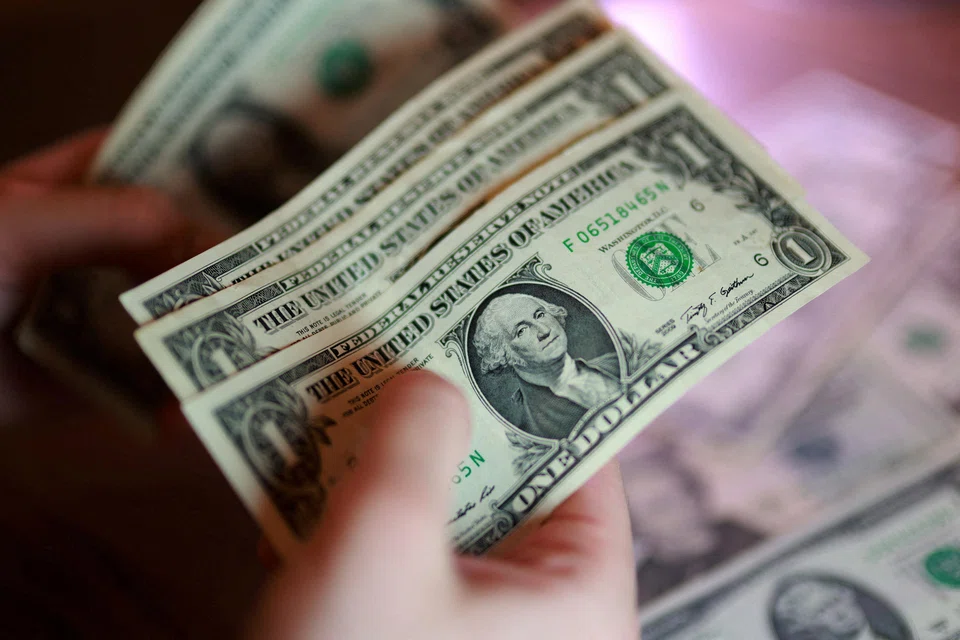
DEUTSCHE Bank and Wells Fargo are among banks declaring the US dollar’s war-driven haven rally is likely over as the fragile ceasefire between the US and Iran prompts investors to seek riskier assets.
The banks are arguing it is time to embrace bets against the greenback, and global investors seem to be doing just that. They have boosted dollar hedging ratios to a two-year high, according to State Street, one of the world’s largest custodian banks. In the options market, meanwhile, confidence in the dollar has faded, with positioning the least bullish in weeks.
The Bloomberg Dollar Spot Index surged in March as the war roiled global markets, drawing investors to the world’s primary reserve currency, traditionally seen as an oasis during times of crisis. The greenback has surrendered most of that advance over the past week, and is almost back where it was before the fighting erupted at the end of February.
The upshot is that with the haven aura fading, investors are once again focusing on the headwinds that drove the dollar down 8 per cent in 2025 – its worst performance since 2017 – including the prospect of Federal Reserve interest rate cuts.
“There is clear rotation out of safe havens like the dollar back into risky assets,” said Kathleen Brooks, research director at broker XTB in London. “If the US-Iran conflict does come to a resolution soon, I see a longer period of weakness for the dollar ahead.”
The Bloomberg dollar gauge is down about 1.4 per cent since the US and Iran agreed to a truce on Apr 7. Risk-sensitive currencies, led by those from Scandinavia, New Zealand and Australia, are up roughly 3 per cent versus the greenback in that period, while the S&P 500 Index has recovered to set new record highs this week.
Pakistan is trying to mediate an extension to the truce beyond its official expiry date next week, but the situation remains fraught. The fragility of the truce underscores the peril of getting bearish on the dollar too quickly, especially if a breakdown in talks sparks a fresh rally in oil and pushes out bets on Fed easing.
Blockade boost
On Thursday (Apr 16), the US currency and oil rose as the Strait of Hormuz, a key route for oil supplies, remained subject to a double blockade. The backdrop of still-elevated crude prices highlights another reason for dollar strength in recent weeks – the view that the US, as an oil exporter, is insulated from energy shocks.
Citigroup currency analysts on Thursday said the risk-reward favoured betting on dollar strength. Persistently high commodity prices will cap gains in risk assets, supporting bond yields and the dollar, they said.

However, the relative easing in tensions has reignited the wariness toward the US currency that has shaped conversations around it since President Donald Trump took office in 2025.
At Wells Fargo, strategists recommended buying the Swedish krona versus the dollar. Deutsche Bank advised selling a broad-based measure of the US currency, seeing scope for the euro to eventually eclipse US$1.20 for the first time since January, from about US$1.18 now. For their part, JPMorgan Chase strategists said last week that “the dollar appears to be emerging worse-off on a medium-term basis from the conflict,” partly because of high spending on the war.
Fed independence
Brooks at XTB lays out some of the challenges for the US currency, beyond expectations for the Fed to eventually cut rates while markets anticipate hikes elsewhere.
She points to potential worries about the Fed’s independence, with Trump’s threat this week to fire Chair Jerome Powell if he does not leave that post “in time,” creating a possible scenario where the president appoints an ally as interim chair while nominee Kevin Warsh awaits confirmation.
“This could lead us back to the dollar debasement theme, which weighed heavily on the dollar last year,” Brooks said.
In the background, there is also the view among some on Wall Street that Trump would like to see a weaker dollar to support US exports, although the administration has repeatedly avowed the long-standing US “strong dollar” policy.
Bearish take
Amid the shift in market sentiment, asset managers have added to bearish dollar trades in the first couple of weeks of April, based on a Morgan Stanley model. A Bank of America survey from Apr 3 to Apr 9 – overlapping the start of the ceasefire – shows that the second-highest conviction trade among fund managers this year, behind owning bonds, was to short the dollar.
“Investors view the Iran war as more of a level shift to the dollar path for 2026 than a change in the trend,” BofA strategists including Ralf Preusser and Meghan Swiber wrote in a note this week.
The extent to which international investors strip out the currency risk from their US holdings – by using derivatives to bet against the dollar – is another potential trigger of greenback weakness.
Data from State Street shows they are piling into that protection, boosting hedging ratios on the US currency to 63 per cent in the wake of the ceasefire announcement.
What’s more, a resolution of the war, by reducing concerns about economies outside the US, may spur investors to buy more international assets.
“The drivers for the diversification trade are there underneath, but they are just overshadowed by other worries right now,” Beata Manthey, head of European equity strategy at Citigroup, said on Bloomberg Television this week. BLOOMBERG
Decoding Asia newsletter: your guide to navigating Asia in a new global order. Sign up here to get Decoding Asia newsletter. Delivered to your inbox. Free.
Share with us your feedback on BT's products and services