

Why high yields on government bonds are causing alarm
Rising fiscal deficits and stubborn inflation are driving a flight from long-dated sovereign debt
[LONDON] Government borrowing costs have been surging around the world as investors demand more compensation to entice them to hold longer-maturity debt.
Yields on 30-year Japanese government bonds are near all-time highs at 4.19 per cent, while 30-year UK government bond yields are at their highest since 1998.
A Bloomberg gauge tracking government debt across the Group of Seven countries now yields its highest on average since September 2000.
Investors’ retreat from long-dated sovereign debt has been driven by a range of concerns, including mounting fiscal deficits and stubborn inflation.
Governments are also having to compete for investor attention as technology companies issue massive amounts of debt to fund the buildout of artificial intelligence infrastructure.
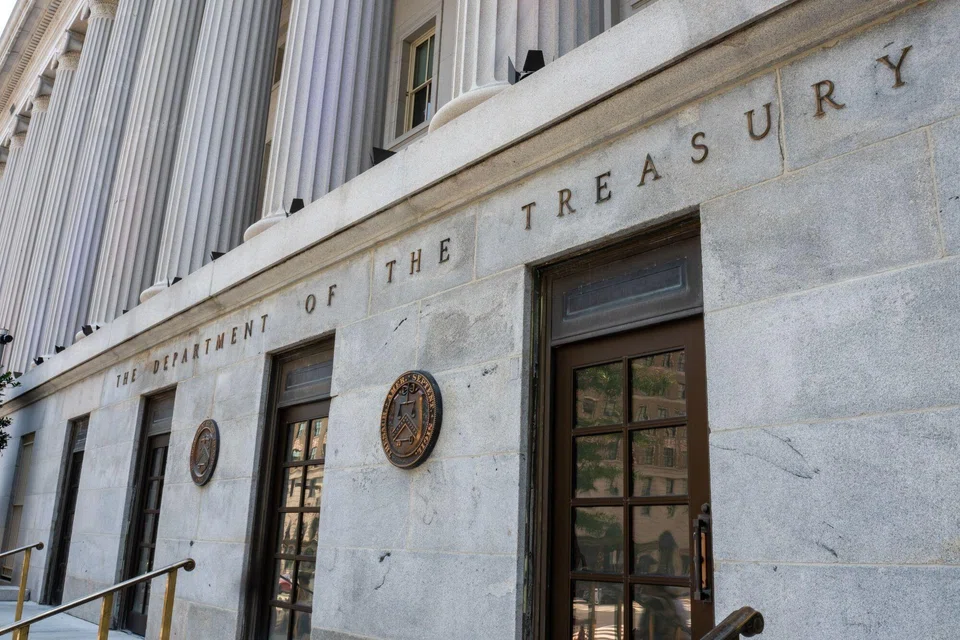
In the wake of yields on US bonds reaching an almost two-decade high, the US Treasury Department said in August that it would ramp up buybacks of long-dated government debt.
The announcement helped temporarily steady bond markets, though yields have since resumed their advances.
What’s so special about long bonds?
Bonds issued by wealthy nations are widely regarded as the world’s safest securities because these governments are highly likely to pay investors back.
Governments often lock in financing costs for long periods such as 30 years. Some even issue debt that matures in a century.



That does not mean these bonds are without risk for investors. Should inflation and short-term interest rates rise, that eats into the real value of a bond’s coupon payments, as well as the principal that is ultimately repaid when the bond reaches its maturity date.
The longer the tenor of a bond, the more time there is for inflation to have an impact. That is why long-dated bonds have been more sensitive to the rise in interest rates and inflation, and why they have been at the centre of the recent sell-off.
In mid-August, yields on 30-year US Treasuries hit their highest level since 2007, although yields have fallen back slightly since then to 5.27 per cent, while German peers are at peaks last seen in 2011.
Why have long-dated bonds diverged from short durations recently?
Investors are concerned that central banks are not doing enough to contain inflation, which has proven sticky amid US President Donald Trump’s trade war and higher energy costs due to the conflict in the Middle East.
A sell-off in long-term US Treasuries accelerated in July after the US Federal Reserve held interest rates steady and Fed chairman Kevin Warsh left investors questioning his commitment to bringing back inflation to the Fed’s 2 per cent target after more than five years of misses.
Warsh took a more aggressive stance toward inflation at a speech in Jackson Hole, Wyoming, in late August.
While leaving rates unchanged helped lower short-term bond yields, which closely track the immediate outlook for central bank interest rates, it hurt long bonds as investors feared the lack of action would fuel inflationary pressures down the line.
That widened the gap between short- and long-term rates, in what is known as a steepening of the yield curve.
It is not just a US story. In Japan, the central bank has been slow to raise rates, which remain among the lowest in the developed world.
Japanese Prime Minister Sanae Takaichi has long been wary of rates moving too high, too quickly, for fear of snuffing out the economic recovery. As a result, the Japanese yield curve is the steepest among major bond markets.
Wouldn’t investors want to buy long bonds at high yields?
In theory, yes, although the bond market is also facing a structural shift in supply and demand. For much of the past two decades, abundant global savings – particularly in Asia – chased a relatively scarce supply of safe assets, helping suppress long-term real yields.
Then-Fed chair Alan Greenspan called the persistently low long-term yields a “conundrum”, as rates stayed subdued even as the Fed raised short-term borrowing costs.
Now, governments around the world are ramping up spending on everything from renewable energy to defence. The US is borrowing more to fund its near US$40 trillion in national debt, as well as to plug an annual fiscal shortfall that the Congressional Budget Office estimates will reach US$2.1 trillion.
While global supply of government debt has swelled, demand has been curtailed by weaker foreign appetite and central banks reducing their bond holdings after years of purchases.
This has been described as a transition from a “savings glut” to a “bond glut” by European Central Bank Executive Board member Isabel Schnabel.
That means the investor base is shifting toward more price-sensitive private buyers, who typically demand higher compensation to hold long-term bonds. Structural changes in pensions and retirement systems have also reduced the pool of traditional long-term buyers.
How much of a premium are investors demanding for long bonds?
In the US, the so-called term premium, the extra yield that investors demand to hold long-term debt, has increased by more than 3 percentage points from the lows during the Covid-19 pandemic, according to a model developed by Bloomberg Economics.
The US has traditionally enjoyed a “convenience yield”, whereby investors were willing to pay higher prices – and accept lower payouts – because of the liquidity, safety and usefulness of Treasuries as collateral.
Some say that privilege has been eroded, pointing to the ever-increasing national debt load and Trump’s erratic policymaking. Others argue that the concern is exaggerated and Treasuries remain the safest debt out there.
Why are long end yields important to the economy?
A disorderly bond market sell-off can spell trouble for governments that rely on debt markets to finance their deficits – something the UK is all too familiar with after the collapse of Liz Truss’s premiership in 2022.
The bond market has “taken out more governments than howitzers”, US Treasury Secretary Scott Bessent remarked earlier in 2026.
Long bond yields underpin interest rates on a litany of consumer loans such as mortgages, as well as corporate debt. The rise in bond yields risks increasing pressure on household borrowers as years of inflation have already made the cost of living less affordable. Savers, however, enjoy a boost.
The pass-through to consumer debt markets is not always straightforward. In the US, 30-year mortgage rates are priced closely off the 10-year Treasury yield instead of the 30-year Treasury rate.
That is because homeowners tend to pay off or refinance their mortgages after a period that is closer to 10 years.
How is the AI spending boom affecting long bonds?
As tech firms seek to expand their AI infrastructure, they are increasingly issuing bonds with long-dated maturities so they do not have to pay back investors for decades. That means governments are facing more competition from corporate debt issuers.
Investment-grade companies, including tech giants, have already sold nearly US$1.5 trillion of bonds this year, a 36 per cent jump from a year earlier.
Nomura Securities estimates that the roughly US$200 billion borrowed by the biggest tech firms alone is equivalent to about 25 per cent of the US Treasury’s net issuance of notes and bonds to private investors – five times the share in 2025.
The surge in corporate debt issuance, together with increased supply of mortgage-backed securities, has pushed 10-year Treasury yields about 30 basis points higher this year, according to analysis by Bank of America economists. A basis point is 0.01 percentage point.
What can governments do about the rise in long bond yields?
Many governments are tilting their borrowing programmes towards shorter maturities. While yields are currently lower there, the shorter tenor of these bonds means they need to be refinanced more frequently – possibly in the face of higher interest rates.
The US Treasury has said it will at least double its buybacks of 10- to 30-year bonds between September and November, in order to “provide greater liquidity support” at the long end of the yield curve.
Yields across long-dated Treasuries and other government bonds dropped in response to the announcement of those plans, although it remains to be seen how much of a lasting impact the Treasury’s decision will have.
More generally, governments need to convince investors that they will get inflation and their fiscal deficits under control. That could involve a combination of tax hikes and spending cuts that will likely prove unpopular with voters.
Should investors be worried about the surge in yields?
To some degree, higher yields are good news for bondholders. With equity markets at record highs, the rise in yields reflects a resilient global economy that can absorb higher borrowing costs.
Yields were near zero in the aftermath of the global financial crisis, when the outlook for economic growth was poor. The recent increase in yields could be viewed as a normalisation to pre-crisis levels. At 4.8 per cent, the 10-year US Treasury yield is roughly in line with its average over the past four decades.
“People love to use the phrase ‘higher for longer’,” Wells Fargo economists Tom Porcelli and Michael Pugliese wrote in a research note in August. “We would argue a far better characterisation is normal for longer.” BLOOMBERG
Decoding Asia newsletter: your guide to navigating Asia in a new global order. Sign up here to get Decoding Asia newsletter. Delivered to your inbox. Free.
Share with us your feedback on BT's products and services
TRENDING NOW

Once staunchly pro-China, Malaysian Chinese businesses are now distancing themselves from Beijing

Looking beyond looming CEO succession, should UOB potentially pursue a transformative merger?

Could stablecoins be the future of money?

Grab CEO’s wife Chloe Tong on life with Anthony Tan and finding her purpose

