

Yen suddenly jumps on talk of possible intervention
Japanese officials have so far declined to comment on whether they have intervened
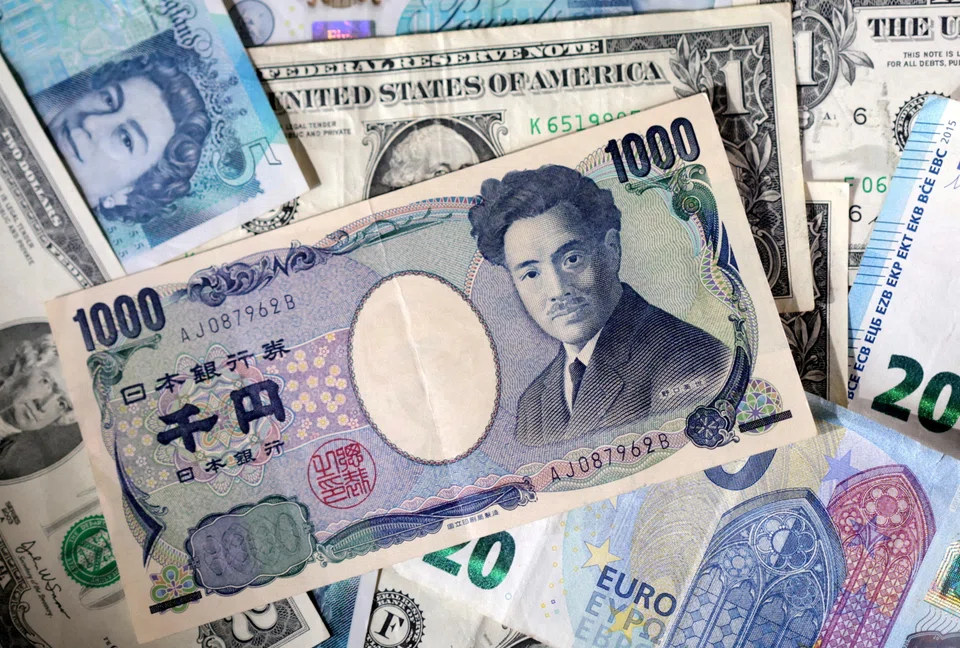
[SINGAPORE] The yen jumped abruptly against the US dollar on Monday (May 4), fuelling speculation of renewed Japanese buying to stem the currency’s long-running slide.
Japan has bought yen before in 2022 and 2024, as the currency’s real-terms slump to record lows drove up import costs. Sources told Reuters it likely did so again last week, when the yen staged a sudden, unexplained jump late Thursday in Asia after slipping past the key 160-per-US dollar level.
The yen leapt about 0.9 per cent within minutes to a high of 155.69 per US dollar in the middle of a holiday-thinned session on Monday. The move soon mostly retraced and market analysts say it will be difficult for Japan to sustain yen gains in the face of pressure from low rates and the effects of the global oil shock.
Japan’s Ministry of Finance (MOF) was not immediately available for comment when contacted by Reuters. Trading was thin with Japanese markets closed for a holiday, a backdrop in which authorities have warned speculators against testing their resolve.
Japanese officials have so far declined to comment on whether they have intervened.
Money market data on Friday showed Tokyo may have spent as much as 5.5 trillion yen (S$45 billion) buying the yen last week.
“It could be them again,” Nick Twidale, chief market strategist at ATFX Global in Sydney, said of Monday’s move.
“Certainly not to the same extent as last week but reinforcing their stance that they will not accept a weak yen.”
The yen has been under pressure for years, first from Japan’s ultra-low interest rates, then on fears Prime Minister Sanae Takaichi would keep borrowing costs artificially low to bankroll spending, and more recently from surging oil import costs.

But analysts said that as long as oil prices stay elevated and the Bank of Japan sticks to its gradual approach to tightening, any market intervention is unlikely to offer more than fleeting relief for the currency.
“In the environment of high oil prices, we might see US dollar/yen revisiting 160,” said Moh Siong Sim, a strategist at OCBC.
“As to whether (intervention) will help, I think it buys some time, perhaps buys some time until oil prices come off if the US and Iran say reach a deal at some point in time.” REUTERS
Decoding Asia newsletter: your guide to navigating Asia in a new global order. Sign up here to get Decoding Asia newsletter. Delivered to your inbox. Free.
Share with us your feedback on BT's products and services
TRENDING NOW

Grab CEO’s wife Chloe Tong on life with Anthony Tan and finding her purpose

Brokers maintain ‘buy’ on CDL despite investor reservations over strategic review

Deal between tycoon friends sparks scrutiny of Philippine power sector

Hwa Seng Builder, two China companies win S$1.2 billion Tuas Road Viaduct phase two contracts

