Yen tumbles as BOJ sticks with ultra-loose policy
 Add BT as a preferred source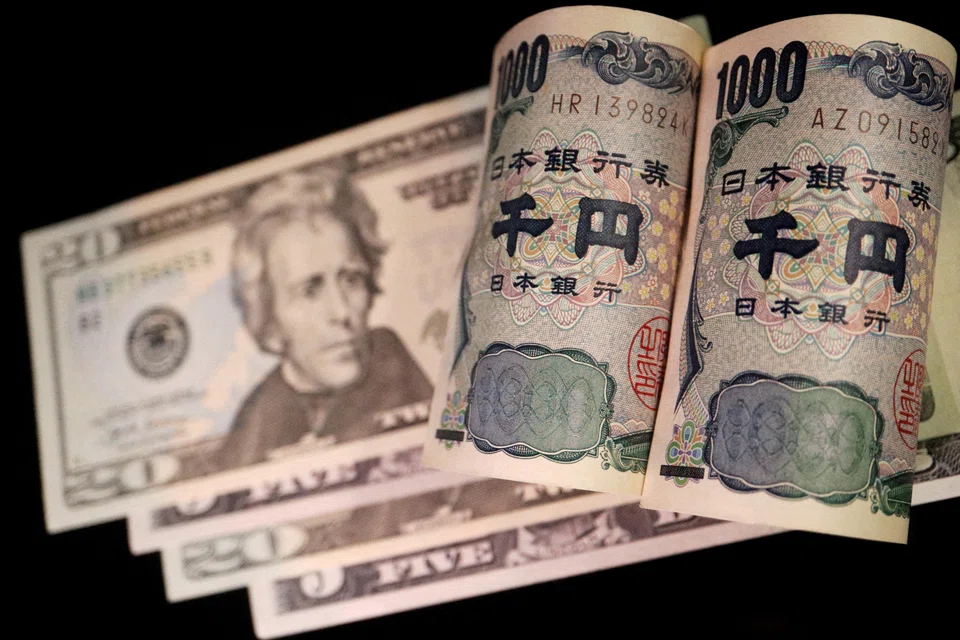
DeeperDive is a beta AI feature. Refer to full articles for the facts.
THE yen tumbled on Tuesday (Dec 19) after the Bank of Japan (BOJ) maintained its ultra-loose monetary policy, as expected, and, more surprisingly, did not signal that a change was approaching. Meanwhile, the US dollar drifted at the low end of its recent range.
The US dollar jumped 1.3 per cent on the yen, and the euro a touch more – each set for its biggest daily gain since end-October when the BOJ had its last meeting, which had also disappointed markets that had been expecting a hint that policy was changing.
The greenback reached 144.95 yen, and the common currency 158.56.
While the outcome was within market expectations, investors were on the lookout for signs whether the dovish central bank might signal an eventual move away from negative interest rates.
“Everyone is trying to jump on the last trade of the year,” noted Lee Hardman, senior currency analyst at MUFG. “The message from the BOJ today is that they are still very cautious and there is no strong indication that they are getting close to raising rates.”
BOJ governor Kazuo Ueda said: “The prospects for (sustainably achieving our inflation target) are gradually heightening. But, in terms of whether the threshold would be met, we’d prefer to look at more data.”
Navigate Asia in
a new global order
Get the insights delivered to your inbox.
Elsewhere, the pound gained 0.47 per cent to US$1.2707 outperforming the euro which rose 0.16 per cent to US$1.0941.
That left the US dollar index little changed at 102.52, above last week’s four-week low of 101.75. But it is still down over 4 per cent since early October, as the Federal Reserve, at its meeting last week, gave succour to investors expecting rate cuts in 2024.
While Fed officials have pushed back against market expectations of how soon the Federal Open Market Committee could cut rates, those comments have done little to sway market pricing and stem the greenback’s decline.
Chicago Fed president Austan Goolsbee on Monday said that the Fed was not pre-committing to cutting rates soon or swiftly, and that the jump in market expectations that it will do so was at odds with how the US central bank functions.
Joseph Capurso, head of international and sustainable economics at the Commonwealth Bank of Australia noted that it might take the personal consumption expenditures (PCE) inflation or comments from Fed chair Jerome Powell to encourage market participants to delay their expectations for the start of the rate-cut cycle.
A reading on the core PCE price index – the Fed’s preferred measure of underlying inflation – is due this week, and may provide clarity on whether inflation has slowed enough for the Fed to begin easing policy next year.
Elsewhere, the risk-sensitive Australian and New Zealand dollars sat around their highest in nearly five months, further beneficiaries of the softening US dollar.
The Aussie rose 0.4 per cent to US$0.6733, having peaked at US$0.6736 in the previous session, its highest since Jul 31.
The kiwi rose 0.35 per cent to US$0.6233.
Minutes from the Reserve Bank of Australia’s December policy meeting showed on Tuesday that the bank considered hiking rates, but decided that there were enough encouraging signs on inflation to pause for more data.
Decoding Asia newsletter: your guide to navigating Asia in a new global order. Sign up here to get Decoding Asia newsletter. Delivered to your inbox. Free.
Copyright SPH Media. All rights reserved.