

Yen’s historic slump defies the rates rulebook, says Mizuho
Investors cannot assume that rising Japanese yields imply a stronger currency, says the bank
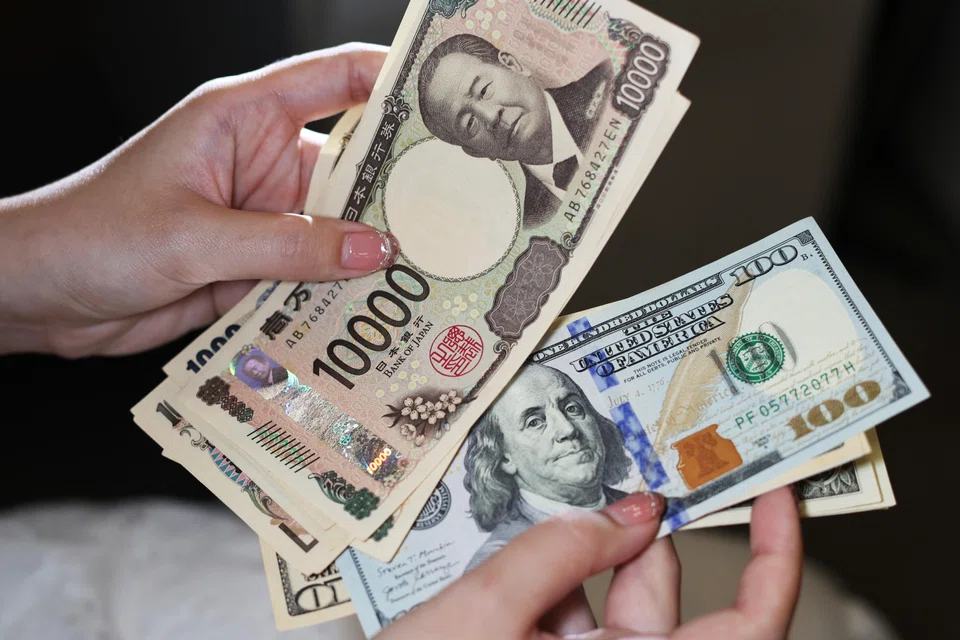
[TOKYO] The slump in the yen to historic lows is forcing investors to rethink one of their most widely used strategies to gauge the currency’s moves, according to Mizuho Bank.
For years, strategists have relied on interest rate differentials between Japan and the US to help forecast the dollar-yen level, since higher Japanese yields relative to Treasuries would typically be expected to provide support.
Instead, the relationship has reversed in recent years, with the yen weakening even as domestic yields have climbed, in a trend that is also being seen in some other Group of Ten markets.
The yen “no longer trades like a G10 currency if the flip in its rates-to-FX correlation is a guide,” said Jordan Rochester, head of the bank’s FICC strategy for EMEA, in a note.
The shift reflects changes in hedging behaviour following the market turmoil triggered by US President Donald Trump’s Liberation Day tariffs, as well as growing overseas participation in Japan’s government bond market, he wrote.
The yen this week fell to its weakest since 1986 and broke above 162 per greenback on Tuesday.
Authorities refrained from intervening in the currency market over the past month after spending a record 11.73 trillion yen (US$72.1 billion) from Apr 28 to May 27 when the yen first weakened past the 160 mark.
Strategists are now increasingly pointing to 163 and beyond as the next levels to watch, arguing the finance ministry may tolerate a weaker currency than during its intervention campaign in 2024.
Still, Rochester cautioned that the changing correlation does not mean that the yen is trading like an emerging market currency.



Similar temporary breakdowns in traditional rates-to-FX relationships have occurred in other G10 markets during periods of stress, including the British pound during Liz Truss’s premiership, he noted.
Instead, a “new short- to medium-term regime” means that investors cannot assume rising Japanese yields imply a stronger currency, he said. BLOOMBERG
Decoding Asia newsletter: your guide to navigating Asia in a new global order. Sign up here to get Decoding Asia newsletter. Delivered to your inbox. Free.
Share with us your feedback on BT's products and services
TRENDING NOW

LTA proposes combining car COE categories, adding rebate-surcharge system

StarHub to acquire MyRepublic’s mobile business amid ongoing telco consolidation

DBS, OCBC, UOB rout lops billions off STI as inflation, rate concerns spook investors

Grab CEO’s wife Chloe Tong on life with Anthony Tan and finding her purpose

