

CapitaLand Ascendas Reit posts 2.5% drop in H1 DPU to 7.524 cents
This comes even as H1 revenue rises 7.2% year on year to S$770.1 million


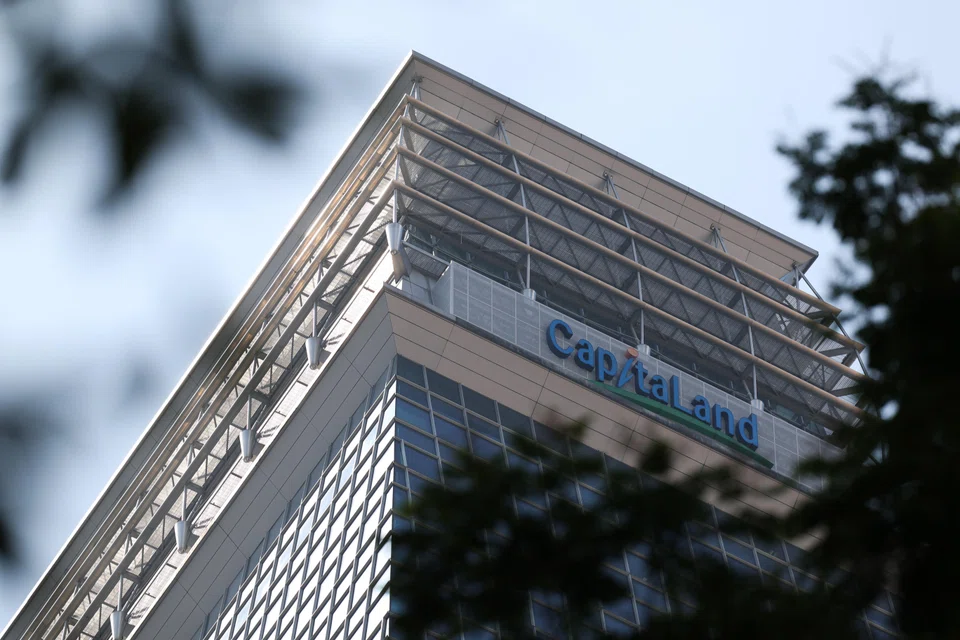
INDUSTRIAL property player CapitaLand Ascendas Reit (Clar) saw distribution per unit (DPU) fall 2.5 per cent for the half-year ended June to S$0.07524. This comes amid an enlarged unit base and higher finance costs.
The lower DPU came even as H1 revenue was up 7.2 per cent year on year at S$770.1 million, while net property income (NPI) rose 3.9 per cent to S$528.4 million.
The growth was driven by acquisitions and newly completed properties in FY2023, although NPI was slightly weighed down by higher operating expenses with a larger portfolio.
Finance costs at Clar rose 16.3 per cent to S$123.3 million, due to higher interest expenses.
The total amount available for distribution went up by 1 per cent to S$330.8 million.
William Tay, chief executive of Clar’s manager, nevertheless noted that distributable income was up despite the high interest rate environment. “This growth is attributable to the higher revenue and net property income, as well as a stable cost of debt,” he said in a statement on Tuesday (Jul 30).
The average rental reversion for leases signed in H1 was positive at 13.4 per cent. Clar expects the average rental reversion for FY2024 to be in the “positive high single-digit range”.
Clar has 226 investment properties across three segments: business space and life sciences; industrial; and data centres and logistics. Its portfolio – spanning Singapore, Australia, the US, the UK and Europe – was worth S$16.9 billion as at Jun 30.
The Reit’s portfolio occupancy rate stood at 93.1 per cent as at Jun 30. While stable in Singapore, Australia and Europe, the occupancy rate in the US portfolio fell to 87.7 per cent, from 89.5 per cent at end-March, due to the expiration of leases at two single-tenant properties.
Looking ahead, Clar is focused on identifying and undertaking redevelopments and asset enhancement initiatives (AEIs) to “maximise returns”. It has six such ongoing projects worth S$572.8 million.
One of them is the S$22.7 million AEI at Aperia, an industrial development in Kallang Avenue with complementary retail space. The improvement works will be completed in the fourth quarter of 2025. Another project is the S$1.5 million refurbishment of ONE@Changi City, a business space property, which is expected to be completed in Q3 this year.
James Goh, head of portfolio management, said in an earnings briefing that despite continued occupancy pressure as a macro structural trend in the US market, the manager has seen a return of tenant inquiries, particularly in the American tech cities of Portland and Raleigh.
“At the same time, we continue to face pressure...that is something we try to counter with some AEIs and proactive white-boxing,” he said.
AEIs help in retaining tenants and bringing in new ones, particularly in the US market, Tay said at the briefing.
He added that Clar’s focus is mainly on AEIs and asset redevelopment projects, given its current assets’ strategic locations.
Clar also wants to grow its portfolio “prudently through acquisitions and developments that are DPU-accretive”, said Tay, noting the Reit’s robust balance sheet and investment-grade credit rating.
The chief executive added at the briefing that US and Singapore are likely to be the markets for accretive acquisitions, if there are any, given the Reit’s prudency in capital management.
Tay said: “It does look attractive to take on high leverage, but there are other metrics that we look at ... So we want to watch all the different metrics to ensure that if there is a need to take on more debt to grow, I think this must be for good reason.”
As at Jun 30, Clar’s weighted average term of debt stood at 3.7 years, and its aggregate leverage remained at a healthy 37.8 per cent.
Together with a high proportion of fixed-rate debt at 83 per cent and a well-spread debt maturity profile, its weighted average all-in cost of borrowing is stable at 3.7 per cent, based on Clar’s financials.
Clar units closed Tuesday at S$2.68, up 0.4 per cent or S$0.01.






