

CapitaLand eyes AUM of S$100b by 2020 and S$3b in capital recycling each year
Singapore
CAPITALAND is aiming to grow its total assets under management (AUM) from S$88.8 billion as of end-2017 to S$100 billion by 2020, even as it announced a 20 per cent increase in core dividends for fiscal 2017 to 12 Singapore cents a share.
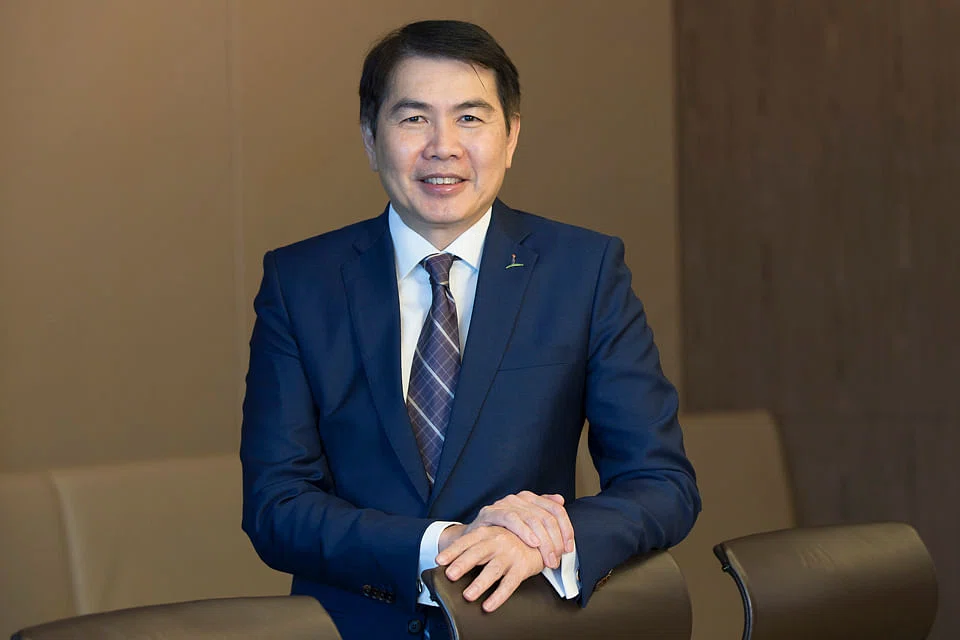
To achieve that AUM growth target, the group can co-invest with funds and capital partners or manage the assets on behalf of funds or third-party owners without taking on equity stakes, said president and group chief executive Lim Ming Yan.
This is in line with its asset-light strategy to drive growth in return on equity (ROE), having delivered an ROE of 8.5 per cent for fiscal 2017, up from 6.6 per cent in fiscal 2016.
"S$100 billion is a size we think is good and strong enough for CapitaLand to be fairly resilient and enjoy economies of scale," he told The Business Times on Tuesday.
"In terms of approach, we don't have to own 100 per cent of the properties. We are happy to own a certain percentage. With that, it actually frees up a lot of capital for us to consider new opportunities."
The group had a total of group cash balances and available undrawn facilities of S$9 billion as at end-2017, which can be deployed into new investments.
But it is looking to extract more value from its stabilised assets. It is thus planning to recycle S$3 billion of investment properties annually by divesting them fully or partially to its sponsored Reits, fund partners or third parties.
This will also free up capital for new investments across asset classes globally, Mr Lim said. With more stabilised assets in its two core markets Singapore and China, more recycling is likely to take place in these markets.
The group unlocked S$2.6 billion through divestments and announced S$5.7 billion in new investments in fiscal 2017, during which it also racked up record operating after-tax earnings of S$908.3 million, a 5 per cent increase from 2016.
Its full-year results on Tuesday showed that net profit for the full year jumped 30.3 per cent to S$1.55 billion on the back of higher contribution from development projects in Singapore and newly acquired and opened shopping malls and serviced residences.
The increase in total PATMI (profit after tax and minority interests) was also due to higher portfolio and fair-value gains from divestments of Innov Tower in China, One George Street and Wilkie Edge in Singapore, as well as serviced residence properties in Germany, China and Japan.
For the fourth quarter, however, net profit slipped 37.8 per cent from a year ago to S$267.7 million, mainly due to lower handover of units for development projects in China. For the same reasons, revenue for the full year fell 12.2 per cent to S$4.6 billion; that for the fourth quarter dropped 35 per cent to S$1.2 billion.
But CapitaLand's improved ROE, dividends and landbank prompted "buy" calls from analysts on Tuesday. Morgan Stanley analysts said they believe a stock rerating from 0.8 times price-to-book to above one time is overdue. Shares of the developer were up 1.4 per cent to S$3.52 on Tuesday.
Having crossed its ROE target of 8 per cent, CapitaLand group chief financial officer Andrew Lim said the group aims to continue delivering ROEs above its cost of equity. He added that the dividends per share of 12 cents is a level that the group deems sustainable.
While the Singapore residential market has turned around, the group is also optimistic about China's residential market, and looking to replenish its landbank there.
CapitaLand China chief executive Lucas Loh said the group aims to sell and hand over a million sq m of units in China this year. At this rate, it would take about four years before its China residential landbank of 3.8 million sq m is sold down.
The group sold 407 units in Singapore worth S$1.5 billion last year and over 8,000 units worth 14.7 billion yuan (S$3.1 billion) in China. About 70 per cent of the value of units sold in China are expected to be recognised this year. In Vietnam, 44 per cent of the S$718 million worth of units sold last year is expected to be booked this year.
Meanwhile, retail figures in China are also looking up, with the same-mall net property income growing at 8.6 per cent in fiscal 2017, and tenant sales up 7 per cent.
The group announced last month that it is offloading its stake in 20 Chinese malls for 8.37 billion yuan (S$1.71 billion), as part of its strategy to move away from Tier Three cities to focus on Tier One and Tier Two cities. This divestment is expected to be completed in the second quarter.
CapitaLand also, through its associates and subsidiaries, sold its stakes in six malls in India and the property manager of these malls for S$71.5 million in December.
Mr Lim Ming Yan said developed and transparent markets like Japan, Europe, the US and Australia present investment opportunities for the group as it seeks to recycle capital from lower-yielding assets to higher-yielding ones.






