CapitaLand eyes greater presence in China post-ASB merger
The merger has opened up avenues for scaling up in key cities, and acquainted the group with business-space assets

Nisha Ramchandani
Chongqing, China
OPPORTUNITIES have opened up for CapitaLand - following its merger with Ascendas-Singbridge (ASB) - to scale up in key city clusters in China and to widen its range of asset classes there, thus giving it a competitive advantage over other players.
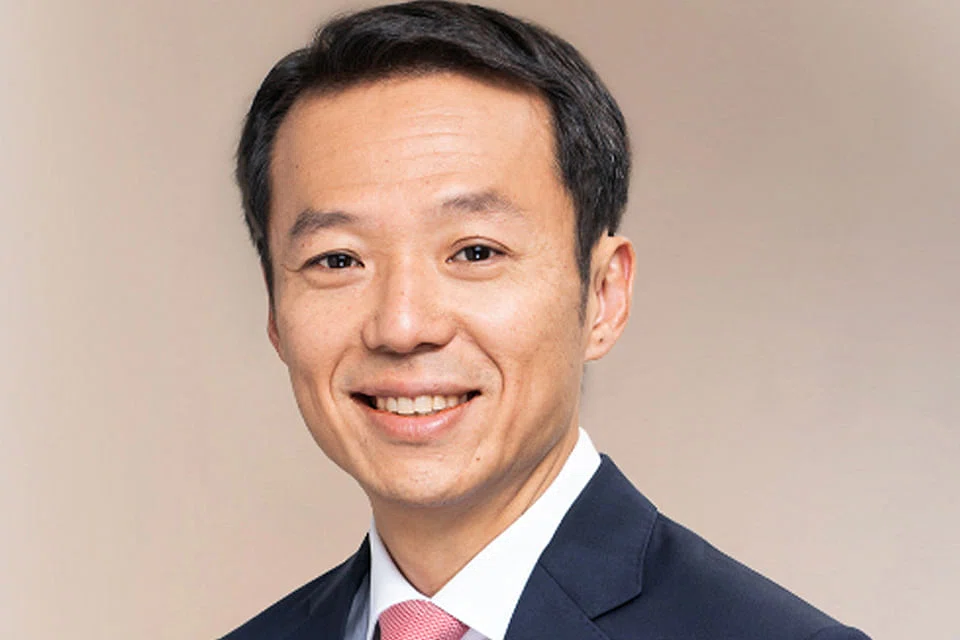
Lee Chee Koon, CapitaLand's group chief executive, declared to The Business Times in an interview: "China will remain a key market for CapitaLand, and be the single largest market for CapitaLand."
The group has earmarked five core city clusters in China to focus on for growth: Shanghai/Hangzhou/Suzhou/Ningbo; Beijing/Tianjin; Guangzhou/Shenzhen; Chengdu/Chongqing/Xi'an; and Wuhan.
Uncertainties in the global environment could cause some pressure in the short term, he said, but cited factors such as the strong Chinese economy, the size of the country's population and advancements in the technology sector as reasons to be positive in the long run.
He added: "I think in the medium- to long-term, China will continue to offer deep opportunities."
The group's S$11 billion acquisition of ASB at the end of June has given CapitaLand exposure to asset classes such as business parks and IT parks, which will create opportunities to build scale in the core city clusters; it also means being able to tap ASB's expertise in these new asset classes, thus honing its competitive edge over other developers.
Before the merger, ASB already had business parks in Suzhou, Xi'an, and Hangzhou, for instance; the provider of business space is also involved in Guangzhou's Knowledge City.
In April last year, CapitaLand signed a Memorandum of Understanding with Ningbo's Haishu District government to explore investing in a large-scale business park comprising research-and-development facilities, offices and homes. Ningbo, a coastal city south of Shanghai, is seeking to attract higher-tech manufacturing industries.
Construction on the first plot of land, with a planned gross floor area (GFA) of 100,000 sq m, will begin by month's end. It is slated for completion by end-2021, and cater to firms from sectors such as smart manufacturing, new materials, innovation and technology.
Business parks attract companies and create employment, which could then pave the way for the real estate giant to collaborate with local governments on other land-development projects, such as integrated developments.
These projects can also be undertaken with other players, including developers, so that the group does not tie up too much of its resources.
Aside from helping CapitaLand to build up a pipeline, such projects stand the group in better stead to negotiate for larger parcels of land and at more reasonable prices as well, said its management. Building up a land bank in China by bidding for individual land parcels via tender, on the other hand, can be a competitive process.
Another engine for growth for the group following the merger is fund management.
Mr Lee said: "On the capital side, you will see us using a lot more private equity funds, both in the US dollar fund that we raised (CapitaLand Asia Partners I), and you'll see us putting in a concerted effort to develop the fund business in China, tapping the RMB.
"Apart from the development side of the business, the fund management side is one area we really want to focus on."
To this end, the group needs to acquire good sites at good prices and then to execute the project well so it can reap the right level of returns.
Lucas Loh, president (China) of the CapitaLand Group, said that as the group embarks on bigger projects, funds and asset management structures will come into play more in the development business.
"Going forward, as we deal with more of these business parks and bigger township developments, we will have to use third-party capital, (and) build up our fund-management capabilities in terms of handling the development project as well."
In line with capital recycling, the group aims to divest at least S$3 billion worth of mature assets annually, and redeploy these funds in other opportunities; channelling them into one of its Reits or PE funds would also enable the group to grow its fee-income business.
Presently, fund management contributes 7 to 8 per cent to the group's overall profit, although it hopes to grow the figure to the mid-teens in three to five years.
Following the merger with ASB, CapitaLand said that it is in a position to consider more fund products involving sectors such as business parks and logistics, and that it will look at assets globally, including markets such as US, Europe, Australia and Japan.
The enlarged CapitaLand group now has eight Reits and 23 funds; of the funds, 13 are China-focused.
China aside, the group sees India, Singapore and Vietnam as its key growth markets for development.
As companies increasingly train their focus on digitalisation, demand for IT capabilities out of India is rising, which in turn drives demand for IT parks in the country, Mr Lee noted.
In Singapore, CapitaLand is looking at overhauling some of its existing assets, including Science Park 1. "We have enough projects lined up that will settle our growth in Singapore for the next 10 to 15 years," he said, declining to reveal more for now.
The acquisition of ASB has brought synergies in that the enlarged entity can redevelop existing assets or carry out asset enhancement works by leveraging the different capabilities within the group to unlock potential, he said.
In China, it is also studying opportunities in, for example, rejuvenating some business parks and upgrading or changing some of their uses.
Other potential synergies to be tapped as a result of the merger include offering cross-geographical solutions to its customers.
READ MORE:
TRENDING NOW
Grab CEO’s wife Chloe Tong on life with Anthony Tan and finding her purpose
Singapore-based Ryde accused of pump-and-dump fraud in class action lawsuit
Malaysia’s F1 return: A low-cost second chance, possible Singapore boost
Canada is upping oil flows to Asia, but South-east Asia’s refineries aren’t ready to handle them yet