CapitaLand Investment may pave way for other real estate investment managers to list on SGX

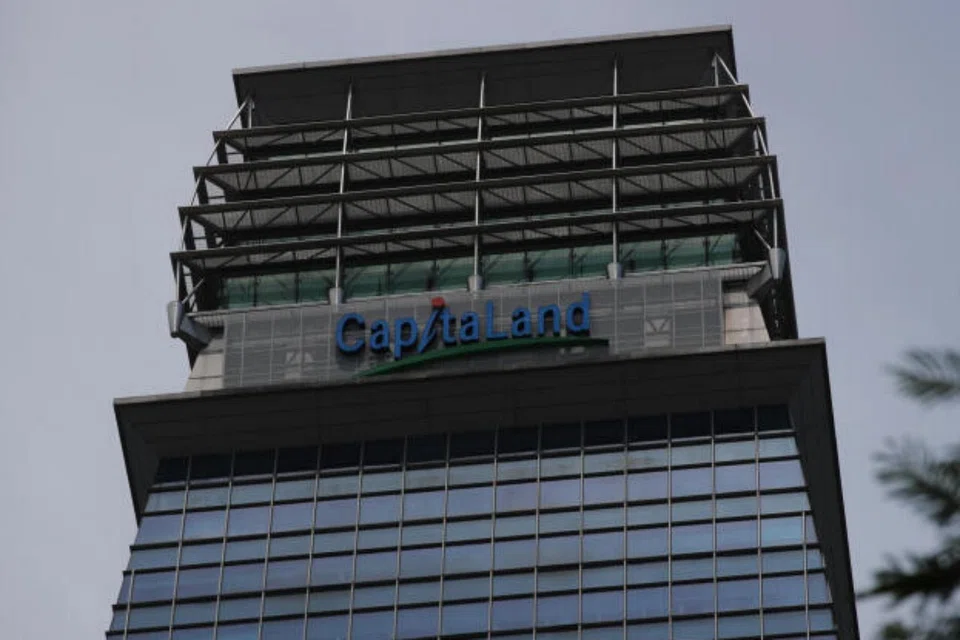
SHAREHOLDERS of CapitaLand have had plenty to cheer about over the last few months.
The property group recently posted a net profit of S$922 million for the first six months of 2021, putting it well on track to reversing its full-year loss in 2020.
The share price is up by around 20 per cent compared to where it last traded prior to announcing a major restructuring plan in March, closing at S$3.96 on Tuesday.
Shareholders have recently given the nod to the group's plan to split its business into a privately-held development arm and a new listed unit for investment management platforms and lodging. The listed unit - CapitaLand Investment (CLI) - will be a real estate investment manager (REIM) with pro forma real estate assets under management (AUMs) of S$115 billion as at end-2020.
Are investors justified in bidding up CapitaLand's shares?
Valuing the investment management unit
The answer depends largely on how CLI trades when it makes its debut around Sept 16. If CLI can trade aboves its book value, the market is underpricing CapitaLand even after the big share price rally.
Based on pro forma net asset value (NAV) of S$14.7 billion as at Dec 31, 2020, excluding the effect of acquisitions and disposals, CLI's NAV per share is S$2.823.
In an investor presentation, CapitaLand pointed out that a basket of REIMs - including Australia's Charter Hall Group, Goodman Group and Lendlease Group, as well as Hong Kong-listed ESR Cayman - trade at an average of 2.9 times NAV.
On Aug 4, ESR entered into an agreement to buy all of ARA Asset Management for US$5.2 billion.
ARA is Asia's largest real assets manager with AUM of US$95 billion as at June 30, 2021. The price tag for ARA is close to five times its shareholders' equity of US$1.1 billion as at June 30, 2021.
The rich premium being paid for ARA may be linked to its asset-light model.
While ARA's latest AUM is slightly higher than CLI's end-2020 figure, the shareholder equity of CLI is multiple times that of ARA.
CLI's pro forma balance sheet as at end-2020 includes S$15.9 billion of investment properties. ARA's latest balance sheet does not include any investment properties.
For ARA, over two-thirds of earnings before interest, taxes, depreciation and amortisation (Ebitda) for the first half of 2021 came from fee income-related business. Fee Ebitda was just over a fifth of CLI's 2020 Ebitda, excluding the impact of revaluation and impairment.
An argument can, however, still be made for CLI shares to fetch above book value. If the same price-to-Ebitda multiple for the proposed ESR-ARA transaction, based on annualising ARA's H1 2021 Ebitda, is applied to CLI, the value of CLI should exceed its end-2020 book value, excluding the effects of acquisitions and divestments.
Considering the ESR impact
An enlarged ESR, should the deal with ARA go through, will be a major competitor to CLI in securing funds to manage and investment opportunities in Asian real estate.
The enlarged ESR will have US$129 billion in AUM, making it the world's third-largest listed real estate investment manager. It would draw more than 80 per cent of Ebitda from new economy real estate such as logistics and data centres.
The creation of an enlarged ESR isnevertheless positive for CLI, as investors and analysts will have a peer against which to benchmark CLI. While it will be the only REIM on the Singapore bourse, CLI has company in Hong Kong's ESR.
If CLI trades well, it may inspire other entities linked to Temasek Holdings such as Mapletree Investments and Keppel Corporation to list their REIM businesses.
Keppel is looking to boost the AUM of its largely real estate-focused asset management business from around S$37 billion as at end-2020 to S$47 billion through acquiring the non-media business of Singapore Press Holdings, which publishes The Business Times.
Mapletree increased its AUM by 9.6 per cent in its latest financial year ended March 31, 2021, to S$66.3 billion.
Back in 2002, CapitaLand was the pioneer in the local real estate investment trust (Reit) market when it successfully listed Singapore's first Reit. Today, Singapore boasts a Reit market substantially larger than that of Hong Kong.
By trading well, CLI and ESR may get big family-owned groups in their respective markets to more actively embrace Reits and private funds, grow their REIM businesses and list such businesses.
Could the Singapore bourse grow its REIM sector? Might listed REIMs fill the void left by property groups making their exodus from the local bourse?
Founded by Singaporean John Lim and Hong Kong's Cheung Kong in 2002, ARA listed in Singapore in 2007 and was privatised and delisted in 2017. For now, ARA will not make a return to the local bourse.
The ball is with CLI to see if REIMs can flourish on the Singapore Exchange (SGX).
CLI will need to grow its AUM, recycle assets quickly, drive earnings, get good exposure to property asset classes with strong structural drivers, and hopefully deliver double-digit return on equity.
The corporate structure and business model look right. It is now about delivering consistent and sustainable performance.
All eyes are on Lee Chee Koon, who will lead CLI, and his team to deliver at CLI for the benefit of its shareholders, local equity investors in general, and the SGX.