

CapitaLand Investment to seed future data centre fund with US$700m investment in Japan
It is making disciplined acquisitions without acting like ‘a kid in a toy store’, says CLI’s Manohar Khiatani

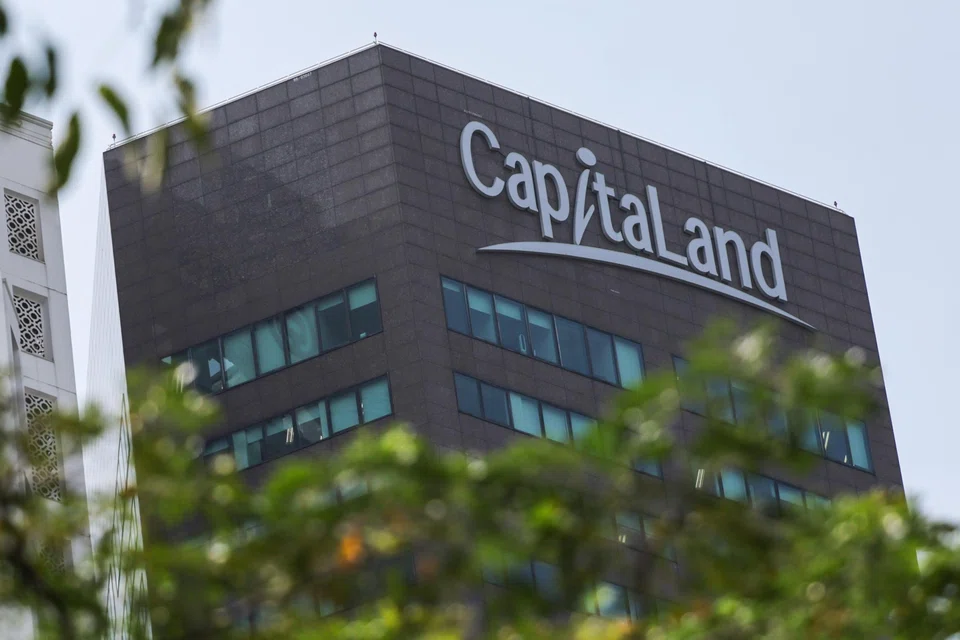
ASSET manager CapitaLand Investment (CLI) will invest more than US$700 million in a freehold land parcel in Osaka, Japan, to develop a data centre with 50 megawatts (MW) of capacity.
The company announced on Tuesday (Feb 4) that the investment will seed a future data centre fund.
In an interview with The Business Times, CLI senior executive director Manohar Khiatani said that the company is bullish on data centre demand, and that the move is part of its strategy of leveraging different liquidity pools to grow its portfolio.
He noted that CLI has added 23 data centres to its portfolio since 2021. In total, the company manages 27 such centres in Asia and Europe, with about 800 MW of capacity. On a completed basis, these amount to some S$6 billion in assets under management.
Khiatani attributes the company’s ability to quickly scale up its data centre exposure to its on-the-ground presence in more than 40 countries. These include India, China, South Korea, Japan and Singapore, where the company is focused on seeking data centre opportunities.
“We have deep local expertise on how to acquire land sites… get approvals, design and develop the buildings.” He added that this skill set is “sometimes underestimated”, and that pure data centre operators lack a real estate background.
He also said that CLI can tap various capital pools in both listed and private funds to cater to different data centre business models and returns profiles.
“Just relying on your balance sheet does not allow you to scale up, so being an investment manager with different capital pools helps a lot.”
He added that the company is not in the business of trading properties, and is more interested in keeping projects for the long term.
“When a data centre stabilises, it may go to a different capital pool. It can be a real estate investment trust, or it can be a private fund, depending on the situation,” he said.
CLI has also been building its credibility with hyperscalers and other data centre customers. Khiatani said that the company now has more than 70 data centre specialists, up from five before it began expanding its portfolio.
In September 2024, the company also hired industry veteran Kenny Khow as CLI’s global data centre managing director. He previously held leadership positions in companies such as Digital Halo, ESR Singapore and Keppel Data Centres.
Khow said that it is important that the company works with customers to understand their requirements before choosing suitable sites to build data centres.
For instance, the Japan market is fairly tight due to the limited supply of new power capacity for data centres. A major benefit of acquiring the site off-market was that power could be supplied to the site in three years, compared with other sites, where the wait for power could be five or more years.
Based on data from Statista, Japan’s data centre market is projected to expand at a compound annual growth rate of 10 per cent, from US$23.8 billion in 2023 to US$38.7 billion in 2028.
Khow said CLI can provide customers information about select locations and their alternatives if access to power is constrained, and if regulations could kick in to limit access further.
“We operate on a market-by-market basis, but we are very mindful that power is a constraint,” he said.
Khiatani added that the company does not have a target proportion of hyperscalers and co-location customers, and that it would go after whichever generates higher returns.
He noted that while hyperscalers generally pay a lower rate, they take up a lot of capacity at one go. Individual enterprises, on the other hand, buy less capacity but pay a higher rate.
Khiatani said that the company needs to be ambitious, but also remain prudent to achieve disciplined growth, amid a hot data centre market.
“I constantly remind (staff): ‘Don’t act like a kid in a toy store’,” he said.
Beyond acquiring individual assets, he said that the company also hopes that its data centres add value to its existing portfolio.
He added that an example of this sort of value-add is in the company’s Bengaluru and Hyderabad data centres, which are situated in and enhance the value of CLI-managed business parks.
As the company looks to expand its data centre portfolio, Khiatani said that it will also seek to invest in sites that have more power capacity, especially on greenfield sites. On average, the company will invest in data centres with capacities of around 50 MW or more, he said.
Khow said that this drive to invest in greater capacities has come about in the last 12 months because of growing interest in artificial intelligence (AI), which the company is studying.
However, he said that the company is not expecting to build massive AI data centres of 1 gigawatt, like some data centres in China, for AI training.
Instead, it is serving hyperscalers that provide cloud services – which continue to grow steadily – to enterprises.
He said that while AI development presents an opportunity to create hockey-stick growth, the growth of cloud services continues to be linear, and is an area that the company remains very focused on.
The announcement comes after the manager of CapitaLand India Trust (Clint) said on Jan 15 that it signed a long-term agreement with a “leading global hyperscaler” for one of its data centres under development.
With the agreement, Clint is likely to pre-lease about half of its total gross power capacity of around 250 MW across its four data centres in India, which are under development.
TRENDING NOW
Motoring tycoon Peter Kwee is back in court: Here are his previous legal battles

Demand, tech capabilities position Apac and AI as Skyscanner’s next growth frontiers: CEO Bryan Batista

Beyond the greenback, Vietnam’s big borrowers turn to Asian-currency bonds

Nvidia’s outlook cut to stable by Moody’s on governance concerns

