

Cartier owner sales lifted by jewellery, improving Asia
Strong demand for jewellery boosted the sales of brands such as Buccellati, Cartier, Van Cleef & Arpels and Vhernier by 6%
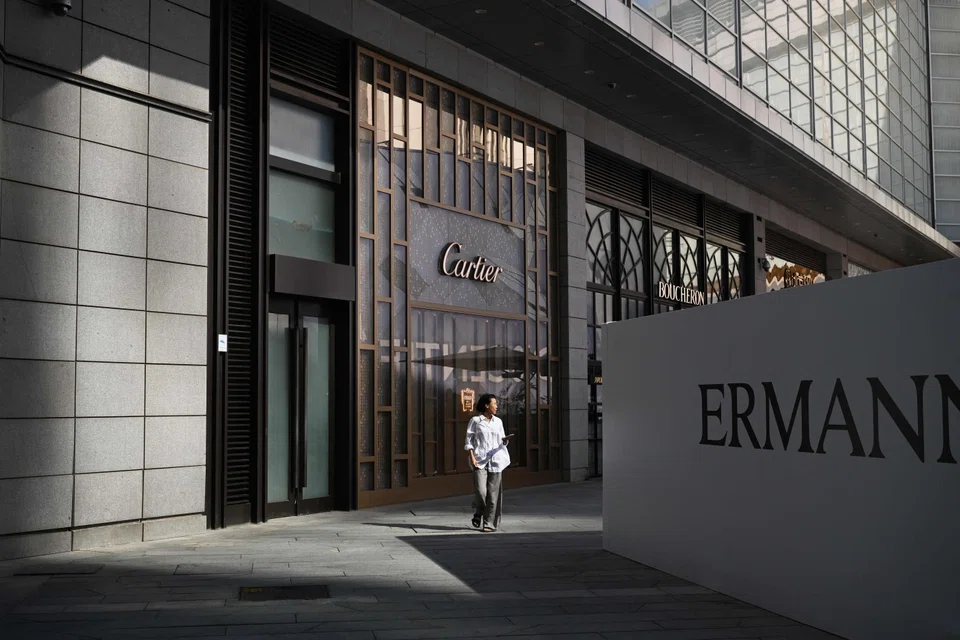
[ZURICH] Swiss luxury group Richemont, owner of Cartier and other iconic luxury brands, reported sales on Friday (Nov 14) which were ahead of analysts’ forecasts, notably thanks to the strength in its jewellery division.
A rebound in some Asian markets, especially China, also contributed to its performance, resulting in sales of 10.6 billion euros (S$16.04 billion) between April and September – the first half of Richemont’s financial year – signalling a rise of five percent.
Stripping out exchange rate factors, the increase was 10 per cent, the company said.
The sales figure is higher than a consensus forecast by analysts of 10.4 billion euros, compiled by AWP, a news agency based in Zurich.
Richemont chairman Johann Rupert called the group’s performance “solid”, saying in a statement it had been achieved “against a persistently complex macroeconomic and geopolitical backdrop”.
Richemont’s net profit came in at 1.8 billion euros, a massive increase over the 457 million euros reported a year earlier, when profits were weighed down by a major asset writedown.
Sales growth was in double digits in Europe, the Americas and the Middle East, while China, Hong Kong, Macau and Japan returned to growth.
Strong demand for jewellery boosted the sales of brands such as Buccellati, Cartier, Van Cleef & Arpels and Vhernier by six per cent in the reporting period, with momentum accelerating in the second quarter.
“Against the backdrop of significant currency movements, higher raw material costs and to a lesser extent, the initial effect from additional US duties, the Jewellery Maisons implemented measured price increases whilst managing their costs efficiently,” Richemont said.


Richemont’s results announcement coincided with a visit by Swiss Economy Minister Guy Parmelin to Washington, in the hopes of reducing steep tariffs imposed by US President Donald Trump.
Trump stunned Switzerland in August when he imposed 39 per cent duties on imports from the country, among the highest in his global tariff blitz.
Looking ahead, Richemont said it was “evident that (they) will need to continue navigating through uncertain times, given that recovery paths remain unsteady, for instance in China, and that external pressures show no sign of abating”.
Investors welcomed the set of results, pushing Richemont’s share price up by nearly eight per cent to 174 Swiss francs, in early Friday business on the Zurich stock exchange. AFP
Decoding Asia newsletter: your guide to navigating Asia in a new global order. Sign up here to get Decoding Asia newsletter. Delivered to your inbox. Free.
Share with us your feedback on BT's products and services
TRENDING NOW

Once staunchly pro-China, Malaysian Chinese businesses are now distancing themselves from Beijing

Looking beyond looming CEO succession, should UOB potentially pursue a transformative merger?

Could stablecoins be the future of money?

Grab CEO’s wife Chloe Tong on life with Anthony Tan and finding her purpose

