

Catalist companies underperform amid macroeconomic volatility

Yong Jun Yuan
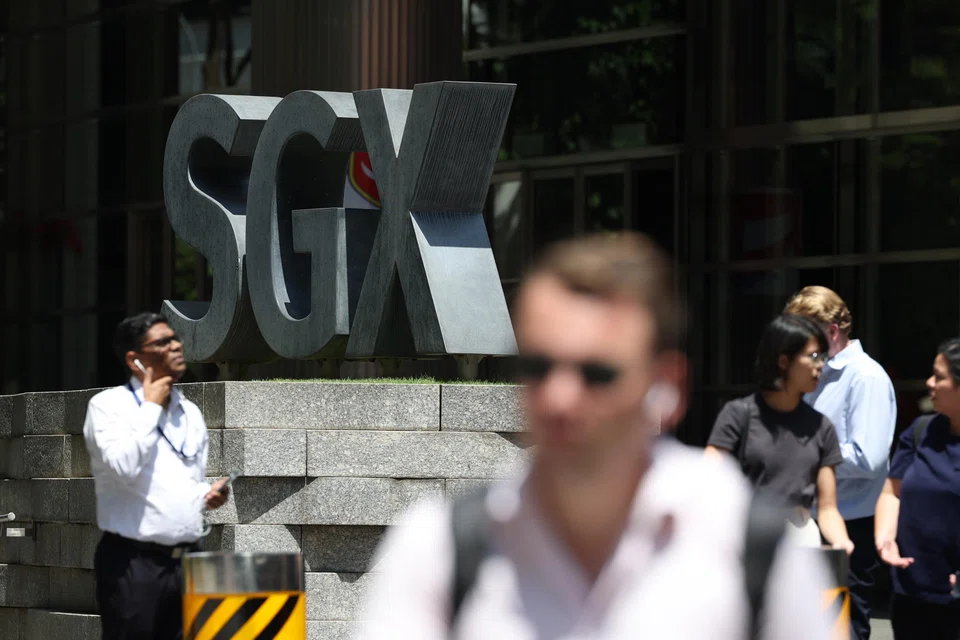
CATALIST-LISTED companies in Singapore are underperforming as poor liquidity coupled with economic swings weigh on investor sentiment.
In the year to Nov 24, the FTSE ST Catalist Index has fallen 19.3 per cent. In comparison, the FTSE ST All-share Index has dropped 5.3 per cent while the benchmark Straits Times Index (STI) has dipped 4.8 per cent.
RHB Singapore senior research analyst Alfie Yeo said the Catalist companies he has reviewed are collectively expected to turn in net losses. “While both (STI and Catalist) companies are expected to grow in revenue, we believe the larger-market capitalisation STI companies have better economies of scale,” he said.
This scale would, in turn, enable the larger companies to better control their costs and improve or maintain their profitability.
The small size of Catalist companies also hurts their tradability.
According to SGX data, just 13 of the 180 Catalist stocks have market capitalisations of more than S$100 million.
Catalist stocks booked a total of S$3 million in net institutional outflows during the year to Nov 14, compared to S$3.4 billion net institutional outflows for mainboard stocks.
Because smaller-cap stocks tend to be less liquid, Yeo said they tend to receive little investor interest – especially among institutional funds, which would find it challenging to both acquire and exit a position. “Some of the illiquidity due to a lack of participation would result in inefficient trading,” he said.
Phillip Securities head of research Paul Chew said poor liquidity can also lead to higher volatility in share prices of companies on Catalist. “In the current weak economic environment, there will be exaggerated share price moves to the downside,” he said.
In general, Chew noted that small-cap stocks are more sensitive to economic cycles and small swings in revenue. “These companies have higher operating leverage, and small swings in revenue cause larger fluctuations in earnings.”
He pointed to director pay as an example of a fixed cost at a micro-cap company.
Another factor that could weigh on the Catalist index is that winners tend to leave the index for the mainboard.
Singapore Exchange market strategist Geoff Howie said: “(Companies) can come to the board, grow their business, engage in secondary fundraisings, whether it’s rights issues or placements, and then also graduate to the mainboard.”
Oil exploration and production company Rex International was one such example, receiving approval to do so in 2022.
Since it moved to the mainboard, shares in the company have chalked up a total negative return of 64.8 per cent.
The Catalist index has not always underperformed the broader market, though. In fact, it outperformed the STI from 2008 to 2010, and again over 2020 and 2021.
This may have been due to shifting risk appetites of investors.
Joanne Goh, senior investment strategist at DBS, said small and mid-cap stocks tend to outperform when risk appetite is very strong and global equity indices are rallying.
Over the two years from 2020 to 2021, the Catalist index booked a total return of 8.5 per cent while the STI posted a total return of 3.9 per cent.
Goh declined to comment specifically on Catalist stocks, as DBS does not cover small stocks in the region.
Carmen Lee, head of OCBC Investment Research, noted that junior bourses in the region have performed quite differently in recent years and that Catalist is part of this mixed bag.
Over the five years to Oct 9, the Catalist index returned minus 44.7 per cent while the Hong Kong GEM Index returned minus 86.2 per cent. The Bursa Malaysia GEM Index delivered a positive return of 2 per cent during the same period.
TRENDING NOW

Things to know about DBS’ incoming chairman Anthony Lim
DBS eyes prime brokerage business as Q3 profit falls 5% on weaker trading income

Royal Group and Sunset Hospitality abandon plans to open Casa Mett hotel off Orchard Road

George Yeo adds 100,000 Wilmar shares at S$2.97 apiece, taking stake to over 1 million shares

