Catalist stocks’ poor performance highlights structural issues, market problems
Many have performed poorly since listing, with prices tumbling on the first day of trade and often seeing little to no trading volumes as a result

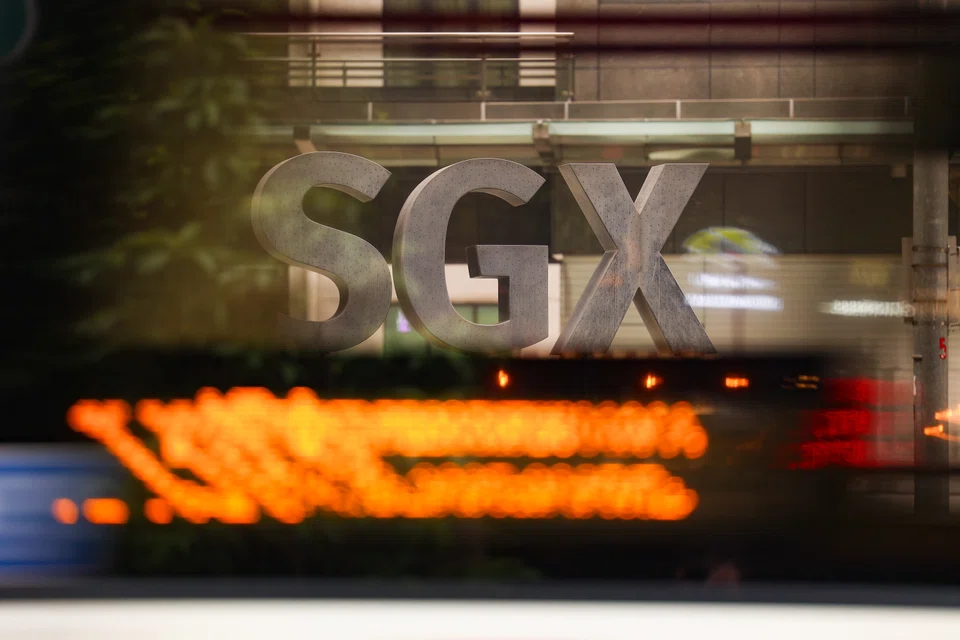
AMID a dearth of new mainboard listings on the Singapore Exchange (SGX), initial public offering (IPO) activity on the local bourse has been propped up by a handful of Catalist listings over the last two years. But the majority of these new entrants have struggled to find their footing.
The poor showing from these recently listed Catalist companies, however, will not be an easy issue to solve. For starters, industry watchers are divided on the reasons for these counters’ underperformance.
While some believe the subdued post-listing performance exposes gaps in the structure of SGX’s junior board, others say the issues stem from low valuations and are more of a market problem.
Observers believe the gaps could be addressed by the Monetary Authority of Singapore’s (MAS) review group on the local equities market. However, they also noted that investors may need to be more savvy when evaluating Catalist listings.
Several of the recent Catalist IPOs did not even offer a public tranche. Many have performed poorly since listing, with prices tumbling on the first day of trade and often seeing little to no trading volumes as a result.
Ooi Chee Keong, partner and head of capital markets at Forvis Mazars Singapore, said the underperformance of these Catalist companies highlights “structural challenges” that have to be addressed to ensure the board’s long-term viability.
These issues include the listing criteria of companies, which Ooi believes should be reviewed to prioritise companies with strong fundamentals, proven business models and clear trajectories.
“By setting higher standards for financial health and operational readiness, the market can better filter out companies that may struggle to generate investor confidence post-listing,” he said.
This view is supported by the fact that recent Catalist entrants were not in the greatest financial positions when they registered to list.
Healthcare provider Singapore Institute of Advanced Medicine (SAM), for example, was in the red when it listed in 2024. In FY2023, SAM widened its net losses to S$18.1 million, from S$12.4 million in FY2022.
It was recently thrust into the spotlight over its financial results. Its external auditors noted in a Dec 9 report that the presence of material uncertainties casts doubt on the group’s ability to continue as a going concern.
Meanwhile, Robson Lee, partner at Kennedys Legal Solutions, believes listing rules should be reviewed to simplify the requirements companies need to fulfil to remain listed.
Some issuers have highlighted that some required disclosures could result in “heavy costs of listing compliance”. For example, all listed companies will have to disclose direct and indirect greenhouse gas emissions from FY2025, to comply with the standards of the International Sustainability Standards Board.
“Catalist-listed companies that are cash-strapped find such disclosure requirements challenging,” Lee said.
“Market problem”
Leon Lim, partner at TSMP Law Corporation, believes the issue is more of a “market problem than a regulatory problem”, as SGX has “improved its approval processes and time to market”.
“The bigger issue is the low valuations in our markets, especially for smaller companies, which (are) a disincentive for companies to IPO here,” he said. He called for more support for Singapore-listed companies and “a better pipeline” of IPO aspirants.
At the same time, Rajah & Tann deputy head of capital markets Tan Mui Hui said external factors such as macroeconomic conditions must be considered as well, as they affect listings in general and are not confined to those in Singapore.
She noted there has been a year-on-year decline in IPOs, and a reduction in funds raised in these listings “on a global scale”.
For instance, a Deloitte report noted that the total capital raised across South-east Asia was at a nine-year low as at Nov 15.
“Given that the performance of capital markets is interlinked (at a global level)... the Singapore capital markets cannot be viewed in isolation and accordingly, it cannot be conclusively determined that the Catalist companies had performed poorly after listing,” Tan said.
Investor education key
There are currently measures underway to strengthen the equities market, most notably the review group established by MAS.
However, on a more granular level, educating more investors about Catalist stock opportunities may be a critical step to improving the vibrancy of SGX, said observers.
TSMP’s Lim said: “The overhang of regulators still trying to protect the retail public – which is not the ethos when you have a disclosure-based regime – still lingers.”
He added: “We need our local retail investors to be more savvy when investing in emerging technologies and not just look at price-to-earnings ratios – which require the companies to be profit-making – and dividend yields.”
Investors both retail and institutional have shied away from newer companies that come into the junior board, possibly due to a lack of understanding of the opportunities associated with Catalist counters, said Forvis Mazars’ Ooi.
“By improving access to information and providing more transparent disclosures, regulators and market operators can help investors make better-informed decisions, ultimately fostering greater confidence in this segment of the market,” he added.