
Catalist stocks ride on renewed market interest, but more needs to be done to spur mainboard transfers

Challenges faced in transitioning include low liquidity, limited visibility and investor perception issues, which hinder capital raising efforts

Summarise
Ranamita Chakraborty
Published Tue, Oct 21, 2025 · 07:00 AM
    • The Catalist board continues to serve as a springboard for growth companies, supporting their development and enabling their transition to the mainboard when they are ready and if they choose to do so, said SGX.
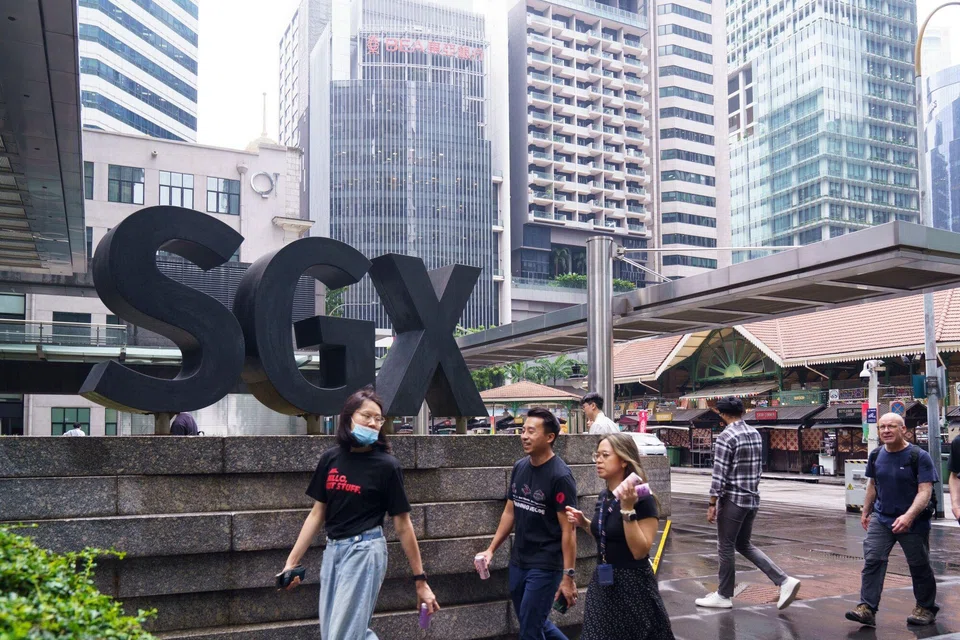
    • The Catalist board continues to serve as a springboard for growth companies, supporting their development and enabling their transition to the mainboard when they are ready and if they choose to do so, said SGX. PHOTO: BT FILE

    [SINGAPORE] Since it transferred from the Singapore Exchange (SGX) Catalist board to the mainboard in June, Malaysia-based Oiltek International has seen its average daily trading volume almost treble.

    Market capitalisation of the vegetable oil process engineering and renewable energy solutions provider has soared to S$366.8 million as its shares climbed to close at S$0.855 on Friday (Oct 17), from S$0.555 just before its mainboard transfer.

    Mechanical and electrical engineering services provider Ever Glory United , which applied for a transfer to the mainboard last week, will be hoping to replicate this success.

    Since its Catalist listing two years ago, shares of Ever Glory United have already jumped 211.4 per cent to S$0.685 from its initial public offering (IPO) price of S$0.22.

    The board said in a bourse filing that a mainboard listing will “enhance the long-term value for shareholders”.

    Indeed, for Catalist companies, a transfer to the mainboard holds the promise of a wider platform to reach out to a larger investor base that will include institutional investors and investors based overseas.

    But names like Oiltek and Ever Glory United remain in the minority.

    The Catalist board was introduced in November 2007 with a vision to provide high-growth companies access to efficient capital and faster time-to-market.

    But an overwhelming majority of Catalist stocks have been unable to transition to the mainboard due to persistent challenges. These include low liquidity, limited visibility and investor perception issues, which hinder capital raising efforts, market participants told The Business Times.

    “Many Catalist stocks have seen their prices fall after their IPO and subsequently experience very low trading volumes, as highlighted in recent market analyses,” said Vincent Toe, co-founder of investment firm ICH Group.

    This makes it difficult to attract and retain investor interest, and limits the companies’ ability to leverage their listed status for future fundraising or acquisitions.

    Jerry Chua, managing partner and chief executive officer at Evolve Capital Advisory, added that the Catalist board’s “limited trading volumes can deter institutional investors, while the absence of consistent research and media coverage weakens price discovery and valuation support”.

    Chua noted that some companies also underestimate the importance of sustained investor relations and transparent market communication, which can dampen long-term investor confidence.

    SAC Capital CEO Ong Hwee Li added that Catalist stocks also have limitations to investor interest as they are mostly Singapore-based. He noted that the relatively smaller size of local businesses and Singapore’s smaller population makes it often harder to generate broad investor appeal compared to larger economies.

    Ong noted that Catalist companies need a market capitalisation of S$150 million before they can move to the mainboard, which is difficult to achieve when trading liquidity is low.

    “Being listed will cost more than staying as a private company, so companies must carefully assess whether they can effectively tap onto the listing platform to raise capital for growth that aligns with their corporate strategy,” he said.

    “Springboard for growth”

    However, liquidity and trading activity in the Singapore market have improved significantly this year. Overall, investor interest in Singapore’s small and mid-cap companies has been picking up.

    Koh Jin Hoe, SGX’s head of capital markets, global sales and origination, told BT that from July to September 2025, turnover among small- and mid-cap stocks surged 88 per cent to S$257 million compared to the previous quarter.

    “We have also seen companies demonstrating significant growth following their listing on SGX Catalist,” he said.

    For example, recent Catalist listings such as Lum Chang Creations , Dezign Format and MetaOptics attracted strong institutional participation at their respective IPOs.

    Post-listing, their market capitalisations have increased significantly; Lum Chang Creations and MetaOptics have doubled in value, while Dezign Format has risen about 40 per cent.

    “These examples underscore how the Catalist board continues to serve as a springboard for growth companies – supporting their development and enabling their transition to the mainboard when they are ready and if they choose to do so,” said Koh.

    This transition process is not difficult as long as the company meets the required financial and operational criteria, added Toe.

    His firm, ICH Group, was the anchor investor in several recent Catalist and mainboard IPOs, including Lum Chang Creations, Info-Tech Systems and Goodwill Entertainment .

    A multi-pronged approach

    Toe also believes that there is adequate support available for Catalist companies making this shift.

    However, he sees the real challenge for most companies not in the process itself, but in achieving the scale, profitability and market capitalisation necessary to qualify for the mainboard.

    This is where a “more structured progression framework” could provide clearer guidance to help companies scale and understand the steps towards mainboard readiness, said Evolve Capital’s Chua.

    “A joint pathway – guided by SGX and sponsors – could include transition incentives, advisory support and transparent eligibility criteria, motivating issuers to aim for mainboard status,” he added.

    SAC Capital’s Ong believes that it will be good if fast-growing companies can use the Catalist board as a platform to “warm up” to the public market and its disciplines before transitioning to the mainboard.

    “Given the size of our economy, we should be realistic about having only fast-growing companies on Catalist,” he added.

    As the market sees more liquidity, partly thanks to initiatives such as the Monetary Authority of Singapore’s S$5 billion Equity Market Development Programme, Toe is observing a more supportive environment taking shape.

    To further strengthen the Catalist board, Toe advocates for a multi-pronged approach: improving investor relations, fostering independent research and ensuring dedicated sector coverage.

    As SGX moves forward with proposals to transition the mainboard towards a disclosure-based regulatory framework, Chua believes aligning it more closely with Catalist’s sponsor-driven model would be a natural evolution.

    “Catalist already operates under a disclosure regime supervised by sponsors, but further refinements towards a disclosure-based regime will broaden the issuer universe, which would add breadth and depth into the equity capital markets,” he said.



