

Cathay Pacific counts on South-east Asia’s burgeoning middle class to drive next growth phase
The airline has prepared for increased passenger and cargo traffic by boosting its capacity and expanding its home base

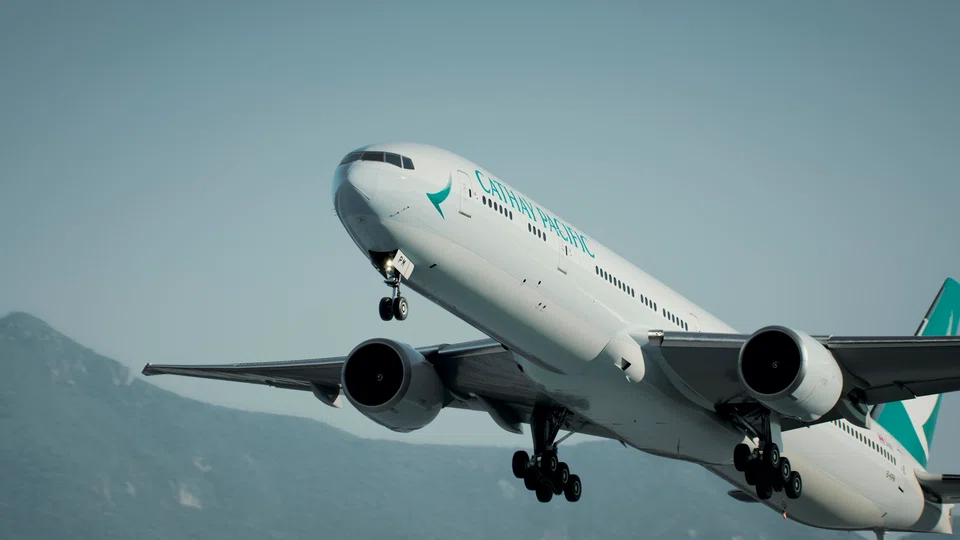
[SINGAPORE] Hong Kong-based Cathay Pacific is counting on South-east Asia’s fast-expanding middle class to power its next phase of growth, even as geopolitical tensions continue to disrupt global aviation flows.
Despite near-term headwinds from the Gulf conflict, the carrier said growth will come from its established key markets of China and North Asia – but South-east Asia will also be increasingly important.
Frosti Lau, Cathay Pacific’s regional general manager for South-east Asia and Oceania, said: “With the upcoming middle class in South-east Asia, more people from the region will want to explore places they have never been to before… and it will not just be outbound traffic, but inbound traffic as well.”

Based on data from the International Air Transport Association, Asia is the largest market for aviation globally and will continue to be for the foreseeable future, driven by solid economic growth and improving living standards.
Boeing’s Commercial Market Outlook predicted South-east Asia’s air traffic to be the fastest-growing in the world until 2044: 7 per cent a year, compared with 3 per cent for Oceania and 5.3 per cent for China. Its key regional connections will be China, North-east Asia, Oceania and the Middle East.
The airline will capitalise on this by boosting its capacity and capabilities, benefiting from major improvements to its home base – Hong Kong International Airport (HKIA).
Riding on headwinds
Despite current difficulties caused by the Gulf conflict, industry observers said Asia’s carriers stand to benefit from the closure of major Middle East hubs, especially on flights to Europe.
“Our focus is on maintaining our operations and schedules where it is safe to do so, while minimising disruptions as much as possible for our passengers and cargo customers,” said Cathay.
Despite cancelling flights to Dubai and Riyadh, Cathay has increased flights to Europe through London and Zurich, catering to increased demand as a result of problems faced by Middle East hubs and carriers.
Travel company Flight Centre Travel Group reported that bookings from Australia to Europe routing through Asian airports increased 34 per cent in the weeks Mar 2 to 15, compared with Feb 16 to Mar 1.
Looking further afield though, Cathay is ready for its next stage of growth.
“After a major uptick recently, I think we are where we were aimed to be before Covid, and we are looking at growing sustainably in the region with good demand,” said Lau.
In 2024, it announced a HK$100 billion (S$16.3 billion) investment to improve its fleet, cabin classes, lounges and more. It seeks to capitalise on increased operational efficiency and volume made possible by HKIA’s third runway.
Cathay’s investment has already begun to pay off.
In its full results for the financial year ended December 2025, released on Mar 11, the group posted a 9.5 per cent bump in profit to HK$10.8 billion, with revenue up 1.9 per cent at a record HK$116.8 billion. Its profit margin slipped 20 basis points to 9.3 per cent, but this compared well to the global industry average of less than 4 per cent.
The Cathay group includes the flag carrier airline, low-cost carrier HK Express and cargo line Air Hong Kong.
For the airline, demand – measured in revenue passenger kilometres – increased 28.9 per cent to 119.9 million. It outstripped capacity growth measured in available seat kilometres, which was up 25.8 per cent at 140.7 million. The airline carried 26.5 per cent more passengers year on year, or 28.9 million.
In 2025, Cathay added 20 new destinations with 14 of those in Asia, bringing its total number of destinations to more than 100.
The group currently has around 150 aircraft in total, with eight new aircraft to join in 2026, expanding passenger capacity by around 10 per cent. Another 25 aircraft are expected in 2027 and 70 in 2028.
On top of this, eight new narrowbody aircraft will be delivered in 2026. Cathay has more than 100 new narrowbody, regional widebody, long-haul widebody and large freighter aircraft in its delivery pipeline.
The next step
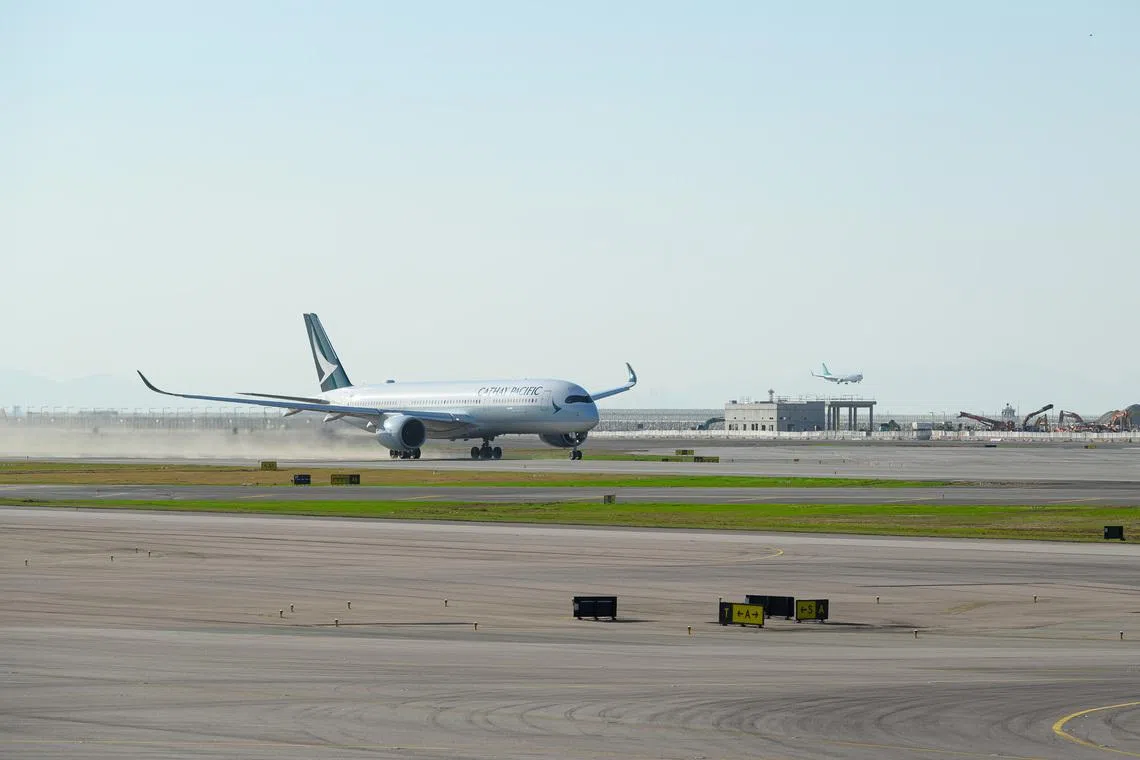
As a regional carrier, Cathay has long banked on intra-Asia traffic and long-haul flights to other regions, but Lau sees much potential in South-east Asia.
“South-east Asia is one of the world’s fastest-growing regions (for air travel)... We think we will have a lot of very strong demand, and this will be primarily business, student and leisure traffic,” said Lau.
The airline currently has around 430 flights a week to South-east Asia. He said it will continue to grow current routes while exploring new ones, because of its current fleet.
“With our fleet composition of Airbus A321neo, A330 and A350 and Boeing 777, we have flexibility to switch deployments to make sure we are able to meet demand while testing new routes – and that will be interesting for us in the next two to three years,” he said.
An example of this is in air cargo, where flights to Bangkok will commence shortly.
“For the first time, we have our own freighters flying (to Bangkok) in the coming months. It’s something quite buoyant in terms of how we capture the demand out of South-east Asia. Bangkok has been a missing piece for a long time,” he said.
Lau added that the premium cabin classes and air cargo are other areas that Cathay will grow in the region as well.
He said that more affluence in the region, as well as the demand for business class and premium economy, will keep growing – which is “quite important” for the group.
Cathay Pacific has been rolling out its Aria Suite business class product and new premium economy class since late 2024. The former boasts premium features, including a larger-than-standard 24-inch entertainment screen and sliding door.
It plans to introduce new cabin products from 2026. These include a flat-bed business class called Aria Studio for regional flights, and new first class suites in 2027 that will be on new flagship Boeing 777X aircraft.
Port of call
Cathay’s own capacity and cabins aside, Lau sees airports as an important factor as well, with major developments in Asean and Hong Kong.
This includes Cambodia’s new Techo International Airport serving Phnom Penh – which opened in late 2025 – and Long Thanh International Airport serving Ho Chi Minh City – which will open in 2026. Other upcoming regional airports include Nusantara, Indonesia and the new Manila airport by 2028.
These airports will potentially boost the region’s travel capacity by tens of millions at least.
“These airports are a game changer (for the region) and a major uplift in travel experience,” said Lau.
“We will look at not just (our flight) network, but also how we can influence the infrastructures in different airports.”
But the biggest step for the carrier is probably at its own home base.
HKIA’s three-runway system became fully functional from November 2024. In aviation terms, it’s a big step – the improvement added 50 per cent to the airport’s capacity, boosting it to 120 million passengers and 10 million tonnes of cargo a year.
It also makes HKIA one of only nine Asian airports with a three-runway system. Singapore’s Changi has three runways, but the third is undergoing upgrading and operations have yet to begin.
The upgrade opens up more possibilities for Cathay’s operations – not just in volume of traffic, but also additional flexibility for landing and parking. This is critical for airlines, and will help Cathay benefit from other transport connections.
It strengthens Hong Kong’s high-speed rail positioning (that links to China) and the benefits from multi-modal connections to the Guangdong-Hong Kong-Macao Greater Bay Area, he added.
“The Chinese government has a strategic directive to ensure Hong Kong remains a very prominent, international and efficient hub for us… to complement that, we want to make sure we capitalise on all the opportunities.”
TRENDING NOW

Britain’s mansion tax shows the difficulty of targeting wealth

Once staunchly pro-China, Malaysian Chinese businesses are now distancing themselves from Beijing

The only common thing in S-E Asia is that we all eat rice: Cisco’s Asean president

Singapore data centre operator DayOne opts for US IPO at likely US$20 billion valuation

