

CDL offers three-cent signal that recovery is underway, but value-unlocking is still key
If the property group's depressed shares are to realise their full potential, it has to follow through with big value-unlocking moves

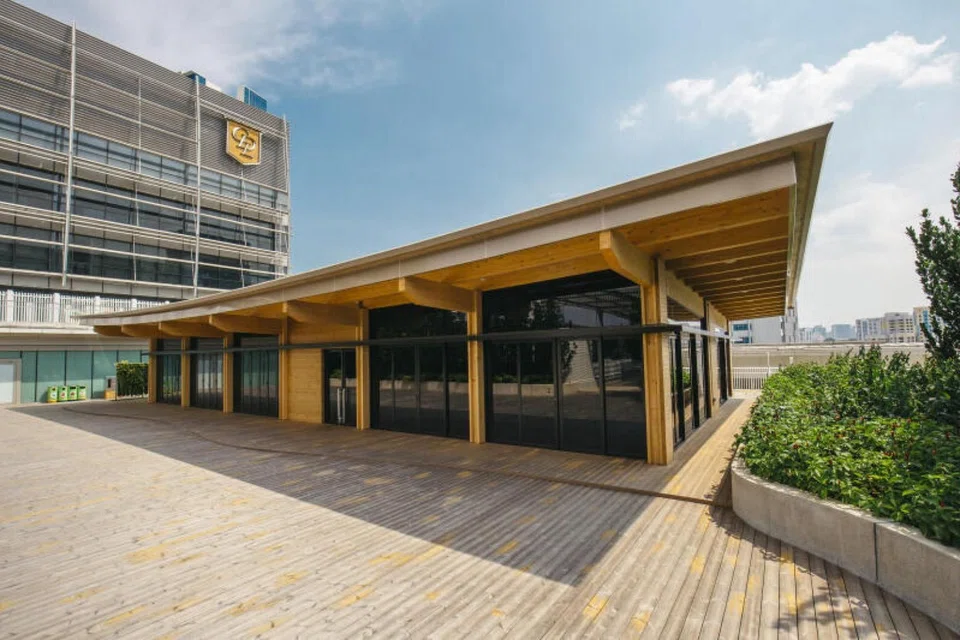
CITY Developments (CDL) gave investors a signal this past week of what could lie ahead for its core business divisions - by announcing a special interim dividend of S$0.03 per share with its half-year results.
To put that in context, for 2020 - a year blighted by the pandemic and revelations that its investment in China-based Sincere Property Group (SPG) had gone spectacularly awry - CDL waited until it reported its final results to unveil a special dividend of S$0.04 in addition to a final ordinary dividend of S$0.08.
For 2019, CDL paid a special interim dividend of S$0.06 as well as a special final dividend of S$0.06, on top of a final ordinary dividend of S$0.08.
My own interpretation of the timing and size of the latest S$0.03 special dividend is that CDL's board believes the company is not in the best of shape but that the outlook for its core businesses is brightening.
Certainly, the group's headline financial numbers for H1 2021 were not all that impressive. Revenue was 11.1 per cent higher year on year at S$1,192.2 million, driven largely by higher recognition of property development sales.
Pre-tax profit fell 29.3 per cent to S$9.7 million. This was due in part to lower profit margins on its development projects, and a decline in contributions from some of its commercial properties.
The group's hotel arm saw reduced pre-tax losses, but this was offset by reduced divestment gains and the absence of interest income from SPG.
The bottom line: CDL reported a loss after tax and minority interests of S$32.1 million for H1 2021, versus a profit after tax and minority interests of S$3.1 million for H1 2020.
Yet, CDL offered investors several reasons to be optimistic. For instance, it said its property development division has a launch pipeline of nearly 2,000 units from four different projects.
CDL also said it will soon commence the redevelopment of Fuji Xerox Towers, which will see a 25 per cent uplift in its gross floor area to some 655,000 sq ft. The plan is for 40 per cent of the space to be allocated for offices and shops, 25 per cent for serviced apartments, and 35 per cent for residential units.
The group also noted that its asset enhancement initiatives at Palais Renaissance and King's Centre are expected to be completed by H1 2022.
Meanwhile, CDL alluded to "green shoots" of a recovery in its hotel business - a term quickly picked up by analysts and the media.
Although revenue per available room declined 10.1 per cent year on year in H1 2021, CDL said occupancies at its hotels were up across all regions.
"We are optimistic of a stronger rebound by the end of 2021 (or) early 2022 and expect strong latent demand for travel domestically and regionally, with further upside once international travel is allowed," said CDL's executive chairman Kwek Leng Beng in a statement last week.
Weakening profitability
CDL's shares have bounced more than 3.3 per cent since the group reported its H1 2021 results. Its shares closed Friday at S$6.83.
Even taking this fillip into account, however, the stock has been the second worst performing component of the Straits Times Index this year - with a decline of 14.3 per cent.
This underperformance is all the more remarkable given the supposedly valuable assets sitting on CDL's books.
As at June 30, the group reported a net asset value (NAV) of S$9.22 per share. CDL's shares are currently trading at a 25.9 per cent discount to this NAV figure.
Of course, CDL's investment properties and hotel properties are famously carried in its books at cost less accumulated depreciation and impairment losses.
Factoring in the fair value gains on its investment properties and revaluation surpluses on its hotel properties, CDL's revised NAV (RNAV) as at June 30 would have been S$17 per share.
The stock is currently trading at a more than 59.8 per cent discount to this RNAV.
So, why have shares in CDL performed so poorly? And, why are they not garnering a decent valuation in the market?
This column pointed out last year that CDL had been suffering a steady erosion in profitability even before Covid-19 walloped its hotel business and lending curbs in China forced it to impair nearly its entire investment in SPG.
Consider this: CDL generated a return on equity (ROE) of 12.5 per cent back in 2010, and 11.7 per cent in 2011. By 2019, its ROE had slumped to just 5.4 per cent.
In 2020, CDL's profitability crashed through the floor as it took massive impairments for its investment in SPG as well as at its hotels business, resulting in a loss after tax and minority interests of more than S$1.9 billion.
As CDL launches more residential property projects in the months ahead, and rides the continued recovery in its hotels business, it will probably be back in the black by the end of the year, and report significantly stronger earnings in 2022.
But can investors expect CDL's ROEs to be any higher than they were back in 2019? And, even if CDL's recovering earnings helps boost its currently depressed shares, can they be expected to trade a much narrower discount to RNAV than before Covid-19 came along?
What can CDL do to realise the full potential value of its shares?
Unlocking value
Earlier this year, faced with a sea of red ink, CDL appeared to be on the brink of an aggressive value-unlocking programme - especially at its hospitality arm Millennium & Copthorne Hotels (M&C), which the group succeeded in taking private in 2019.
"Covid-19 has given us greater impetus to review our entire privatised M&C portfolio, with a view to unlocking the intrinsic value of the group's RNAV at the right time," said Mr Kwek in a statement in February.
In June, CDL also said that it had applied to Singapore Exchange and the Monetary Authority of Singapore to establish a Singapore-listed real estate investment trust holding UK commercial property assets.
Investors who were hoping to see big value-unlocking moves might now be feeling a bit disappointed though.
CDL has not followed through by providing a clear indication of exactly how much value it plans to unlock, or a roadmap for how it will identify underperforming assets and redeploy any cash it raises from their sale.
Moreover, as widespread vaccinations and quarantine-free travel gradually become realities, CDL might now be less inclined to pursue especially ambitious value-unlocking moves.
Given that the group's profitability was deteriorating even before Covid-19 came along, it seems unlikely that CDL's depressed shares will realise their full potential on the back of an organic recovery alone - even if it is accompanied by increased dividends.
TRENDING NOW
Prima to move out of historic Keppel Road flour mill building in 2028

Grab CEO’s wife Chloe Tong on life with Anthony Tan and finding her purpose
OCBC sheds S$8 billion in value as shares close nearly 6% down; analysts cautious on banks
As Asia’s food delivery giants rejig the pie, who will win the market?

