

CDLHT rides on staycation wave with W hotel acquisition
Occupancy at the 240-room hotel has reached up to 60-65 per cent on Fridays and Saturdays.

Kalpana Rashiwala
LAST November, when CDL Hospitality Trusts (CDLHT) unveiled its plan to acquire the W Singapore - Sentosa Cove, its top brass could never have imagined the blow to international travel and tourism that was to come just a few months later with the outbreak of Covid-19.
However, a silver lining from that acquisition is currently in play. The completion of the acquisition on July 16 this year has proven to be well timed to tap the staycation business.
On July 3, the Singapore authorities announced that hotels here may apply to reopen for staycation bookings. On July 9, the W Singapore received the official nod to do so; a week later, CDLHT completed its purchase of the hotel and has since been welcoming holiday-starved Singapore residents.
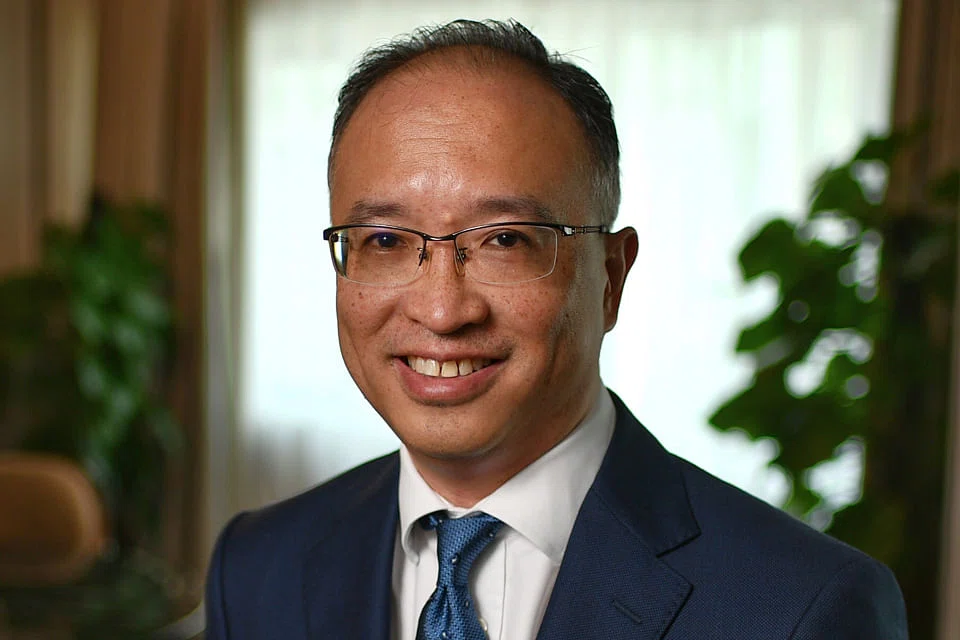
"From the level of bookings which the hotel has received, there is pent-up demand for a getaway retreat. For many living in Singapore, the entire setting for Sentosa is the closest emulation of the feeling of being away from Singapore on a vacation," said Vincent Yeo, chief executive of the managers of CDLHT, in a recent interview with The Business Times.
Since the re-start of the staycation business, occupancy at the 240-room hotel has reached up to 60-65 per cent on Fridays and Saturdays. Strong demand for rooms on these popular days among staycationers would allow the hotel to push for a higher occupancy but it has decided to cap the figure - to manage staggered arrivals, breakfast booking and seating capacity as well as social distancing restrictions in public areas.
Overall room rates at the hotel are comparable to pre-Covid levels due to strong pent-up demand, said Mr Yeo. The price of the entry-level category - Wonderful Room, at 40 square metres - starts from about S$400 per night on Sundays to Thursdays. On Fridays and Saturdays, the rate is higher, from S$480.
Demand for suites at W Singapore is elevated, including those with a private plunge pool; these suites (with plunge pools) are generally priced from S$1,500 a night.
"It is encouraging to see this pent-up demand and the tremendous support from the local market as well as demand from the expat community due to the international school holidays," said Mr Yeo.
CDLHT is a stapled group comprising a Reit and a business trust that was floated on the Singapore Exchange in July 2006. It owns 16 hotels and two resorts (totalling 4,926 rooms) as well as the Claymore Connect mall adjoining Orchard Hotel here. The group's properties are in Singapore, Auckland, Australia, Tokyo, the UK, Munich, Florence and Maldives. In its biggest market, Singapore, it has six hotels. Besides the recently acquired W Singapore, the others are: Orchard, Grand Copthorne Waterfront, M, Copthorne King's and Studio M hotels.
"The W Singapore - Sentosa Cove, which is riding on the staycation wave, is busiest on Fridays and Saturdays, school holidays and public holidays. Local residents are also interested to experience the hotel on Sundays to Thursdays when pricing is usually more competitive," said Mr Yeo.
Other than couples and groups of friends, the hotel's extensive facilities and location on Sentosa appeal strongly to families as well. "W" is one of the hotel brands under Marriott; and the strength of the Marriott distribution network and loyalty programmes have also drawn guests.
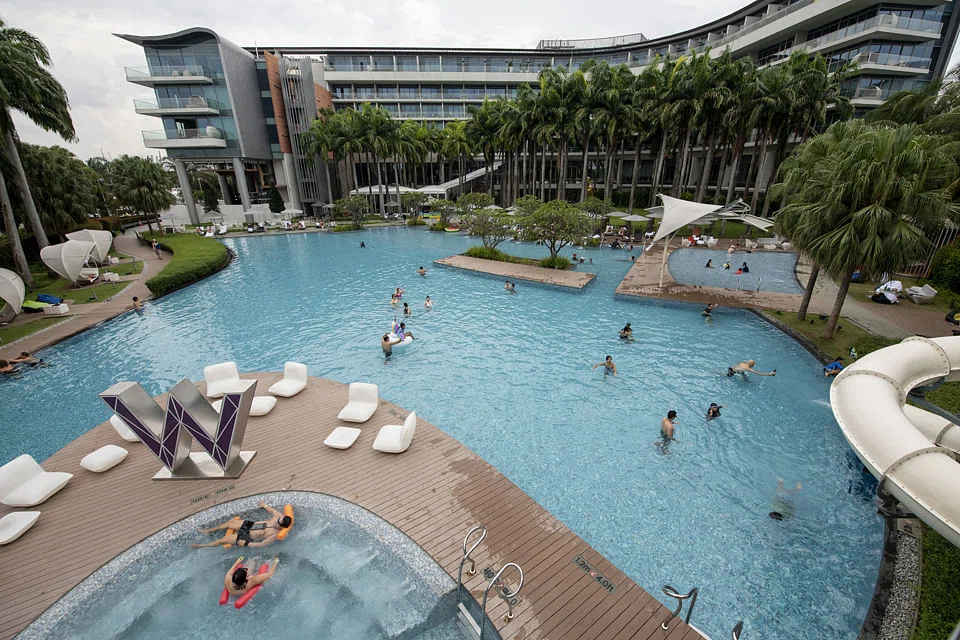
W Singapore's facilities include a spa with a decompression area; and a large pool with a 2,000 sq m outdoor area. The hotel has three F&B outlets. "Certain guest profiles such as families also choose the hotel due to the numerous attractions available on Sentosa," said Mr Yeo.
On mainland Singapore, CDLHT's Orchard Hotel, near the Singapore Botanic Gardens, has also been serving staycation guests since receiving the official nod in mid-July. The hotel has undergone an extensive revamp in the past few years.
For the first-half ended June 30, 2020, CDLHT's distribution per stapled security shrank to 1.51 Singapore cents from 4.16 Singapore cents in the year-ago period. Most of its properties - with the exception of its New Zealand and Singapore hotels - were either closed on a temporary basis, or were operating at low occupancies from March onwards due to strict travel restrictions amid the Covid-19 pandemic.
All but one of the group's properties are now open. The exception is Raffles Maldives Meradhoo, which will reopen in the fourth quarter of this year.
Like many other hotel owners in Singapore trying to make up for the loss of revenue during the pandemic, CDLHT has secured the isolation accommodation business from the Singapore government for some of its hotels here. "In the absence of international travel, corporate or MICE (meetings, incentives, conferences and exhibitions) demand, this alternative source of revenue enables hotels to remain operational, secure some level of revenue and retain as many jobs as possible," said Mr Yeo.
That said, nearly a fortnight ago, CDLHT's sponsor, Millennium & Copthorne Hotels (M&C) - which leases and manages five of the stapled group's Singapore hotels - retrenched 159 employees or 15.2 per cent of its Singapore-based workforce after reviewing its Singapore corporate office and hotel operations.
Of CDLHT's overseas hotels, only the Grand Millennium Auckland is being used as an isolation facility.
Orchard Hotel's occupancy has also been supported by it providing accommodation to foreign workers affected by border closures. These are mostly Malaysians, although the hotel has also been a temporary home to corporate guests of other nationalities.
Besides tapping alternative sources of revenue, another factor that has shielded CDLHT from the full impact of the pandemic is fixed rental income to the tune of S$36.7 million annually from the lessees of five of its six Singapore hotels (the exception being W Singapore) and the Auckland hotel. This rental income is paid to CDLHT by the respective lessees of the hotels, which are all subsidiaries of M&C.
M&C, a wholly-owned subsidiary of City Developments, owns a stake of about 38 per cent in CDLHT. Having a strong sponsor owned by a blue-chip group has its advantages.
While the operating climate in the short term is still uncertain, Mr Yeo is confident about the long-term fundamentals of the Singapore hotel market, the city state's status as a regional hub for many business activities, and its well-established reputation as a top international MICE destination.
"For our overseas (locations) with a domestic tourism market - for example, Japan, UK, Europe and Australia - business from domestic travel should resume first, followed by MICE and overseas travel."
On the broader macro front, a positive factor Mr Yeo highlights is that following the large demand shock to the global hotel market from the pandemic, future hotel rooms supply increases in most markets are likely to be less than previously projected.
Mr Yeo, who is a nephew of City Developments' executive chairman Kwek Leng Beng, also noted that those in the hotel business have never seen a situation where hotels have had to be closed for a protracted period of time.
"To compound matters, hotel groups with diversification have also never come across a situation where no geographic region has been spared." The lesson from this for CDLHT is that to mitigate risk, "we will also look at demand diversity throughout the hospitality and accommodation spectrum to further create sustainable value".
TRENDING NOW

CPIB hauls Multi-Chem CEO, COO in for questioning; stock hits ‘circuit breaker’

Fed hike throws Singapore banks a margin lifeline; UOB likely to benefit more

He built the Vingroup empire. Now South-east Asia’s richest man is handing some key roles to his sons
From Haidilao to Oriental Kopi: How some of Asia’s favourite F&B players are faring in 2026

