

CDLHT shifts Singapore hotel focus to occupancy as room-rate rally runs its course
The group is banking on a strong events line-up, robust tourism infrastructure and enduring wanderlust to boost its room take-up rates, which have yet to catch up with pre-Covid norms

Kalpana Rashiwala
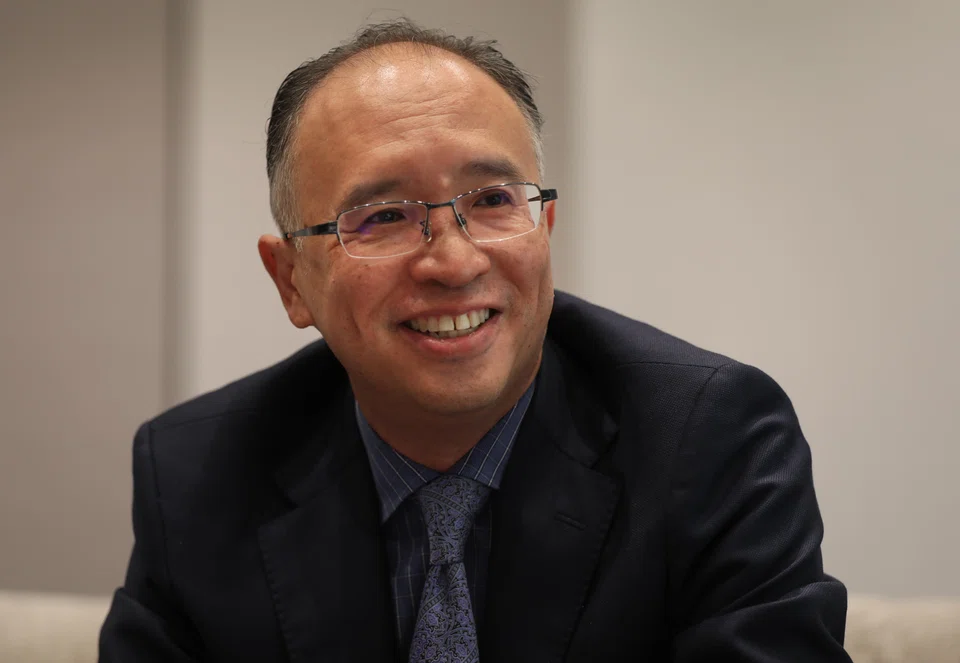
CDL Hospitality Trusts (CDLHT) has been riding the recovery in the hospitality sector, on the back of what its managers’ head honcho Vincent Yeo terms the “evolution of hotel room rates” in its core market of Singapore.
For a long time, room rates in Singapore were significantly lower than in other capital cities, despite hotels here running at very high occupancies. However, things began to change last year as Singapore emerged from the Covid-19 pandemic.
“Hotels accepted lower occupancy but achieved higher room rates, ultimately collecting more revenue,” said Yeo.
The trigger was a labour shortage in the city-state, which meant that a hotel’s available rooms were limited to the number that could be cleaned up. “Because of the lower inventory for sale, the hotels pitched their rates higher and they found that the demand was there,” said Yeo.
““If you have the right product and the right experience for people, they will pay.””
Vincent Yeo
Even after the labour shortage eased, this pattern of selling rooms at higher rates continued until September this year. “As a result, Singapore hotel room rates have gravitated closer to what major capital cities can command, based on data for the first nine months of this year,” said Yeo, the chief executive officer of CLDHT’s managers, in an interview with The Business Times.
Data from the Singapore Tourism Board (STB) shows that the average room rate for hotels here hit S$325.46 a night in September this year. This was up 13.4 per cent from the previous month and was the highest level since such data was first captured in STB’s Singapore Tourism Analytics Network in January 2008.
However, the figure slipped 14.6 per cent month on month to S$278.08 in October. Likewise, revenue per available room (RevPAR) fell 19.3 per cent to S$217.05 in October, from the record S$269 in the preceding month.
Some analysts have attributed the declines in October partly to seasonal factors; the September room-rate figure had been boosted by the Formula One Singapore Grand Prix. Moreover, competition from other Asia-Pacific tourist destinations, such as Japan and South Korea, are thought to have dampened tourist arrivals in Singapore, causing weaker hotel demand.
Said Yeo: “The next phase of revenue maximisation, at least for CDLHT, is to build up occupancy, which has yet to catch up with pre-Covid levels.”
At CDLHT’s Singapore hotels, the occupancy figure for the first nine months of this year was 75.2 per cent, lower than the 86.2 per cent in the corresponding period in 2019.
Yeo is optimistic about the Republic’s ability to pull in visitors. “The events calendar is getting stronger, with a string of concerts and conferences in 2024. Another draw is the development of the local culinary scene,” he added.
“Tourism offerings are getting better by the year. STB and the Singapore government are doing an excellent job in terms of the whole tourism infrastructure and air connectivity that’s being built up.”
Wanderlust
Yeo also pointed to the strong desire for travel that has manifested post-Covid. “We’ve seen this phenomenon in many parts of the world, including at our hotel in Florence, Italy, where people are prepared to pay room rates that are 40 to 50 per cent above the 2019 level.”
He acknowledged there is an element of pent-up travel, but added: “In the context that the economic environment is so poor right now, and that there are still enough people willing to pay premium room rates, really attests to the strength of the wanderlust element. I find this very encouraging for tourism, that if you have the right product and the right experience for people, they will pay.”
Even when pent-up demand recedes, some of those who had held back on travelling due to financial restraint will travel again or do so more extensively as economies, including China’s, recover, said Yeo.
Not putting all its eggs in one basket
Prospects for hospitality groups such as CDLHT are markedly brighter these days compared with during the pandemic, when most air travel was halted and hotels survived on the quarantine business from the Singapore government and later on, the staycation business from residents stuck here.
That said, the lessons learnt from the episode – including the importance of diversification, not only geographically but in terms of business activity – have not been lost on the stapled group.
In July 2021, CDLHT said it would broaden its principal investment mandate from hospitality assets to include other segments of the accommodation spectrum, or “living sector”, including rental housing and purpose-built student accommodation (PBSA). In the following month, the stapled group entered the build-to-rent (BTR) residential sector for a development in Manchester, involving an investment of £73.3 million (S$136 million).
Slated for completion in mid-2024, The Castings will have 352 apartments ranging from studios to three-bedders.
The BTR segment is also known as the private rented sector (PRS), and is akin to the multifamily residential sector in the US and Japan. A PRS asset is typically a residential building with the apartments leased out individually – to singles, couples or families. Typically, the entire building is under single ownership, enhancing curation.
“The rental housing market has been extremely strong in the UK. High interest rates on mortgages have deterred many potential homebuyers, who have had to turn to the rental sector,” said Yeo.
However, he expects it to be challenging to find more investments in the BTR segment, with the current high interest rate environment resulting in negative spreads for property acquisitions generally in most markets, except for Japan, where interest rates are very low, he observed.
With hotel acquisitions also affected by the same issue, the group has concentrated on refurbishing its hospitality assets to maximise their potential.
Grand Copthorne Waterfront Hotel’s competitive edge in the meetings, incentives, conferences, and exhibitions (Mice) business has been sharpened, following a complete revamp of its conference facilities. Hotel rooms in the property, next to the Singapore River and near Havelock MRT station, have also been spruced up.
Lifestyle orientation
Over the years, CDLHT has also catered to the growing demand for lifestyle-oriented hotels, with its acquisitions of W Singapore – Sentosa Cove in July 2020 and Hotel Brooklyn in Manchester in 2022. Another lifestyle offering in the pipeline, Moxy Singapore Clarke Quay, is expected to be completed in late 2025.
When the interest rate environment normalises, acquisitions will return to centre stage in CDLHT’s growth strategy. Target markets include the UK, the rest of Europe, Japan and Singapore.
For all real estate classes in Singapore, including hotels, values have gone up over time, Yeo noted. “Despite all the trials and tribulations we’ve seen in recent times, hospitality has shown its operational and financial resilience over time.”
CDLHT owns 19 operating assets, comprising 16 hotels (in Singapore, Auckland, Perth, Tokyo, Manchester and Cambridge in the UK, Munich and Florence), two resorts in the Maldives, and the Claymore Connect mall adjoining Orchard Hotel.
All of the Singapore properties were acquired from either sponsor Millennium & Copthorne Hotels (M&C) or M&C’s parent City Developments Ltd (CDL). In November 2019, CDL privatised M&C, which has a stake of about 27.8 per cent in CDLHT as at Sep 30, 2023.
There are potentially still hotels in its sponsor’s portfolio that will be of interest to CDLHT, Yeo said. “At the right time, it will come down to, I guess, whether the valuation works for both parties. When we have a normalised interest rate environment, we can revisit the opportunities. And it may not just be hotels.”
CDL has also been building up its presence in other living sectors, including PRS in the UK, Japan, US and Australia, as well as PBSA in the UK; it could sell some of these assets to CDLHT.
Having gone through the pandemic, when hotels had to operate more leanly than ever before, the group is now better prepared to face challenges.
“Increasingly, we’re living in a more erratic global environment, be it interest rates, inflation, wars, (or) pandemics… It doesn’t change our outlook in terms of the desire to grow and expand; it’s just about taking a longer-term view,” said Yeo.
“Our focus now is delivering the right products to our customers.”
TRENDING NOW

Singapore identifies 7 firms responsible for haze fires, notices issued urging action: Grace Fu

Could stablecoins be the future of money?

Singapore should prepare for prolonged haze until November, says Grace Fu

High Court rules against Julius Baer’s Singapore trust arm in US$50 million family trust dispute

