

Centurion aims to boost student, worker accommodation portfolio
Company looks to higher-education markets such as the UK and US, while exploring workers' housing needs in SE Asia.

Nisha Ramchandani
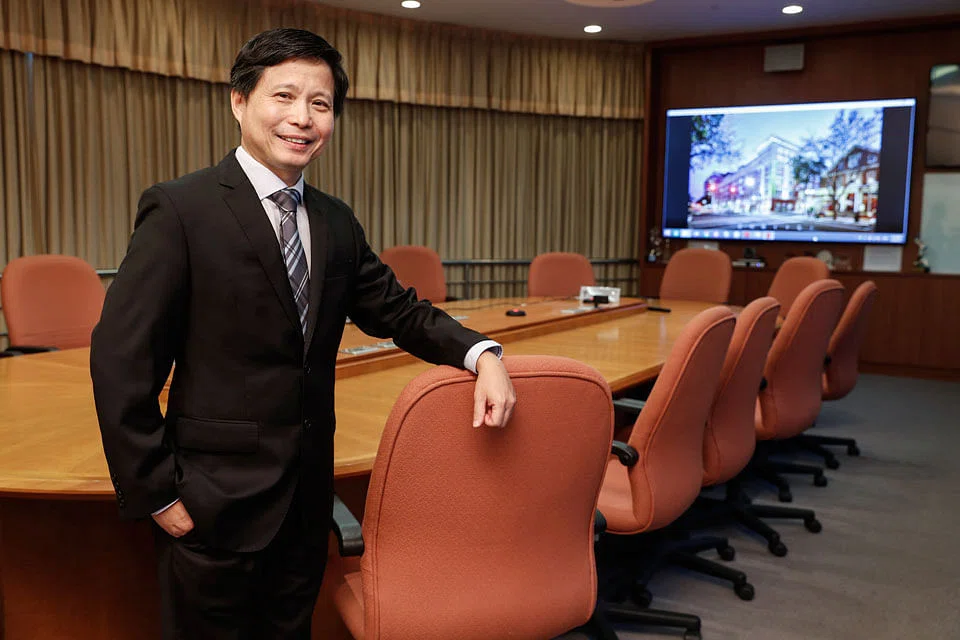
CENTURION Corporation plans to grow the number of student accommodation assets under its management in its existing markets, while looking for new markets to venture into.
The mainboard-listed company's student accommodation business segment already has a presence in Singapore, Australia, the United Kingdom, the United States and Korea under its "dwell" brand.
Chief executive officer Kong Chee Min expects the UK, Australia and US to remain key destinations for students and will continue to scour for opportunities to scale up in these three quality, higher-education markets.
Mr Kong said: "The group aims to intensify expansion of its total assets under management for student accommodation in existing markets as well as explore new markets of key global education hubs."
While it remains to be seen how Brexit will play out, Centurion hasn't seen any decline in the number of students from Europe, not has it experienced a significant impact on operations thus far, Mr Kong emphasised.
More affordable option
The weaker pound has, in fact, made education in the UK more affordable for international students, although any depreciation in the currency could also give rise to negative foreign exchange translation effects.
Amid the escalating US-China trade spat, the number of students from China opting to study in the UK this year has also picked up, with reports that some Chinese students are facing difficulties in securing visa applications and extensions for the US.
According to UK-based Universities and Colleges Admissions Service (UCAS), a record 40,720 international students from outside the European Union have been accepted for the 2019/2020 academic year, up 6 per cent year-on-year. The number of Chinese applicants rose by some 30 per cent.
At the same time, there is a supply-demand imbalance for student accommodation in a number of major UK cities, according to a Knight Frank report, where full-time student numbers outweigh current purpose-built student accommodation (PBSA) bed spaces by 3:1 across the UK.
Mr Kong added: "Despite wider uncertainties surrounding Brexit, an increase in acquisitions of PBSA assets in the UK by global investors as well as an uptick in the development pipeline underscores the resilience of the sector."
The PBSA sector is seen as defensive and counter-cyclical - performing well during economic downturns. Some market watchers, however, point to increased competition for UK PBSA assets from global investors as a challenge. Yield compression may also continue, the Knight Frank report suggested.
Other Singapore-based investors in the UK PBSA segment include GIC, Mapletree Investments, Singapore Press Holdings and Far East Orchard.
Aside from the UK, Centurion is also bullish on Australia, as the government seeks to boost the number of undergraduate degree holders. By 2025, the government aims for degree holders to comprise 40 per cent of those in the 25 to 34 year old age bracket, up from 27 per cent presently.
For its workers' accommodation business - which operates under its Westlite banner - Centurion sees growth opportunities arising from Malaysia in the near to mid-term.
Mr Kong said: "We also continue to explore opportunities in foreign and migrant accommodation needs in other countries across South-east Asia."
In Malaysia, demand for purpose-built workers accommodation (PBWA) will be underpinned by the government's efforts to ensure proper housing for foreign workers - as seen by the recent Worker's Minimum Standards of Housing and Amenities (Amendment) Bill passed in July this year - as well as growth in the Malaysian economy.
As at end-June, Centurion had 63,052 beds, with 56,800 beds across 11 assets in its PBWA segment and 6,252 beds across 20 assets in its PBSA segment. For 1H2019, its PBWA assets in Singapore and Malaysia clocked occupancy rates of about 97 and 90 per cent, respectively. The average occupancy for its PBSA portfolio is understood to be in the high 80s.
Sustainable business
Centurion expects to boost its portfolio to 74,656 beds by FY21, driven largely by the PBWA segment which has 11,600 beds in the pipeline.
Formerly SM Summit Holdings, Centurion started as a manufacturer of audio cassette tapes. But the challenging physical media business spurred a hunt for a more sustainable business segment.
Following a reverse takeover by Centurion Properties, the renamed entity entered the worker accommodation segment in 2011 with the injection of a 5,300-bed facility in Toh Guan East. From there, it made a foray into Malaysia to pursue growth.
It went on to diversify into the student accommodation sector in 2013 by acquiring the RMIT Village in Melbourne, Australia. While its PBWA business is bigger, the student accommodation business has been growing faster in recent years.
In FY18, revenue from its student accommodation segment rose 8 per cent to S$37.73 million, versus a 20 per cent drop in revenue to S$80.61 million for the workers accommodation business segment, owing to the expiry of Westlite Tuas' lease (and as a result, 8,600 fewer beds). In the long-term, Centurion hopes to eventually grow both businesses to equal size.
At the same time, it is mulling new areas, such as senior living. Mr Kong added: "We have been looking at investing in this sector and are assessing potential opportunities. This is still in progress."
But even as it looks to expand its footprint, Centurion has shifted towards an asset-light model to keep its debt manageable, Mr Kong said. In December last year, the Centurion Student Accommodation Fund announced a first closing with total committed capital of S$70 million; the fund is gunning for an eventual size of S$100 million.
This is its second fund after its inaugural private fund - the Centurion US Student Housing Fund - which closed with US$89.5 million raised.
Asset-light strategy
He said: "An asset-light strategy is important for the company's expansion plans as it allows us to leverage on investors' funds, and to grow into the management business. We are also looking at various options to recycle our capital." Thanks to the lower-for-longer interest rate environment though, he doesn't rule out the possibility of acquisitions if the group chances upon a suitable property.
With uncertainties in the broader economy, Centurion will remain selective when looking at opportunities for acquisitions or deals, Mr Kong said. He believes that specialised accommodation assets remain more stable than most other sectors.
In protest-assailed Hong Kong, where Centurion is also listed, it continues to monitor the situation closely.
Nonetheless, it plans to maintain its dual listing in Hong Kong, which has delivered "greater exposure and access to a wider investor base", visibility as well as access to institutional investors, "who have shown interest in both (the) stock as well as (its) private fund investments".
TRENDING NOW

Simba admits exceeding spectrum limits amid failed M1 deal; full-year profits surge 277%

Temasek’s Wan Chee Foong to helm PIL, Lars Kastrup to be board adviser

He built the Vingroup empire. Now South-east Asia’s richest man is handing some key roles to his sons

One-third of Singapore-listed firms at risk in severe AI downturn: MAS

