

CGSI launches portfolio strategy focused on new listings and secondaries in Asean, Hong Kong
The strategy targets annual returns of 10-15%

[SINGAPORE] As investors turn to Asia for growth amid uncertainty in US markets, CGS International Securities (CGSI) is rolling out a new discretionary equity portfolio mandate, the Ascend Access Strategy, which will focus on new listings and secondary placements across Asean and Hong Kong.
Developed by CGSI’s asset management division, the strategy offers investors access to initial public offerings (IPOs) and secondaries traditionally reserved for institutional investors.
Under the mandate, at least half of the portfolio will be allocated to Singapore equities. The remaining half of the portfolio will be allocated to other Asean equities, as well as selective exposure to Hong Kong and China markets.
“Through this, investors can participate in Asean’s growth story, as well as Hong Kong’s renewed strength as a leading global IPO market,” said CGSI. Its parent company, China Galaxy Securities, is located in China.
The strategy is open to accredited and institutional investors, with a minimum investment amount of S$100,000. It targets annual returns of between 10 and 15 per cent.
The target assets under management for this strategy is S$50 million, with the figure expected to grow to S$250 million over the next three years, in tandem with the potential growth of Singapore’s and the region’s capital markets.
Institutional access, regional reach
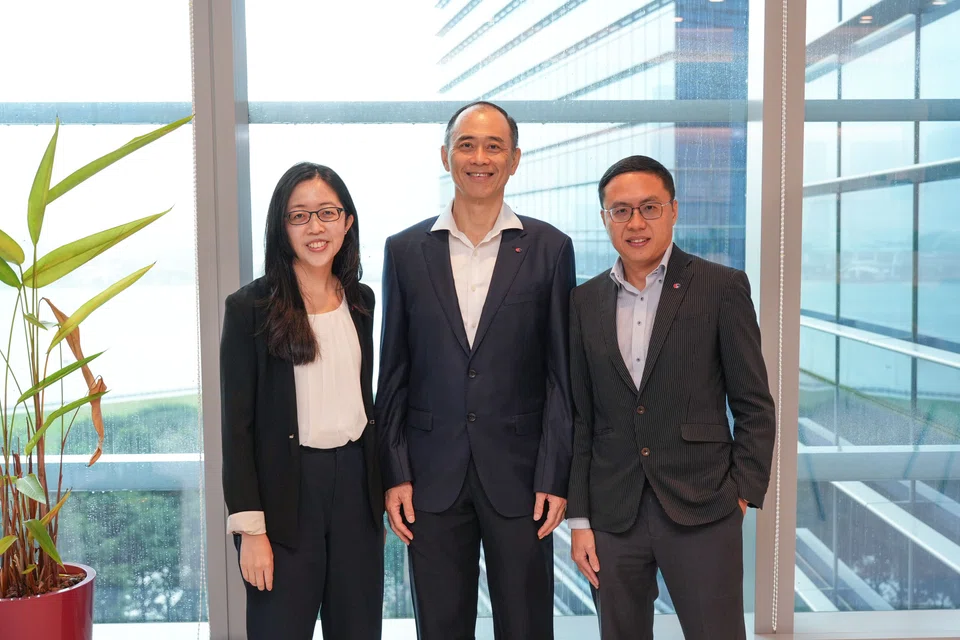
Speaking to The Business Times ahead of the launch, Phua Zhenghao, group head of investments within the asset management division at CGSI and the strategy’s portfolio manager, said that the strategy sets itself apart from other Singapore-focused ones as it targets higher-growth segments.
“We’re helping investors focus on this niche because we think the opportunities are strong. We are not only offering... access... which lets investors (in) earlier than the retail tranche, but we also offer portfolio management,” said Phua, who was formerly the head of investment strategy at Income Insurance.
The other senior portfolio manager is Grace Yan, previously from Amova Asset Management (formerly Nikko Asset Management). Yan has more than 17 years of expertise in small and mid-cap equities in Asia, excluding Japan. She has also won several accolades, including Equity Fund Manager of the Year for Asia in 2024 awarded by financial markets magazine The Asset.
The broader asset management team at CGSI is headed by industry veteran James Ong, who previously led institutional businesses at HSBC and UOB Asset Management. Former Singapore Exchange senior managing director Chew Sutat is the independent chairman of the investment committee.
The portfolio’s regional mix also provides diversification benefits. “There will be a time when the rest of the region gets their act together, and we will be able to tilt the rest of the 50 per cent of the portfolio to where the opportunities are,” said Phua.
Companies on the team’s radar include Singapore-listed Food Empire , which has a growing presence in Vietnam; construction firm Pan-United , part of the infrastructure growth story; and Hong Kong’s electric vehicle maker Seres, which is planning an IPO.
To decide the IPOs and secondary opportunities in which to invest, CGSI’s portfolio managers apply a scoring metric that evaluates a holding across various categories including growth trajectory, balance sheet strength and management quality.
Launching at an inflection point
The launch comes at what Phua calls an “inflection point” for global markets. He noted that while US markets have performed strongly over the past decade, China is emerging as one to watch, driven by regulatory reforms and rapid advancements in artificial intelligence.
Both Asean and Singapore stand to benefit from this rebalancing, he added. These markets remain relatively undervalued, insulated from US policy uncertainties and supported by stable currencies. Singapore in particular is seeing tailwinds from government initiatives to revitalise its equity market.
With more interest in Singapore stocks, shareholders can help companies unlock shareholder value, supporting a more “sustainable uplift” across the equity market, said Phua.
With the US dollar weakening since the start of the year, the strategy’s Singapore dollar base makes it particularly appealing to international investors, he added.
Said Phua: “At the end of the day, all we want is a stable anchor, at a time when the stability of the US dollar is questionable.”
TRENDING NOW

ComfortDelGro appoints two new independent directors

Once staunchly pro-China, Malaysian Chinese businesses are now distancing themselves from Beijing

NoonTalk needs continued financial support from CEO Dasmond Koh, auditors warn

DP Architects sets the benchmark for sustainability disclosure and design

