Chances of RGD’s coal assets becoming stranded ‘very remote’, says CEO
IEA projections show coal demand is expected to rise in South-east Asia as a result of the growing energy needs of the region’s economies

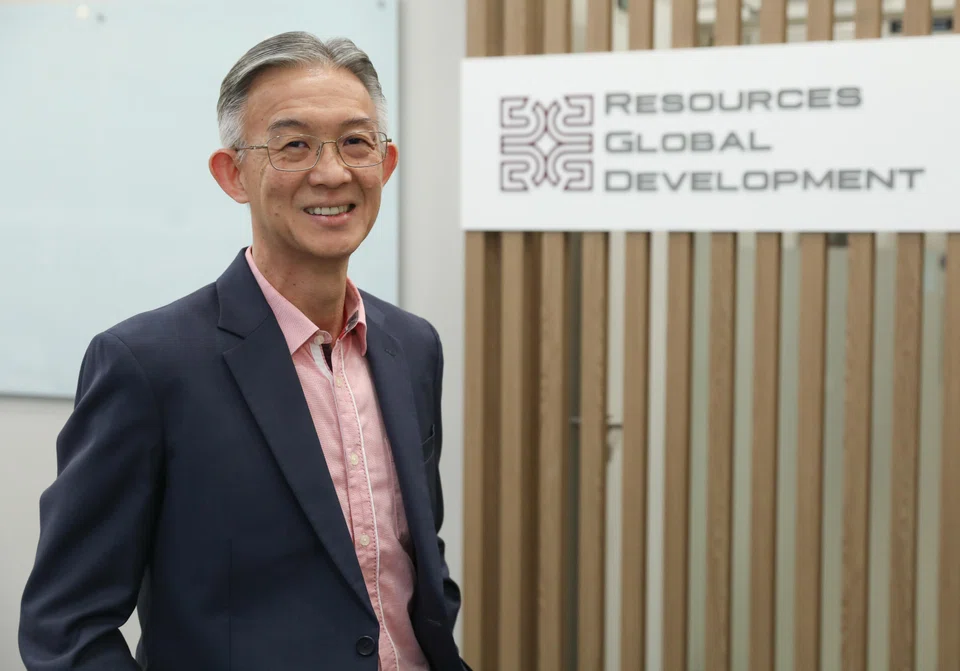
[SINGAPORE] The worldwide push towards transitioning the energy sector away from fossil fuels – in a bid to arrest the rise in global temperatures causing climate change – has resulted in a growing consensus in financial markets that coal assets are at a high risk of becoming stranded.
However, the chief executive officer of coal handling company Resources Global Development (RGD), Francis Lee, said the chances of that happening to the company in the next few years is “very remote”.
“The risk is always there, but the probability of it happening is really quite remote – unless, suddenly, there’s a cliff drop on the demand of coal,” said Lee in an interview with The Business Times.
Projections from the International Energy Agency (IEA) show the exact opposite is likely to happen in South-east Asia, with coal demand expected to rise as a result of higher energy demand to power its burgeoning economy.
According to the IEA, coal generated half of South-east Asia’s total electricity in 2023, accounting for 80 per cent of the power sector’s emissions.
Based on publicly stated policies from South-east Asian governments, coal and gas demand is expected to grow by more than 30 per cent until 2035, even as the share of clean energy rises.
Driving the region’s demand for coal is its largest economy, Indonesia, which is where the bulk of RGD’s operations are located.
First started as a commodity shipping business – in which it transports coal and other minerals, including nickel, around various parts of Indonesia – RGD went upstream and ventured into coal mining last year, as part of longer-term plans to secure its supply.
When asked why the company has decided to take this step forward given the long-term direction towards clean energy, Lee said fossil fuels still play a very substantial role, particularly for developing economies.
“So in the long term, I think we all know that we need to move towards the (net-zero) target. I think what we couldn’t agree on, between the environmentalists and ourselves, is what we do in between,” he said.
“Do we abandon and forsake all these people who need base load to develop, who need the cost factor that they can afford to elevate (themselves out of) poverty and for development to happen, and to wait for the technological change so that renewables like solar, wind and hydro, is able to give that grid stability? While all these are being debated, life has to go on,” he added.
Lee sees RGD playing a role in plugging the gap in demand for energy during this interim period where the clean energy sector overcomes technological constraints and ramps up capacity.
“Will renewables today be able to totally eliminate or totally substitute the function of coal? The answer is overwhelmingly no,” he said.
While the risk of having its assets stranded is not high, the company did note other climate-related risks in its sustainability report. The first is that Indonesia’s long-term plans are to eventually phase out coal and achieve net-zero emissions, and the second is its limited access to capital.
The Catalist-listed company acknowledged that getting investors in Singapore to finance coal is a challenge. The three local banks have committed to cease thermal coal financing.
However, Lee said, the company is still able to tap the wider capital markets. Regional banks and international commodity players are also still willing to provide financing. In addition, cash flows from its shipping business are healthy, given the short cash-generation cycle, and would be able to provide a fair amount of internal funds for growth.
As for policy risks resulting from Indonesia’s decarbonisation, Lee said it is hard for RGD to articulate a long-term transition plan spanning the next 20 or 30 years.
“Of course, I cannot, as of today, say that we are going to do this for the rest of our lives. But I think a lot has to do with what opportunity comes about and also what is going to be presented in the long term,” he added.
Growth strategy
The company, however, is firm on its short-term plans – which are to focus on growing its shipping and coal mining business.
Its shipping business has been the main driver of earnings, contributing close to 60 per cent of revenue, and 64 per cent of gross profits in its latest financial results for the first half of 2025 ended Jun 30.
RGD plans to ramp up its fleet of vessels, consisting currently of 31 units of tugs and barges, to 41 by the end of 2026, bringing the fleet’s total deadweight tonnage to 372,000, a 27 per cent increase from the current 292,000.
In addition to having its own supply of coal after acquiring its own coal mine, Lee said that the fleet expansion rides on the boom in Indonesia’s critical minerals industry.
“Indonesia comprises well over 17,000 islands,” he noted. “The minerals are being mined to the processing plant, be it factory, be it smelters, be it mills. The carriage of that is the driver of our shipping pillar. So we… thrive on moving resources between islands. With the growth of the mineral industry in Indonesia, the demand for these vessels has been very, very strong.”
However, the shipping business’ gross profit dipped to S$11.4 million in H1 2025, from S$14.8 million in the same period a year ago, mainly due to the softening of freight rates, higher fuel costs, as well as a decrease in shipping volumes as there were longer turnaround times on certain shipping routes.
This has caused gross profit margins to decrease to 38.2 per cent from 50.7 per cent over the same period in 2024.
Lee said this was due to uncertainties caused by geopolitical tensions in H1 2025, with wide-ranging tariffs being imposed by the US on most of its trading partners.
However, he believes that these uncertainties are more a cyclical phenomenon and not part of a structural shift that is of any concern. The freight industry is looking more firm and bullish at the moment.
“Many industry players actually have had to sit back, take time to sink in, and also to wait for the impact and the consequences. Now nine months have passed, and many players have now become numb… I think the world is coming to terms with it… It’s normalising,” said Lee.
As for its coal mining business, the company will be focusing on ramping up production of its mine in Central Kalimantan which it is actively managing after acquiring it in April last year.
The Tri Oetama Persada mine – also known as the Triop mine – has a permit to operate until July 2031, and is estimated to have a total of proved and probable reserves of 64 million tonnes.
Lee said that the company’s management has an internal productivity target which it hopes the Triop mine will achieve by the end of the year, though it is not publicly disclosed.
While the company does not rule out acquiring more mines in the future, the focus in the next few years is to bring up the production level of the Triop mine.
The addition of the coal mining business provided a new revenue stream for RGD, boosting its earnings for H1 2025.
Net profit attributable to shareholders rose 80.3 per cent to S$8.1 million from SS$4.5 million over the same period in the previous year.
Nonetheless, Lee noted that the company’s coal exports – which are mainly to China – might remain affected by the ongoing trade tensions, even if its shipping business is heading towards normalisation.
“The slowdown of their economy and their industries will inevitably affect their appetite to buy, which then translates to the slowdown of coal on the supply side,” he said.