

Chasen capitalises on emerging trends
Its 3PL segment receives a boost amid the pandemic as air cargo crunch fuels demand for cross-border land freight.

Nisha Ramchandani
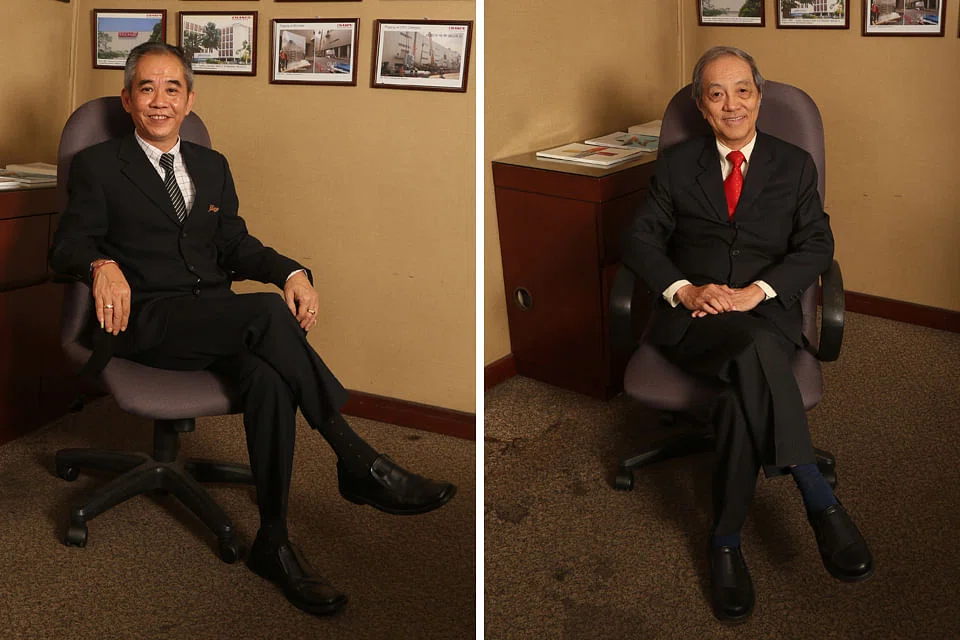
EVEN as Covid-19 fuels economic headwinds, Chasen Holdings is capitalising on emerging trends to drum up business for certain business segments.
Its third party logistics (3PL) segment, for instance, has seen a spike in revenue during the pandemic owing to the crunch in the air cargo market, which in turn has fuelled demand for cross-border land freight. The latter is cheaper than transporting cargo by air and faster than the sea route.
Passenger planes typically carry cargo in their bellyhold and the dearth of air travel has forced airlines to ground aircraft, taking a significant portion of capacity out of the market. This has also caused a spike in air freight rates.
With its regional subsidiaries, Chasen is able to transport freight by land from Singapore all the way up to China, and can charge a premium to account for the return trip. Chairman Eric Ng told The Business Times in an interview: "We've picked up business (that) previously we were not able to do, and there is more business to be done."
In June, its 3PL operations in Malaysia saw revenue about double to RM6.2 million (S$2 million), before rising further in July to RM7 million. Chief executive officer Justin Low said Chasen is seeing more requests for quotations for long-term cross border freight. So while rates for land freight may normalise once the pandemic subsides, Mr Low expects to see an increased volume of business vis-a-vis pre-Covid days.
As a result of the shift towards 3PL, there has also been a bump in demand for warehouses. Chasen is planning to expand its warehouse in Penang by 128,000 square feet as well as add 22 trucks to its fleet in Malaysia, Thailand and Vietnam by end-2021.
For Chasen, its specialist relocation services - where it uses specialised tools, equipment and vehicles to relocate high-value equipment and machinery used in manufacturing - and its technical & engineering (T&E) businesses account for about 80 per cent of revenue. 3PL contributes the rest.
Shifting supply chains post-Covid and amid US-China trade tensions are also benefiting its 3PL and specialised relocation businesses. "In China, we are in the market that caters to local demand. (That) demand is still there," said Mr Ng. At the same time, it has subsidiaries in Vietnam and the US which can pick up business from companies either relocating their supply chain out of China or back to the US.
But it hasn't been all smooth sailing during the pandemic. Its specialist relocation services customers in markets such as China faced project delays due to border closures, which in turn affected Chasen. "When projects are pushed back. . .we have to keep the workforce (there). We need them to be ready to work, and the skillsets must be there," said Mr Ng. This means not only a delay in revenue, but Chasen would also incur higher costs. However, business momentum has started to pick up again in China, especially with border controls for travel to and from countries such as Japan and Korea starting to ease. This allows engineers of manufacturers from such markets to enter China once again and install equipment in the factories of Chasen's Chinese clients.
At the same time, the company is branching out into a new area of business - providing cleaning and maintenance services for critical components of machines used in the thin film transistor (TFT) LCD industry. Chasen has a facility in Chuzhou, Anhui province as a starting point to embark on this fledgling business.
"Over the next few years, we expect this business to grow, but it's going to be a very capital-intensive business," Mr Ng added.
Over in India however, where its specialist relocation arm incorporated a company late last year, business has been hampered by the widespread pandemic and ongoing lockdown. "India is a new market to us," said Mr Ng. "The manufacturers are now focusing on the Indian domestic market so they have to set up a factory (there) to be more competitive when they sell their TV sets in India."
Meanwhile, its T&E segment was - and continues to be - impacted by the circuit breaker in Singapore and the slow ramp-up in construction activities. Its T&E business comprises construction-related businesses such as metal fabrication in Singapore, contract manufacturing in Singapore and China as well as engineering support services to semi-conductor manufacturers in Singapore. Border closures have also complicated matters, with some of its Malaysian workers stuck across the border.
"The construction sector in Singapore is among the last to restart site operations post-circuit breaker due to the large number of foreign workers involved. There is also some confusion as to the regulations on safe distancing at site and restrictions on the movements of foreign workers from site to site," said Mr Ng, referring to sites where Chasen operates as a sub-contractor. As such, its T&E revenue is still a trickle compared to pre-Covid levels.
With potential projects on the decline, Chasen's T&E business is reducing headcount - mainly foreign workers - as a cost cutting measure. As a group, it is also trying to contain costs in other ways, such as via a bigger variable component in wages that would trim salaries should revenues fall in the event of contingencies such as project delays.
However, Mr Low expects Chasen as a group could eventually add to its staff strength once the Covid dust has settled if it needs to support business opportunities in other areas of operations, such as logistics.
In the first financial quarter ended June 30, 2020, Chasen managed to eke out a profit of S$257,000 despite the challenging environment, albeit down from S$282,000 a year ago. This came on the back of new business from its 3PL segment, while government grants across its markets also helped prop up its performance for the quarter. As a matter of financial prudence, it also took provisions for doubtful debts in FY20, namely for customers hit badly by the pandemic.
"We took a sharp knife," said Mr Ng. "Anything that stirred, (we) chopped its head." For now, it is reasonably optimistic that it will not have to take further provisions.
Meanwhile, in July, it announced that it had bagged S$21 million in new projects, largely from its specialist relocation business. Of the new business, S$16 million came from relocation projects for manufacturing companies based in Singapore, China and Malaysia.
TRENDING NOW

Could stablecoins be the future of money?

Philippine power giant First Gen rebuffs foreign offers, plans up to US$2.6 billion in expansion
GIC-backed Bank Jago sees wealth management as next growth engine as Indonesian investor base grows
The middle power moment arrives in South-east Asia – but not for Asean

