

China firm in Singapore keeps global horizon
MCC Land (S) is looking into two mixed-use developments in Malaysia.
MCC Land (Singapore), which is part of a large Chinese state-owned conglomerate, has been operating in Singapore for almost two decades. But its vision goes beyond the local horizon. Having undertaken sufficient feasibility studies, the group is ready to set foot in Malaysia and Indonesia within the next two years.
But it is treading a different path from its Chinese peers, whose zealousness in launching massive residential projects in Iskandar Malaysia has left them reeling from large unsold stock.
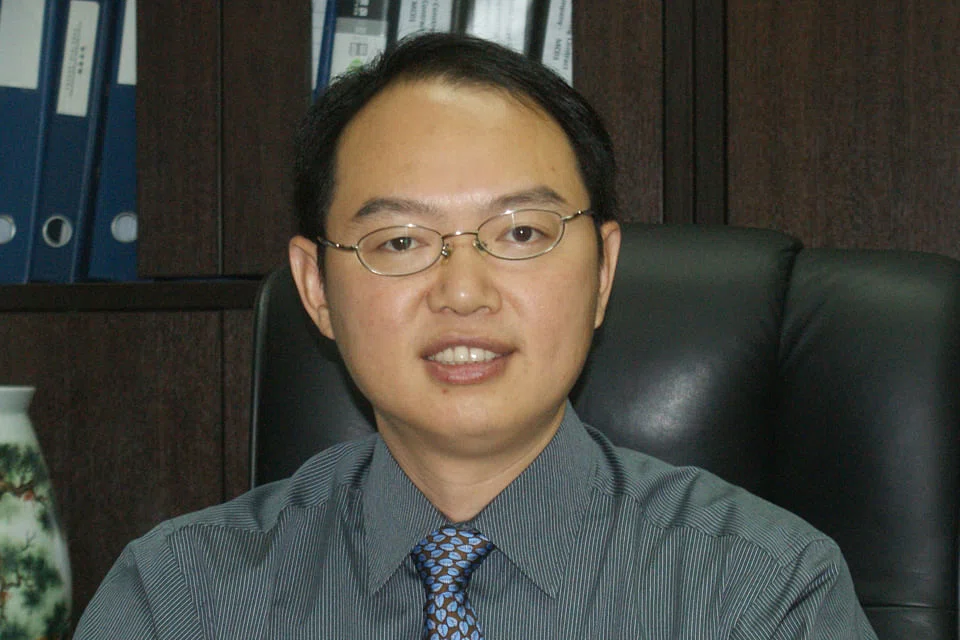
"We have never given up on the goal of expanding outside of Singapore," Tan Zhiyong, the Mandarin-speaking managing director of MCC Land (Singapore) told The Business Times. "In the past few years, we have been focusing on Malaysia and Indonesia," he said.
The group has spoken to local partners in Malaysia on two mixed-use developments - with one of them possibly having a hotel component. Its first project in Malaysia could materialise as early as in the first half of next year, Mr Tan said.
While declining to reveal where the two projects could be located, Mr Tan sees more development potential in the resource-rich western side of the Malaysia Peninsula such as Kuala Lumpur and other cities with a strong tourism draw.
The group has cast its eye across the Causeway for a while, and set up a Johor Baru office last year. But it has not directly undertaken any project, except a project management role in Hao Yuan Investment's mixed-use project at Danga Bay. Hao Yuan's Iskandar project, covering some 15 hectares will last seven to eight years, with phase one of 1,000 units likely to be further sliced into smaller phases, Mr Tan said.
While the long-term outlook for Iskandar economic zone remains positive, Mr Tan reckoned that some Chinese developers may have misunderstood that market. "They are pushing too many units at one go but the market does not have a high absorption rate," he said. "There are still fundamental differences between China and Malaysia. "In China, housing units are either quickly absorbed by the sheer population or through policy manoeuvres. But Iskandar is different," Mr Tan said.
As for the Indonesian market, the company has been mulling the prospects of cities like Jakarta but has held back from making a move before this year's changes in the country's political leadership.
MCC Land, an offshoot of Shanghai and Hong Kong-listed Metallurgy Corporation of China, was among Chinese companies which heeded Beijing's call to "go global". It started out as a construction firm in Singapore some 18 years ago but only saw significant growth after the first 10 years when it clinched major contracts for the Universal Studios in Genting's integrated resort in Sentosa and public housing projects.
Its leapfrog into property development in 2010 brought about astronomic growth. Development profits now make up 80 per cent of MCC Land's profits. Some 1,150 residential units were sold in 2013 at an aggregate value of S$1.1 billion. The group's profit more than doubled to S$43.4 million in 2013 from S$17.3 million in 2012 on the back of a surge in income to S$625.9 million from S$290.3 million in 2012.
Its earnings this year might, however, feel some heat from rising construction costs amid wage hikes and higher material costs, Mr Tan said.
Now, the lines are blurred as to whether MCC Land is a local or foreign company as most of its management staff are Singaporeans, Mr Tan quipped.
With the Singapore market seeing a fresh influx of Chinese developers with deep pockets and aggressive acquisition of land sites, Mr Tan said this trend was "inevitable" given that the financial capacity of Chinese companies have expanded but development opportunities in their domestic market have shrunk.
Another Chinese conglomerate Nanshan Group made an inaugural purchase of a residential plot here off Sin Ming Avenue in a recent government tender at S$173.57 million, a 7.2 per cent premium to the next highest bid.
Rather than attribute the higher land prices to aggressive bidding by developers, Mr Tan felt that there were other factors. For one thing, the government has cut its supply under its land sales programme. Certain policies such as the URA's revised rule to include private enclosed spaces and private roof terraces in non-landed residential projects as gross floor area (GFA) for which development charges apply, and the 15-month waiting period before developers can launch executive condominium projects after securing the land have also contributed to higher costs for developers, Mr Tan argued.
MCC Land is still keen to secure well-located land sites in Singapore with proximity to MRT stations, and may consider snapping up office and hotel sites in the future.
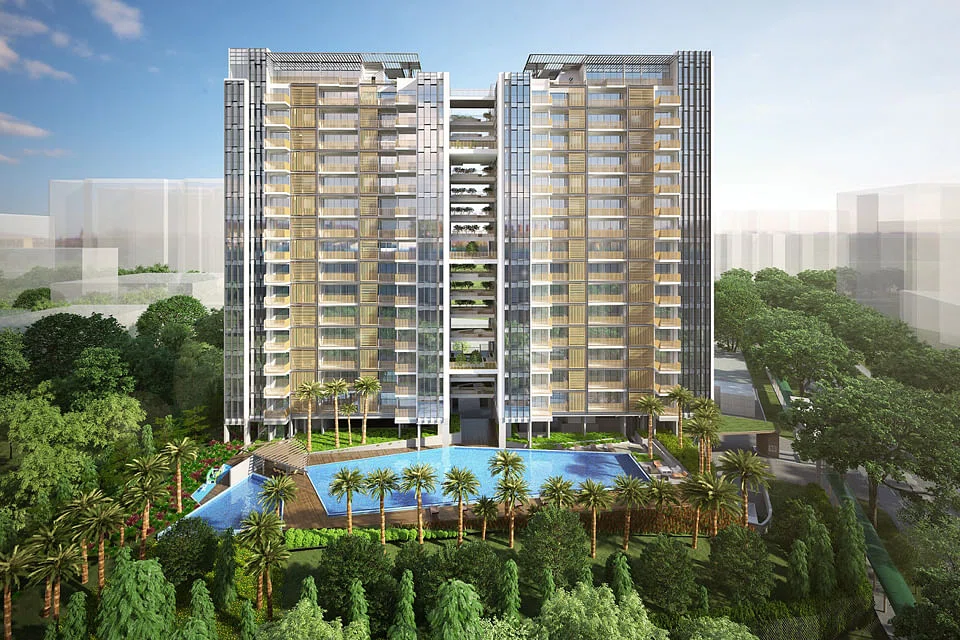
Located next to Aljunied MRT station, the newly launched TRE Residences that MCC Land is developing with Sustained Land and Greatview Development has moved 20 per cent of the 250 units at an average S$1,416 per square foot (psf), including a 5 per cent early-bird discount.
The group is slated to launch a residential cum retail project in Potong Pasir in the middle of next year, which is expected to yield some 600 residential units and up to 5,000 sq m of retail space, including restaurants.
Mr Tan revealed that the breakeven pricing for TRE Residences and the upcoming Potong Pasir project is S$1,300 psf and S$1,200 psf respectively.
Sales at The Santorini, its condo project at Tampines launched in March, have been "less than ideal" despite the group having engaged four official marketing agents, he conceded. So far, 28 per cent of the total available 597 units have been sold at a median price of S$1,117 psf.
"With the lending curbs under TDSR (total debt servicing ratio) and MSR (mortgage servicing ratio) and the additional buyers' stamp duty, the market is now at a cooling stage," Mr Tan said. "Even with more marketing tactics, it is difficult to turn the current market sentiment around," he added. "We could only address this internally by managing our construction costs. We are also not inclined to cut prices to sell units because our prices have been reasonable to begin with."
Unfazed by vacancies of private condos inching up, Mr Tan called this a "structural issue" - many of the newly completed homes are a result of the supply ramp-up by the government in 2011 to make up for the preceding years of tight land supply. Furnishings will typically take some three to six months before the units are primed for occupation or rental.
"Residential prices in Singapore have stabilised, particularly in the mass market Outside the Central Region," he said. "With fundamental demand still relatively strong, a major price correction is unlikely."
TRENDING NOW

Nvidia reinstates Jensen Huang as CEO; Trump says move poses no national security risk

Indonesia’s coal tycoon Low Tuck Kwong replaced as Bayan Resources president-director

Nvidia surges 33% after reinstating Jensen Huang, reviving AI trade; stocks soar in US and Europe

Consider lowering homeownership barriers for some non-resident foreigners

