

China reopening likely to mitigate tightening NIM: OCBC chief Helen Wong

Tan Nai Lun
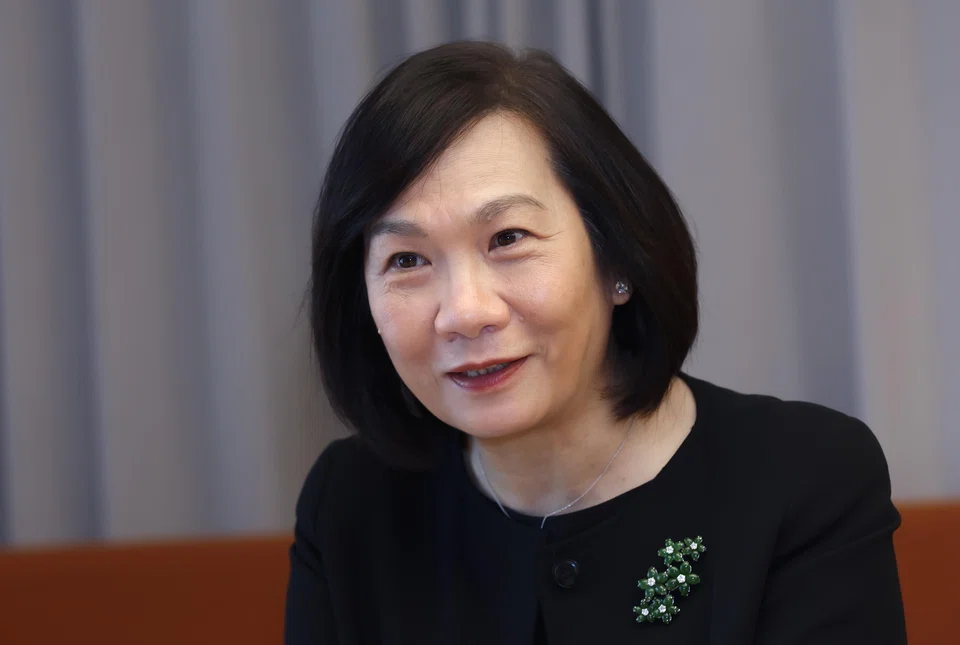
CHINA’S reopening will likely boost OCBC’s wealth and trade segments to mitigate the tightening of net interest margins, said the lender’s chief executive Helen Wong.
In an interview with The Business Times, Wong was optimistic that the bank’s operations across Greater China and the Asean region can allow it to capture fund flows in areas including wealth, investment and trade.
This comes as interest rates have likely peaked, even though stabilising interest rates should continue to contribute to net interest income.
Wong said: “Asean continues to have a very strong link with Greater China, with wealth still growing in (the two regions). And in a period of uncertainty, that wealth flow is coming into Singapore, which is a safe hub for wealth management.”
The bank registered net new money inflows of S$10 billion for the first quarter of 2023. While the inflows were well distributed, Wong observed more flows from the Asia region.
“By having more clients and more assets to manage, the volume will help us to mitigate any drop or the tightening in our net interest margin,” she said.
Wong noted that the bank had already been active in connecting wealth flows in the Greater Bay Area since pre-Covid, but the pandemic had made overall flows slower.
But as travelling resumes, Wong expects to capture more of the business alongside the market: “As people get more active going across borders, they will start to think about investment again.”
Earlier this month, China reported underwhelming trade data for April. Exports grew at a slower pace, while imports missed expectations and shrank at a faster rate.
Singapore’s non-oil domestic exports also extended its decline in April as exports to China contracted sharply, and offset the rebound to the US and Europe.
Wong said trade data is likely to remain slow for the moment, as the disruptions to supply chains over Covid will take time to recover.
But she still expects investment and trade flows to improve going forward in the rest of the year, as China is set to post more than a 5 per cent GDP growth for 2023. “It is important that China reopened its door earlier than people expected,” she said.
For now, China’s recovery is likely to begin with the services sector and domestic consumption, Wong said.
In a Morgan Stanley report on the aviation sector, the research team expects China’s reopening to unleash a wave of potential international travel demand.
It estimates that missing Chinese travellers represent up to 25 per cent of total inbound visitors to most Asian economies.
Once China resumes outbound travel from the current level of 30 per cent to more than 95 per cent in the next 12 to 15 months, it is expected to bring substantial upside to most Asian economies, the team said.
A Maybank Securities report also noted that China’s outbound tourism recovery is accelerating and should hit more meaningful levels by the middle of the year.
The research team is positive on the Asean tourism sector, with Singapore as a top beneficiary as it is a preferred destination for high-net-worth Chinese and single Chinese women.
More overseas spending bodes well for OCBC’s cross-border income. The bank has invested heavily in its digital capabilities over the years, in areas including cross-border payments, Wong noted.
“China presents many parts that we can capture: there’s wealth, the investment flow, the digital payments area… and trade, not limited to Singapore as a trade hub, but the trade that China effects with the Asean countries,” she said.






